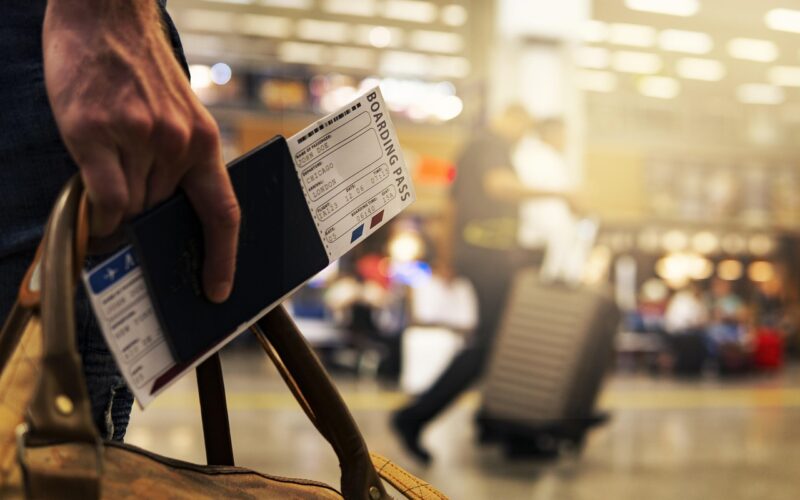
We booked a round-trip from London to Bangkok last month for £287. Our friend flying the same route a week later paid £890. Same airline, same cabin class — but we had a system, and she just searched and hoped. That kind of gap doesn’t happen by accident. Finding cheap flights in 2026 isn’t about luck. It’s about knowing exactly when to search, what tools to use, and which airline quirks to exploit before the algorithm catches on. The old “book on Tuesday at midnight” myth is dead. Here are the seven tricks we’ve tested extensively — and how they can slash your flight costs by 40% or more.
1. Master the Art of Search Engine Switching (Don’t Stick to One)
No single platform wins every search. The right tool depends on what you’re optimizing for. We tested the same routes across five different engines and found price variations of up to $200 on identical flights — same airline, same seat class, same date.
The Smart Four-Step Search Strategy:
Start with Google Flights to identify your cheapest travel dates. Its calendar view shows price fluctuations across entire months — invaluable for flexible travelers. Use it to get a baseline price and activate price tracking alerts for routes you’re watching.
⚠️ This post contains affiliate links. If you book or buy through them, we may earn a small commission — at no extra cost to you. We only recommend services we’d genuinely use ourselves.
Cross-check with Aviasales for international routes. Independent testing found Aviasales beating Google Flights by up to $45 on certain Asia routes. One traveler we know saved nearly $500 on a Bangkok–London ticket by choosing Tuesday instead of Saturday — Aviasales surfaces these gaps faster than most tools.

Add Skyscanner for budget airline coverage that bigger engines miss. Skyscanner consistently surfaces cheaper options by including Ryanair and Wizz Air that Google Flights overlooks — especially for European short-haul routes where budget carriers dominate.
Finish with Kiwi.com for complex multi-city routes. Kiwi specializes in “virtual interlining” — combining flights from airlines that don’t normally partner — creating bargains like a $480 Boston–Bangkok itinerary you’d never find elsewhere. If your trip involves more than one destination, Kiwi is non-negotiable.
| Search Engine | Best For | Key Strength | When to Use |
|---|---|---|---|
| Google Flights | Speed & flexibility | Date comparison, price tracking | Always — as first step |
| Aviasales | International bargains | Low fees, Asian & Eastern European routes | Cross-check step |
| Skyscanner | Budget carriers | European low-cost airlines | European trips |
| Kiwi.com | Multi-city trips | Virtual interlining | Complex itineraries |
2. Time Your Booking Window Like a Pro (The Data Changed in 2026)
The 2026 CheapAir Annual Airfare Study analyzed 917 million domestic fares and confirmed an optimal booking window of 21–60 days before departure, with the sweet spot typically landing at 28–42 days depending on your route. But here’s what most guides miss: the optimal window varies drastically by route type, and booking one week too early can cost you just as much as booking too late.
- Domestic flights: Aim for 15–30 days out for shorter routes — earlier than this, airlines haven’t released their cheapest fare buckets yet, and you’ll be paying full price for flexibility you don’t need.
- International to Europe or Americas: The Going 2026 Airfare Report places the sweet spot at 31–45 days for international routes, with the best fares on transatlantic routes typically appearing 5–6 weeks before departure.
- International to Asia or Oceania: Book 60–180 days ahead — these routes price out fastest, and last-minute deals are rare compared to European routes.
- Peak season travel: Book Thanksgiving flights in early to mid-October and Christmas airfare by Halloween — the cheapest holiday deals appear in October, not November when most people finally start looking.

The Friday booking advantage: Expedia’s 2026 Air Hacks Report shows Friday is now the best day to both book and fly — up to 8% cheaper than flying on Sunday. Meanwhile, Tuesday departures remain significantly cheaper than weekend flights across most route types.
Real example: Hala, a scholarship student flying Riyadh → Manchester, had a flexible August departure. By booking on a Friday, 67 days out, with a Tuesday departure, she paid £412 round-trip — about 31% below the route’s August median. She used Skyscanner’s monthly view and shifted her departure two days to dodge a school-holiday surcharge. £412 instead of the £600+ her classmates paid — same destination, same month.
3. The Hidden City Ticketing Truth (Use Carefully)
Hidden-city ticketing works by booking a flight to City B with a layover in your actual destination (City A), then simply not taking the connecting flight. A New York to Tokyo flight might be cheaper than New York to Seoul — if Seoul is the layover city. Savings of 20–60% are possible, but the risks are real and airlines actively monitor for this.
The 2026 reality check — four mistakes that get you caught:
- Checking bags is an instant giveaway — your luggage flies to the final destination, not yours, and you lose both the bag and any claim to compensation.
- Using your real frequent-flyer number on a hidden-city ticket creates a data trail that airline fraud teams actively look for.
- Booking round-trips with a hidden-city outbound will void your entire return portion — only use this on one-way tickets.
- Making it a habit with the same airline is the fastest way to get your account flagged and banned permanently.
Safe usage rules — follow all four:
- Book one-way tickets exclusively — round-trips make the hidden city obvious and give airlines grounds to cancel both legs.
- Travel with carry-on luggage only, every single time — checking a bag makes the whole strategy unworkable and potentially expensive.
- Leave your frequent flyer number off the booking entirely — the savings from miles aren’t worth the account ban risk.
- Space out your usage and vary the airlines — treating this as a regular system rather than an occasional tactic is what gets travelers caught.

⚠️ Risk warning: Airlines can ban frequent flyer accounts and retroactively charge the fare difference if caught repeatedly. Use sparingly and strategically — this is a tool, not a lifestyle.
4. Debunk the Incognito Browsing Myth (And What Actually Works Instead)
The latest independent tests — including 2026 follow-up studies — continue to find no measurable price difference between incognito and standard browsers. The situation has not changed. Airlines price by route demand and available seat inventory — not by your cookies or browsing history. The incognito tip has been circulating for a decade and was always more myth than reality.
What actually works instead — four strategies that move the needle:
- Search across multiple engines simultaneously rather than running the same engine in different browser modes — the platform you use matters far more than whether you’re in incognito.
- Set price alerts on Google Flights and Hopper rather than manually checking daily — alerts catch price drops the moment they happen, often at 2am when you’d never be searching.
- Use flexible date searches to identify the real price pattern across a 30-day window rather than fixating on specific departure dates you haven’t fully committed to yet.
- Clear your search history between different route searches if you’re comparing multiple destinations — this minimises any cross-contamination between searches, even if the cookie effect is overstated.
The VPN trick reality: Skyscanner blocks known VPN providers since 2024, and most “cheaper” fares visible through a VPN are currency-conversion artifacts that disappear at checkout when your bank applies its own exchange rate. Success rate is around 20–30% at best — nowhere near worth the effort compared to the strategies above.

5. Exploit Error Fares and Flash Sales (Move Fast or Miss Out)
Error fares are genuine pricing mistakes by airlines or booking systems that can last anywhere from 20 minutes to 4 hours before being corrected. We’ve seen London to New York for £89, Paris to Tokyo for €180, and Sydney to LA for AUD 400. These aren’t myths — but they require a system to catch them.
The error fare playbook — five steps:
- Subscribe to multiple deal alert services simultaneously — Going, Secret Flying, Jack’s Flight Club, and Airfarewatchdog each catch different errors, and relying on just one means missing 60–70% of opportunities.
- Enable push notifications on your phone for all of them — email alerts arrive too slowly for fares that disappear in under an hour.
- Have your passport number, payment details, and preferred seat preferences saved and ready before you ever need them — every minute of fumbling costs you.
- Book first and research the destination second — the 24-hour cancellation rule in the US (and similar protections in the EU) gives you a safety window to change your mind after securing the fare.
- Wait 48–72 hours before booking non-refundable hotels or activities, because airlines can and do cancel error fares, and you don’t want to be holding a hotel reservation for a flight that no longer exists.
Flash sale strategy: Budget airlines like Ryanair and Frontier run 48-hour flash sales that are legitimately among the cheapest fares available — not errors, just aggressive pricing windows. Airlines typically announce these on Tuesday mornings. Follow Ryanair, easyJet, and Wizz Air on social media for immediate alerts, and have your travel dates roughly mapped out so you can move fast when a relevant sale drops.
Enjoying This?
Get more guides like this — plus flight deals — sent straight to your inbox.
6. Mix and Match Airlines (Hacker Fares Save Hundreds)
Buying two separate one-way tickets on different airlines is sometimes dramatically cheaper than booking a round-trip with one carrier. Search engines call these “Hacker Fares” — and they work because airlines optimise round-trip pricing for brand loyalty, but can’t control what competitors charge on your return route.

Real example: Dina, a freelance translator flying Amman → Berlin, booked a Kiwi.com virtual-interlining itinerary combining Pegasus and Lufthansa. With Kiwi Guarantee Pro covering any missed connection, her fare came in at $312 round-trip — $220 below the cheapest direct alternative available that week. That’s a weekend city break funded by the difference.
How to execute the hacker fare search:
- Search your full round-trip on Aviasales first to establish your baseline price and see what the market considers “normal” for that route pair.
- Run separate one-way searches on each direction independently — sometimes the outbound is cheap on one carrier while the return is dramatically cheaper on a competitor.
- Calculate the total cost including all baggage fees, seat selection, and any connection protection before deciding, since budget carrier add-ons can erase the savings quickly.
- Book separately and save both confirmation emails clearly labelled, because if one flight is cancelled, the other airline owes you nothing — you’re managing two independent bookings.
The luggage reality check: Budget airlines advertise low base fares but charge separately for carry-ons, checked bags, and seat selection. Always calculate the fully-loaded cost before booking — a basic economy ticket on a legacy carrier with one free checked bag sometimes works out cheaper than a budget airline after adding all the extras.
7. Master Flight Delay Compensation (Turn Disruptions Into Cash)
Most travelers don’t realise they’re entitled to hundreds of euros in cash compensation — not just vouchers — when flights go wrong. Airlines benefit enormously from passenger confusion on this point, so knowing your rights in advance is worth real money.
Compensation by region in 2026:
- EU and UK flights under 1,500 km: Up to €250 for delays arriving 3+ hours late, regardless of whether you’re flying to or from the EU on an EU-based carrier.
- EU and UK flights between 1,500–3,500 km: Up to €400 for the same 3-hour arrival delay threshold — this covers most medium-haul European routes.
- EU and UK flights over 3,500 km: Up to €600 for long-haul routes to North America, Asia, or Australia, making this the most valuable compensation tier.
- Canadian flights: CAD 400 for delays of 3–6 hours, CAD 700 for 6–9 hours, and CAD 1,000 for delays of 9+ hours caused by the airline rather than weather or security.

US flights receive automatic refunds for significant delays and cancellations under the 2024 DOT rules — but no additional cash compensation beyond the ticket price itself.
Use Compensair to file your claim automatically — they handle the entire process and only charge a success fee if you win. In 2026, more airlines are settling valid claims faster to avoid regulatory penalties, so turnaround times have improved significantly.
Critical distinction: A refund is your own money back because the service wasn’t delivered. Compensation is an additional statutory penalty the airline owes you on top of that refund. Don’t accept a travel voucher when you’re legally entitled to cash — airlines often offer vouchers first precisely because many passengers accept them without knowing they could demand money instead.
Document everything immediately:
- Screenshot your departure and arrival times the moment you land and notice the delay — timestamps matter for claims.
- Keep every boarding pass, receipt, and email confirmation as evidence of your booking and the disruption.
- Photograph the departure board showing the delay or cancellation announcement while you’re still at the airport.
- Save every piece of communication from the airline — texts, emails, app notifications — as these can establish the reason for the delay.
How to Combine All Seven Tricks Into One System
These strategies work exponentially better together than any single trick on its own. Here’s the sequence we use for every booking:

- Start broad — use Google Flights’ calendar view to identify your three cheapest departure windows across a full month.
- Cross-verify — check those exact dates on Aviasales and compare all-in pricing including any fees.
- Test hacker fares — search both directions as separate one-way trips on Kiwi.com and compare against the round-trip total.
- Set alerts — use Google Flights price tracking on your preferred dates and subscribe to at least two error fare services.
- Book smart — if prices are within $15, book direct for better customer service and loyalty points credited correctly.
- Protect the trip — get travel insurance through EKTA before you fly, covering flight disruptions, medical emergencies, and lost luggage from €30.
Keep reading:
- Planning Tokyo? See our complete guide to cheap Tokyo flights for route-specific tricks on one of the world’s most searched destinations.
- Complex itinerary? Our multi-city flight hacks guide covers advanced routing strategies that can save hundreds on multi-stop trips.
- New to Kiwi? Our Kiwi Nomad tutorial walks through virtual interlining step by step with real screenshots.
- Flying Turkish Airlines? Learn about their free hotel stopover program — one of the most underused perks in aviation.
- Connecting through Paris Beauvais? Here’s how to reach central Paris at night safely and cheaply.
FAQ
What is the best flight search engine in 2026?
No single engine wins every search. Use Google Flights for research and date flexibility, then cross-check with Aviasales for international routes and Skyscanner for European budget carriers. The combination consistently beats any single platform by $30–$100 per ticket — the two minutes of extra searching are always worth it.
When is the cheapest time to book flights in 2026?
The CheapAir 2026 Annual Airfare Study places the optimal window at 21–60 days out, with the sweet spot at 28–42 days for most routes. For international flights to Asia or Oceania, book 60–180 days ahead. The Going 2026 Airfare Report confirms Friday is now the best day to both book and fly — up to 8% cheaper than Sunday.

Do incognito browsers actually find cheaper flights?
No. The latest 2026 independent tests confirm: no measurable price difference exists between incognito and standard browsers. Airlines price by route demand and available inventory, not your browsing history. Searching multiple engines will save you far more than any browser trick.
Are hidden city flights legal in 2026?
Yes, but only safe under strict conditions: one-way tickets only, carry-on luggage exclusively, and never use your frequent flyer number. Airlines can cancel accounts and charge the full fare difference if caught repeatedly. Use it as an occasional tactic, not a regular system.
How much compensation can I get for flight delays?
EU/UK rules offer €250–600 depending on flight distance, for delays arriving 3+ hours late. Canada pays CAD 400–1,000 for airline-caused delays. The US gives automatic refunds but no additional cash compensation. Use Compensair to claim automatically — no paperwork, no stress, no fee unless you win.
Should I book directly with airlines or use third-party sites?
If prices are equal or within $15 of each other, book direct — you’ll get better customer service, easier rebooking, and loyalty points credited correctly. If a third-party site is significantly cheaper, verify their refund and change policies before paying, since some budget booking platforms add hidden fees at checkout.
Conclusion
There’s no single secret that unlocks cheap flights in 2026. What works is a system: switch between search engines, book in the right window, test hacker fares, set error fare alerts, and know your EU flight delay compensation rights before you even board. Master all seven strategies and the gap between paying $300 and $800 for the same flight consistently comes down to which tools you use and when you use them.
Start your next search on Aviasales — the fastest way to see if you’re being overcharged on your route.

Already booked? If things go sideways at the airport, Compensair handles your delay compensation claim automatically — no paperwork, no phone queues, no stress.
Want to push your savings further? Our European skiplagging guide explains how hidden-city ticketing works and how to avoid airline penalties.
{ “@context”: “https://schema.org”, “@type”: “FAQPage”, “mainEntity”: [ { “@type”: “Question”, “name”: “What is the best flight search engine in 2026?”, “acceptedAnswer”: { “@type”: “Answer”, “text”: “No single engine wins every search. Use Google Flights for research and date flexibility, then cross-check with Aviasales for international routes and Skyscanner for European budget carriers. The combination consistently beats any single platform by $30–$100 per ticket.” } }, { “@type”: “Question”, “name”: “When is the cheapest time to book flights in 2026?”, “acceptedAnswer”: { “@type”: “Answer”, “text”: “The CheapAir 2026 Annual Airfare Study places the optimal window at 21–60 days out, with the sweet spot at 28–42 days for most routes. For international flights to Asia or Oceania, book 60–180 days ahead. The Going 2026 Airfare Report confirms Friday is now the best day to both book and fly — up to 8% cheaper than Sunday.” } }, { “@type”: “Question”, “name”: “Do incognito browsers actually find cheaper flights?”, “acceptedAnswer”: { “@type”: “Answer”, “text”: “No. The latest 2026 independent tests confirm: no measurable price difference exists between incognito and standard browsers. Airlines price by route demand and available inventory, not your browsing history.” } }, { “@type”: “Question”, “name”: “Are hidden city flights legal in 2026?”, “acceptedAnswer”: { “@type”: “Answer”, “text”: “Yes, but only safe under strict conditions: one-way tickets only, carry-on luggage exclusively, and never use your frequent flyer number. Airlines can cancel accounts and charge the full fare difference if caught repeatedly.” } }, { “@type”: “Question”, “name”: “How much compensation can I get for flight delays?”, “acceptedAnswer”: { “@type”: “Answer”, “text”: “EU/UK rules offer €250–600 depending on flight distance, for delays arriving 3+ hours late. Canada pays CAD 400–1,000 for airline-caused delays. The US gives automatic refunds but no additional cash compensation.” } }, { “@type”: “Question”, “name”: “Should I book directly with airlines or use third-party sites?”, “acceptedAnswer”: { “@type”: “Answer”, “text”: “If prices are equal or within $15 of each other, book direct — you’ll get better customer service, easier rebooking, and loyalty points credited correctly. If a third-party site is significantly cheaper, verify their refund and change policies before paying.” } } ] }
Never Miss a Deal
Get the best travel tips, festival guides & flight deals straight to your inbox.

Gbuska is the founder and lead writer at WanderFunTrip. What began as one too many 3 a.m. festival fields and a $40 flight booked on a whim turned into a full-time habit of testing adventure trails, party cities, and adults-only resorts firsthand — then writing up what actually worked (and what didn't). Every guide here starts from a real trip or a real booking, never a press release. Usually somewhere between a departures board and the next cliff jump.