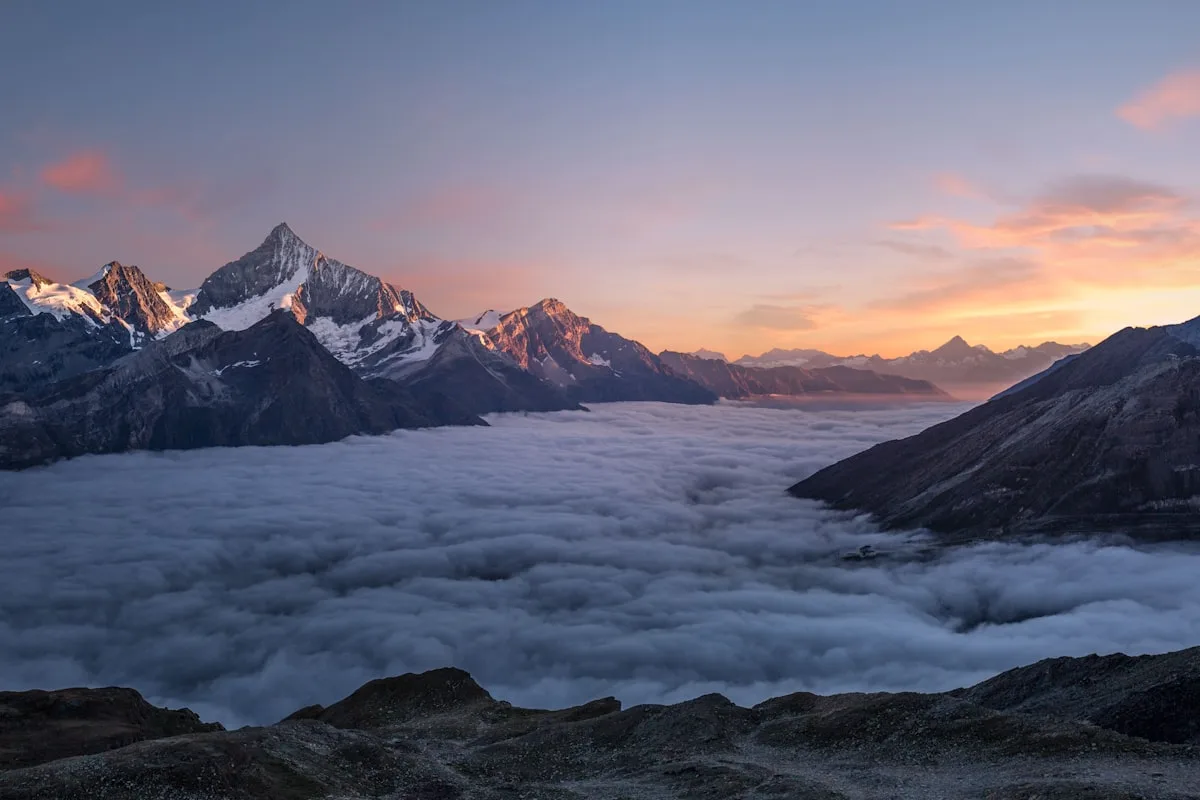
Picture this: you’re gliding 800 meters above the emerald lakes of Thun and Brienz, the Eiger, Mönch, and Jungfrau peaks towering around you like ancient giants. Your pilot asks if you want to try some aerial tricks, but honestly? You’re too mesmerized by the cinematic landscape unfolding below. This is paragliding Interlaken — and if you’ve never done it before, you’re in for the adventure of a lifetime.
TL;DR — Paragliding Interlaken at a glance
- A standard tandem flight costs CHF 180–199 for roughly 10–20 minutes of airtime.
- Most flights launch from Beatenberg at ~1,350 m, reached by a 20–30 minute bus from Interlaken (transport included).
- No experience or training needed — it’s a tandem flight with a licensed pilot.
- Spring (Mar–May) gives the longest flights; summer is busiest and books out weeks ahead.
- Bring sturdy shoes and a windproof jacket, and get adventure-sports travel insurance — standard policies often exclude paragliding.
⚡ Heads up: This post contains affiliate links. If you book or buy through them, we may earn a small commission — at no extra cost to you. We only recommend stuff we’d actually use ourselves.
What Actually Happens During Your Paragliding Flight
Here’s the reality: almost every Interlaken paragliding experience is a tandem flight with a professional pilot, and you get a short safety briefing before launch. No complex training, no certificates, no prior experience — just show up, run a few steps, and enjoy. From pickup to landing, the whole thing takes about 1.5 hours, with the actual flight being 10–20 minutes of it.
Pickup and transport (20–30 minutes). You’ll be driven by minibus from central Interlaken up to the Beatenberg launch area. The ride itself is scenic — winding through Swiss villages while your pilot explains what to expect and answers nervous first-timer questions.
Safety briefing and gear setup (15 minutes). Your pilot checks wind conditions, explains the takeoff, and fits you with your harness and helmet. The “training” really just amounts to one instruction: run a few steps forward when told, and don’t sit down until you’re in the air.
Ready to book your flight to Switzerland? Compare airlines and snag the best deals on Aviasales before spring prices spike.
Takeoff (30 seconds). Take a few steps with your pilot down a gently inclining slope — and suddenly you’re airborne, soaring hundreds of meters above Interlaken. It’s surprisingly gentle — no dramatic cliff jumps like you see in movies, just a smooth lift as the wing catches the air.
The flight (10–20 minutes). You’ll have views over both Lake Thun and Lake Brienz, the surrounding mountain peaks, and alpine villages far below. Want more excitement? Let the pilot throw in some wingovers and spirals. Prefer to soak it in? Just gaze ahead and breathe — most first-timers choose this.
Landing. After 10 to 20 minutes you land softly on a field in the center of Interlaken — within walking distance of the hotels, the Höhematte park, and the train stations.
Getting to Interlaken: Flights and Transfers
Interlaken has no airport of its own, so almost everyone arrives through one of three Swiss gateways and finishes the trip by train or transfer. The good news: Swiss rail is famously direct, and the final stretch into Interlaken is a sightseeing ride in its own right.
| Arrival airport | Distance to Interlaken | By train |
|---|---|---|
| Zurich (ZRH) | ~120 km | ~2 hours, 1 change |
| Bern (BRN) | ~60 km | ~50 minutes, direct |
| Geneva (GVA) | ~220 km | ~3 hours, 1–2 changes |
Zurich is the most common choice for international visitors thanks to its flight connections. If you’d rather skip the rail puzzle with luggage after a long flight, a door-to-door transfer takes the stress out of arrival day. Need a ride from Zurich, Bern, or Geneva airport? Book in advance with Welcome Pickups and step straight into a waiting car. Flying a less common route to save money? Kiwi.com specialises in multi-stop connections that bigger search engines often miss.
Launch Sites: Beatenberg vs Grindelwald
Beatenberg (Most Popular)
The main launch site sits at roughly 1,350 m above sea level below the Niederhorn, near Amisbühl. You walk a few steps on slightly sloping terrain — and you’re airborne. This is where most Interlaken operators launch from, and it’s the easiest option for first-timers.
- Views of the Eiger, Mönch, and Jungfrau from launch — plus Lake Thun directly below and Lake Brienz to the east
- In clear weather: a wide panorama from Lake Thun all the way to the Bernese and Central Alps
- Altitude difference during flight: approximately 800 meters
- Pure flight time varies between 10 and 20 minutes depending on thermals
- Total experience time including transport: approximately 1.5 hours
Grindelwald Alternative
Grindelwald offers a different angle on the Swiss Alps — towering peaks and pristine valleys with its own dramatic character, right beneath the north face of the Eiger. Flight time also ranges between 10 and 20 minutes depending on thermals, with a total experience time of around 1.5 hours. Choose Beatenberg for the classic two-lakes panorama, or Grindelwald if you want to fly closer to the high peaks.
If your flight to Switzerland gets delayed more than 3 hours, you could claim up to €600 in compensation — Compensair handles the paperwork for you.
Pricing Breakdown 2026
Tandem prices in Interlaken are remarkably consistent across operators, so you’re rarely choosing on cost alone. Here’s what you’ll actually pay in 2026:
| Flight option | Duration | Price (CHF) |
|---|---|---|
| Standard tandem flight | 10–20 min | 180–199 |
| Double Airtime (extended) | 30–40 min | ~270 |
| Photo/video package add-on | — | +40 |
The photo/video add-on is worth considering: your phone stays zipped away during the flight, so the pilot’s wing-mounted camera is the only way to bring home footage. Money-saving tip: many operators offer combination packages — pair your paragliding flight with a jet-boat trip on Lake Brienz or a second activity and save noticeably versus booking each separately.
Best Season to Go: Month-by-Month
Spring (March–May): Longest Flights
The temperature differences between air layers create the strongest thermals in spring. If you want maximum airtime — or you’re considering the Double Airtime upgrade — spring is your season. Lush green valleys framed by snow-capped peaks make for stunning views.
Summer (June–August): Warm and Comfortable
June through August is peak season — warm enough to fly in shorts and a t-shirt on the warmest days. The trade-off: July and August book out fast, so reserve well in advance if you’re visiting during peak summer, and build a spare day into your plans for weather.

Autumn (September–November): Gentle and Clear
Autumn brings gentle thermals for a smoother, more relaxed flight, combined with excellent visibility over the alpine landscape. It’s a great option if you prefer a calm, scenic glide over acrobatics — and crowds thin out after the summer rush.
Winter (December–February): Snow-Covered Magic
Crystal-clear cold air and snow-covered mountain peaks create a dramatic backdrop. Some operators offer winter discounts. Dress warmly: it’s noticeably colder up there even on sunny days, and your hands feel it first.
What to Wear and Bring
Dressing right makes a real difference at altitude. Here’s what you need:
- Sturdy shoes with ankle support — sneakers or hiking boots. Absolutely no sandals or slippers.
- Warm layers — a zipped windproof jacket is essential; it’s colder at altitude even on warm days.
- Gloves — your hands will thank you, especially in spring and autumn.
- Long pants — shorts are fine in midsummer, but otherwise bring trousers.
What the operator provides: helmet, harness, gloves, and all safety equipment. If you don’t have appropriate shoes or a jacket, most operators lend them free of charge — just ask when you book.
Camera policy: small digital pocket cameras with a wrist strap are usually permitted. Selfie sticks and handheld phones are not allowed during the flight itself, for the obvious reason that nobody wants to chase a dropped phone down a mountain.
Safety: What First-Timers Need to Know
Paragliding as a tandem flight with a licensed pilot is a very safe activity — but like any outdoor sport, a small residual risk exists. Here’s how operators manage it:
- All pilots are licensed and experienced; equipment is regularly maintained and inspected
- Flights only take place in stable weather, reassessed throughout the day
- Each pilot carries a reserve parachute
- If weather cancels your flight, operators reschedule or refund in full
Physical requirements: passenger weight limits vary by operator and time slot — many cap standard flights around 100 kg, while early-morning departures are often limited to 80 kg, so confirm when booking. The minimum is about 25 kg, and children from age 5 are accepted by most operators. All guests should be in reasonable health and able to run a few steps (around 40 meters) on takeoff and landing.
One non-negotiable: travel insurance that specifically covers adventure sports. Standard policies often exclude paragliding entirely. EKTA offers solid plans from around €30 that cover adventure activities — and that matters here, because Swiss mountain rescue, including helicopter evacuation, can easily run 10,000+ CHF without cover.
Smart Booking Tips for 2026
- Book as early in your trip as possible to leave room for weather reschedules
- Cancellation is usually free if you give at least 24 hours notice
- If the operator cancels due to weather, you’ll get a full refund or reschedule
- Arrive at the meeting point 10–15 minutes before your scheduled time — late arrivals typically forfeit their flight with no refund
- Small bags can usually be stored in the pilot’s backpack; larger luggage is held at check-in and returned after landing
Alternative Adventures If Weather Cancels Your Flight
Bad-weather days happen, and paragliding is the first thing to get grounded. Interlaken has solid backup options:
- Skydiving from up to 18,000 ft (5,500 m) — among the highest helicopter skydives in Switzerland, with a long freefall and unmatched Alps views
- White-water rafting on the Lütschine or Aare rivers
- Canyoning in the surrounding gorges
- Harder Kulm viewpoint, Lake Brienz and Thun cruises, or a day trip to the waterfalls of Lauterbrunnen
Frequently Asked Questions
How much does tandem paragliding cost in Interlaken in 2026? A standard tandem flight costs between CHF 180 and CHF 199 depending on the operator and season. Extended Double Airtime flights (30–40 minutes) cost around CHF 270, and photo/video packages add CHF 40. Prices may vary slightly with group bookings.
What’s the best time of year to go paragliding in Interlaken? Spring (March–May) offers the strongest thermals and longest flight times. Summer is the most comfortable weather-wise but books up fastest. Autumn is ideal for a gentler, more scenic flight, and winter offers dramatic snow-covered views with fewer crowds.
Is paragliding safe for first-timers? Yes — tandem flights with licensed pilots are very safe. Pilots carry reserve parachutes, equipment is regularly inspected, and flights are only cleared when weather conditions meet strict safety standards. Your pilot will fully brief you before launch.

Is there a weight limit for paragliding in Interlaken? Yes. Most operators cap standard tandem flights at around 100 kg, while early-morning slots are often limited to 80 kg. The minimum is roughly 25 kg, and children from age 5 can usually fly. Always confirm the exact limit with your operator when booking.
What should I wear for paragliding in Interlaken? Sturdy ankle-support shoes are mandatory — no sandals. Wear warm layers including a windproof jacket and gloves regardless of ground temperature, since it’s noticeably colder at altitude. If you don’t have suitable gear, most operators lend jackets and boots free of charge.
Where do paragliding flights launch from in Interlaken? Most flights launch from Beatenberg at about 1,350 m above sea level, reached by bus from Interlaken with transport included. Grindelwald is an alternative launch site offering different views of the Bernese Alps. Both options land in or near central Interlaken.
Also Worth Reading
Planning more adventures in Europe? Check out these guides:
- 7 Epic Adventure Sports in Split, Croatia — the Adriatic’s best thrills, from cliff jumping to zip-lining
- Canyoning Split Croatia: Complete First-Timer’s Guide — everything you need for the Cetina River canyon
The Bottom Line
Paragliding in Interlaken isn’t just an activity — it’s a memory that lingers. The combination of Switzerland’s dramatic landscape, expert pilots, and year-round flying conditions makes it one of Europe’s unmissable adventure experiences. Book early, dress appropriately, sort your adventure-sports insurance, and prepare for the most spectacular 20 minutes of your Swiss trip.
Craving more vertical thrills in the same town? See our Skydiving in Interlaken 2026 cost guide to find out if the freefall is worth it. Your Instagram feed will thank you later — but honestly, some moments are too beautiful for photos anyway.