You don’t need experience. You don’t need expensive gear. You just need three days and a willingness to jump in. Koh Tao — Thailand’s small Turtle Island — issues more scuba certifications than almost anywhere else on the planet, and for good reason: warm water, insane visibility, and prices that make getting certified here a no-brainer. This guide covers everything a first-timer needs — the best schools, actual costs, the right time to go, and what marine life to expect when you finally descend below the surface. If Koh Tao sparks a taste for adrenaline, our first-timer’s paragliding guide is a natural next adventure.
⚡ Heads up: This post contains affiliate links. If you book or buy through them, we may earn a small commission — at no extra cost to you. We only recommend stuff we’d actually use ourselves.
Before anything else: sort your travel insurance. EKTA offers plans that cover diving activities from around €30 — worth every cent before you get in the water.
Why Koh Tao Is the World’s Best Place to Learn Diving
Koh Tao sits in the Gulf of Thailand with conditions that feel almost unfair compared to other dive destinations. Water temperature stays between 27–30°C year-round, visibility averages 10–30 meters on a normal day, and over 25 established dive sites are reachable by short boat rides from the beach.
The island’s dive schools maintain a maximum of 4 students per instructor — standard practice here, not a premium upgrade. That ratio means personalized feedback, real skill development, and a much safer first experience than crowded resort courses elsewhere.
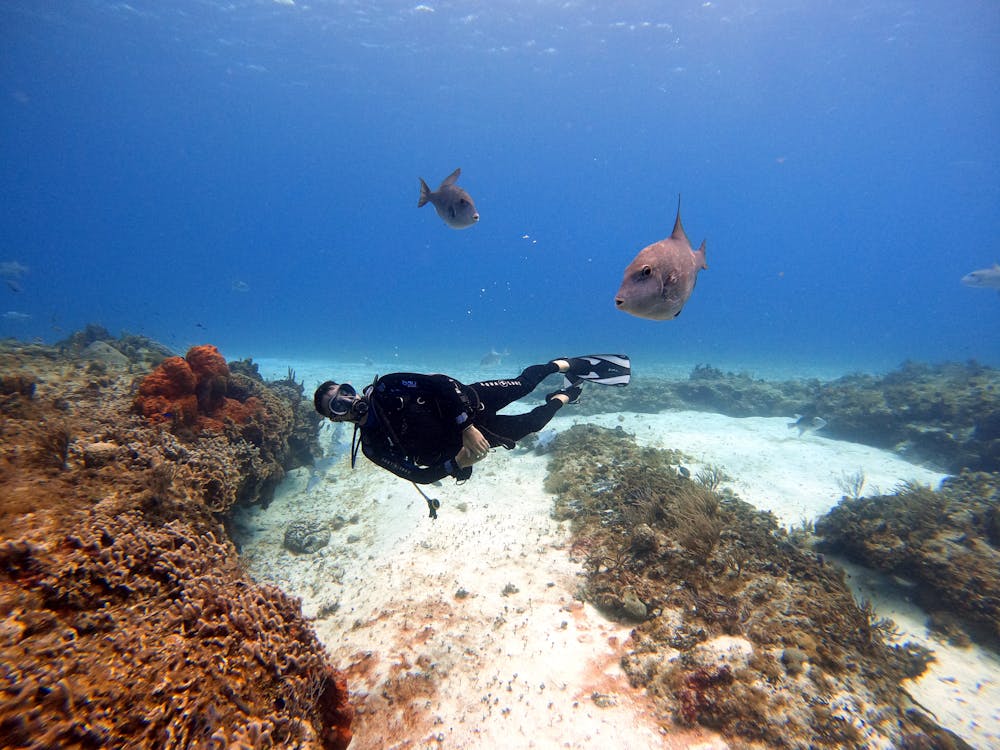
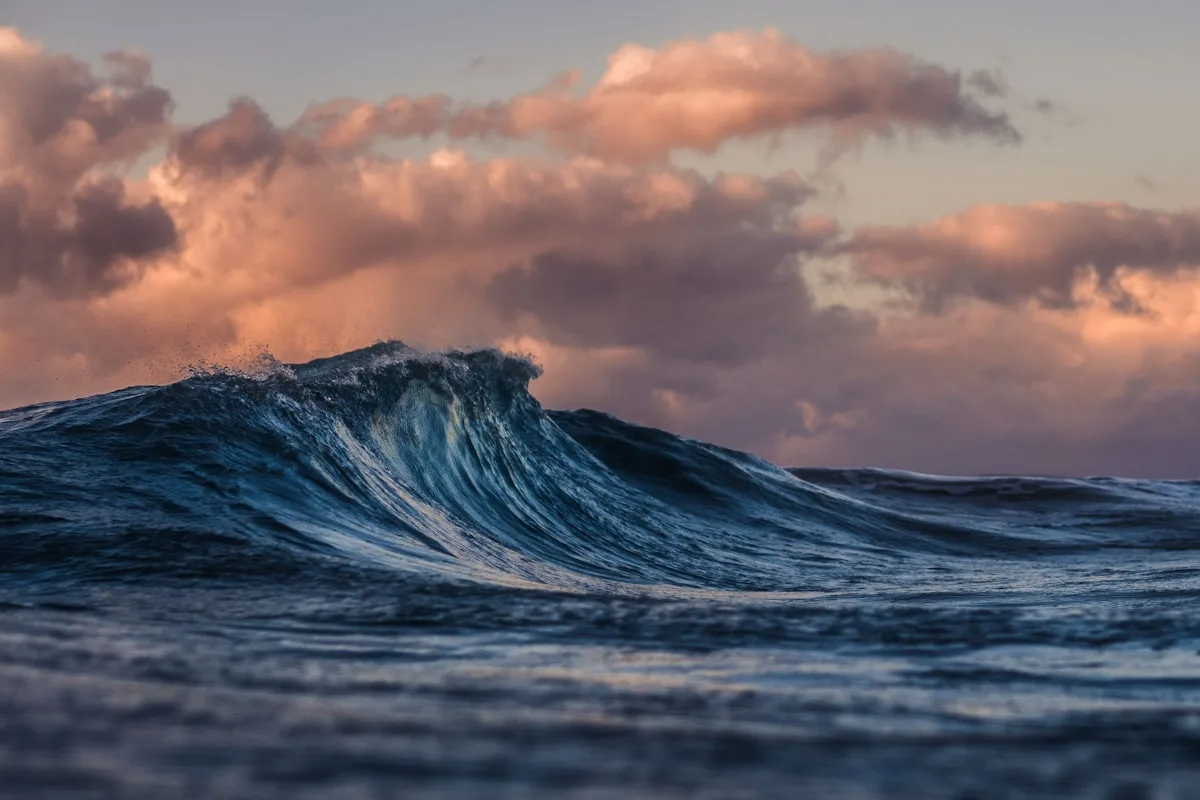
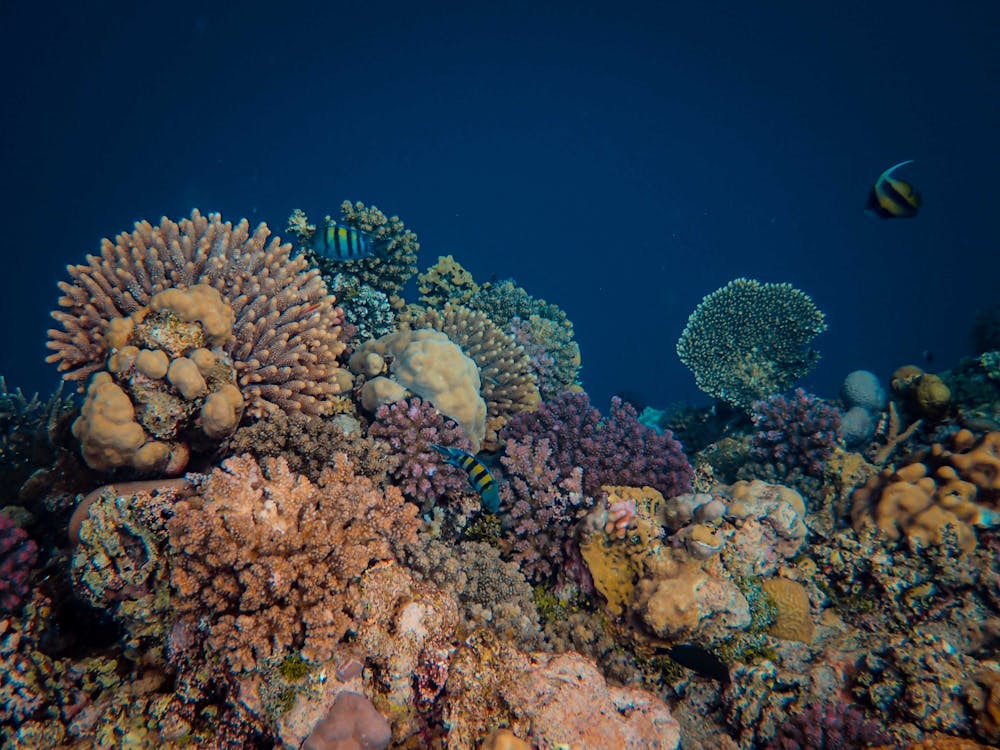
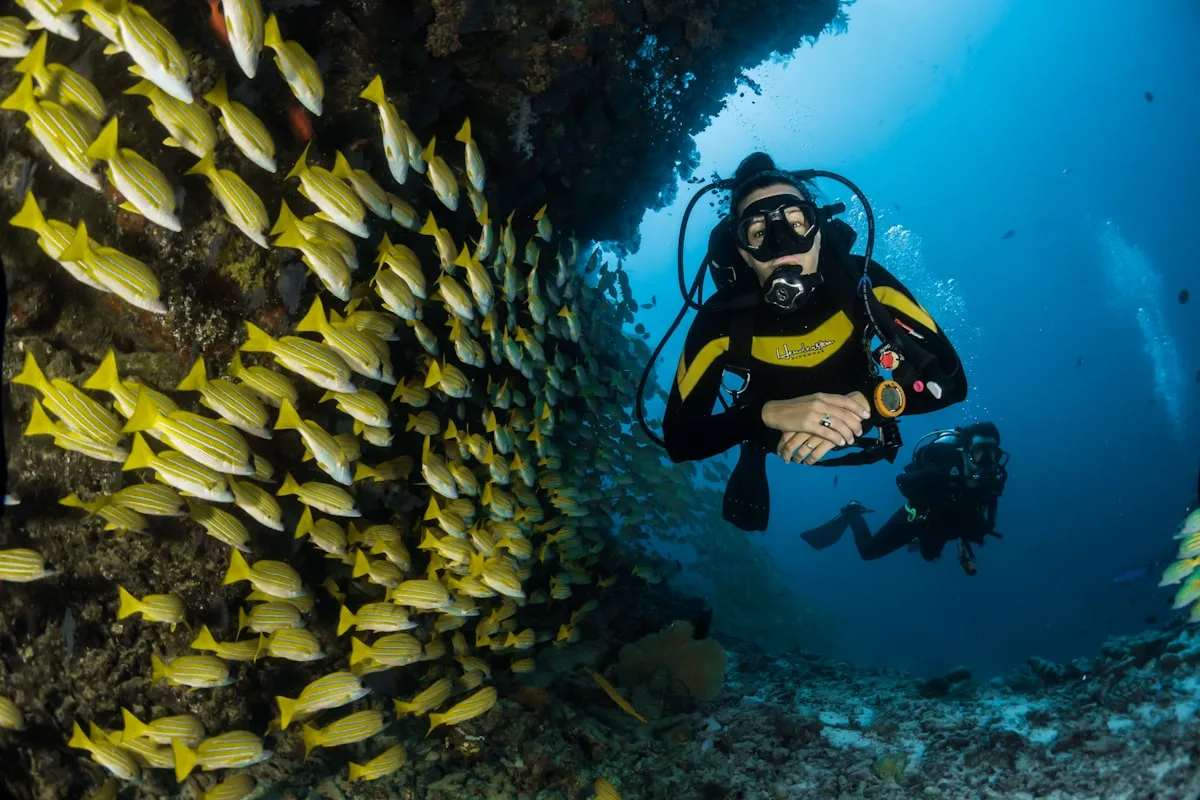
What makes Koh Tao genuinely special is the marine life. Whale sharks, blacktip reef sharks, sea turtles, blue-spotted rays, and vibrant coral gardens are not highlights — they’re the everyday backdrop to your training dives. Other destinations promise this. Koh Tao delivers it reliably.
To get there cheaply, search flights to Bangkok or Koh Samui early on Aviasales — fares fluctuate a lot and booking 6–8 weeks out makes a real difference.
Top 3 Dive Schools for Beginners
Koh Tao has over 70 dive schools. Most are fine. These three consistently come out on top for first-timers specifically.
Crystal Dive — Best All-Round Experience
Crystal Dive runs a tight operation: organized, friendly instructors, small groups, and a beachfront pool for confined water training. Reviews consistently highlight that even other dive school staff recommend Crystal when asked for an honest opinion. Their instructors are technically solid and approachable — the kind you end up having a beer with after the dive briefing.
Big Blue Diving — Best for SSI Certification
Big Blue is Thailand’s most recognized SSI dive center and one of the island’s longest-running schools. They’ve invested heavily in equipment, boat quality, and instructor training. Their marine conservation focus means you get educated about reef protection alongside dive skills — something that matters if you plan to keep diving after certification.
Koh Tao Divers — Best for Long-Term Divers
The original dive school on the island, operating since 1987. Koh Tao Divers discovered many of the sites you’ll be diving during your course. Their Nordic approach prioritizes quality over throughput — smaller cohorts, more individual attention, and an excellent range of post-certification specialty courses if you catch the bug.
PADI vs SSI: Which Certification Should You Choose?
Both are globally recognized. Both follow identical safety standards. The real difference matters most if you ever want to teach diving professionally.
- PADI — the bigger global brand, more widely recognized for professional-level careers. PADI instructors can operate independently, which matters for future work flexibility.
- SSI — rapidly growing (50% market share on Koh Tao), fully digital coursework via free app, slightly greener footprint. Instructors must teach through an SSI-registered shop.
- RAID — smaller agency, but allows dives to 20m depth vs 18m for PADI/SSI — a slight advantage if that matters to you.
- Pricing — all three agencies price courses similarly: 9,000–11,000 THB ($270–$330 USD) for Open Water.
Practically: choose your school first based on vibe and reviews, then take whichever certification they specialize in. The underwater world doesn’t read your certification card.

Open Water Certification: What Happens Day by Day
The Open Water course runs 3–4 days. It’s designed for students as young as 10, so the theory side is genuinely manageable. You’ll need to swim 200 meters and tread water for 10 minutes — that’s the fitness bar.
Day 1: Theory and pool training. You’ll meet your group (max 4 students), watch course videos, work through chapters with quizzes, then head into shallow water to practice your first underwater skills in a controlled environment. No pressure, no depth.
Day 2–3: Open water dives. First two dives go to 12 meters maximum under close instructor supervision. You’ll demonstrate skills, then get actual bottom time to explore. Final two dives go deeper — up to 18 meters — at sites 45 minutes from shore. This is where it clicks.
What you’ll learn:
- Equipment assembly, fitting, and pre-dive safety checks
- Underwater communication using hand signals
- Buoyancy control — the most critical skill for comfortable diving
- Emergency procedures: mask clearing, regulator recovery, controlled ascents
- Underwater navigation basics and environmental awareness
After certification: you can dive anywhere in the world to 18 meters. Most people immediately start thinking about Advanced Open Water (5 more dives, goes to 30m).
Real Costs: What You’ll Actually Pay in 2026
Koh Tao is the cheapest place in the world to get a globally recognized certification without cutting corners on quality.
| Course | Price (THB) | Price (USD approx.) |
|---|---|---|
| Discover Scuba (1 ocean dive, no cert) | 2,500–3,500 | $70–$100 |
| Open Water Certification | 9,000–11,000 | $270–$330 |
| Advanced Open Water | 8,500–10,000 | $230–$280 |
| Rescue Diver | 10,000–14,000 | $295–$415 |
Course prices include all equipment, materials, and certification processing — no surprise extras. Accommodation near dive schools ranges from 800 THB/night (fan bungalow) to 1,500 THB/night (air-con). Most schools offer package deals combining accommodation with courses for additional savings.
Getting from the ferry pier to your school is easy when you book transfers in advance. Welcome Pickups offers fixed-price transfers from Chumphon and Surat Thani piers — no haggling, no surprises on arrival day.
No direct flights from your city? Kiwi.com specializes in multi-stop routes that standard search engines miss — often significantly cheaper for less obvious origin cities.
Enjoying This?
Get more guides like this — plus flight deals — sent straight to your inbox.
Best Time to Dive in Koh Tao
Koh Tao is diveable year-round, but conditions vary meaningfully by season.
March–May: Peak Season for Beginners
The optimal window. Visibility reaches 25–30 meters, seas are calm and predictable, water temperature stays at 28–30°C. This is also whale shark season — sightings at Chumphon Pinnacle, Southwest Pinnacle, and Sail Rock are most frequent in April and May. First-timers who want the full Koh Tao experience should aim for this window.
September–October: Best Visibility of the Year
Often clearer water than peak season, with fewer crowds and slightly lower prices. The trade-off is slightly less predictable weather, but conditions are generally excellent. Good value for flexible travelers.
June–August: Decent Mid-Season
Visibility ranges 10–25 meters depending on recent weather. Diving is still very good — just less consistent than peak months. August can actually bring surprisingly calm conditions and clear water.
November–February: Budget Season
More rain, possible dive cancellations, and rougher seas. Lowest prices and fewest crowds. Experienced divers find unique species during this period, but for beginners on a tight schedule, the unpredictability adds risk to your planning.
Marine Life You’ll Actually Encounter
Koh Tao punches well above its size when it comes to marine biodiversity. Here’s what realistically awaits during Open Water training dives:
- Whale sharks — most frequent April–May at Chumphon Pinnacle and Southwest Pinnacle, but surprise appearances happen year-round. The biggest fish in the ocean, harmless filter-feeders up to 12 meters long.
- Sea turtles — both Green and Hawksbill turtles frequent beginner dive sites regularly. Shark Bay and Twins are reliable spots even during training dives.
- Blacktip reef sharks — spotted in large numbers around many training sites. Beautiful to watch, completely harmless, and more afraid of you than you are of them.
- Blue-spotted ribbontail rays — resting on sandy patches between coral formations. One of the most visually striking encounters for new divers.
- Tropical reef fish — butterflyfish, angelfish, parrotfish, triggerfish in abundance at every site. Your intro dives will feel like swimming through a wildlife documentary.
Top Beginner Dive Sites in Koh Tao
Your dive school will choose sites based on conditions and your skill level. These four appear most often in Open Water training programs:
- Shark Bay — shallow (5–20m), protected, excellent for skills practice. Blacktip reef sharks and sea turtles are common despite the beginner-friendly depth.
- White Rock — great visibility, gradual depth changes from 5–15m, abundant marine life including occasional whale shark sightings. A confidence-builder.
- Japanese Gardens — stunning coral formations in a well-organized underwater layout. Easy navigation, 14m maximum depth, thick with tropical fish species.
- Twins — twin rock formations at 14m descending to 35m. Pelagic species including trevally and mackerel, plus a known whale shark hotspot even at shallower depths during training dives.
Safety: How to Choose a Good School
Most schools on Koh Tao are legitimate. A few cut corners. Here’s how to tell the difference before committing your money and safety.
Green flags:
- Maximum 4 students per instructor — non-negotiable standard for quality schools
- Modern, regularly serviced equipment with visible maintenance records
- Thorough safety briefings before every single dive, not just the first
- Emergency oxygen and first aid kit on every boat
- Strong recent reviews on TripAdvisor, Google, and diving forums
Red flags:
- Prices significantly below the 9,000–11,000 THB market rate — someone is cutting something
- Pressure to complete the course faster than the standard 3–4 days
- Groups larger than 4 students per instructor
- Equipment that looks worn, poorly fitted, or inconsistently maintained
Visit the school in person before booking if possible. Meet the instructors. Check if the equipment room is organized. Trust your instincts — you’re trusting these people with your first experience underwater.
Frequently Asked Questions
How much does Open Water certification cost in Koh Tao?
Expect to pay 9,000–11,000 THB ($270–$330 USD) for a full Open Water certification including all equipment, course materials, and certification fees. This is one of the most affordable prices globally for a quality, internationally recognized dive certification.
What’s the best time of year to learn diving in Koh Tao?
March to May is the sweet spot for beginners — visibility hits 25–30 meters, seas are calm, and whale shark sightings peak in April and May. September to October offers equally clear water with fewer crowds. Avoid November to February if you have a fixed schedule and can’t handle possible cancellations.
Which dive schools are best for beginners in Koh Tao?
Crystal Dive, Big Blue Diving, and Koh Tao Divers all have strong reputations specifically for beginner courses. Crystal Dive is consistently recommended for its instructor quality and organized approach. Big Blue suits those who prefer SSI certification. Koh Tao Divers is ideal if you’re planning to continue diving long-term.
Do I need any experience before starting an Open Water course?
None at all. You need to be able to swim 200 meters and tread water for 10 minutes — that’s the only physical requirement. The academic part of the course is designed for students as young as 10, so theory won’t be an obstacle. Your instructor handles everything else from day one.
Is scuba diving in Koh Tao safe?
Yes, when you choose a reputable school. Koh Tao training standards are high across established schools — small groups, quality equipment, and thorough safety briefings are standard. Avoid schools offering prices significantly below market rate and always check recent reviews before booking.
The Bottom Line
Koh Tao is the easiest place in the world to go from zero diving experience to internationally certified diver — in three days, for under $330, surrounded by whale sharks and sea turtles. It’s not hype. The combination of warm water, excellent instruction, and jaw-dropping marine life makes first dives here genuinely life-changing for a lot of people.
Sort flights early on Aviasales, cover yourself with EKTA travel insurance that includes diving, and book your pier transfer through Welcome Pickups so arrival day is stress-free. Everything else, your dive instructor will handle underwater.
Never Miss a Deal
Get the best travel tips, festival guides & flight deals straight to your inbox.

Gbuska is the founder and lead writer at WanderFunTrip. What began as one too many 3 a.m. festival fields and a $40 flight booked on a whim turned into a full-time habit of testing adventure trails, party cities, and adults-only resorts firsthand — then writing up what actually worked (and what didn't). Every guide here starts from a real trip or a real booking, never a press release. Usually somewhere between a departures board and the next cliff jump.