⚡ Heads up: This post contains affiliate links. If you book or buy through them, we may earn a small commission — at no extra cost to you. We only recommend stuff we’d actually use ourselves.
By the WanderFunTrip editorial team — updated September 2026. Door prices, opening hours and line-ups change constantly in Berlin; every figure below is an indicative range, so confirm on the venue’s own site or its Resident Advisor club page before you build a night around it.
TL;DR: Berlin is one of the easiest cities in the world to rave sober, because the culture is built around the music and the length of the party rather than around bar service. Weekend floors run 12–24+ hours, nobody polices what’s in your cup, Club Mate and alkoholfrei beer sit behind every bar, and the camera-sticker door policy removes the pressure to perform. Budget roughly €30–50 for a full alcohol-free night — usually around half of what the same night costs with drinks, as of September 2026.
If your mental image of clubbing is three hours of shouting over a sound system while a bartender ignores you, Berlin will confuse you in the best possible way. The city’s dancefloors run on a different clock. Doors open late, the peak often lands somewhere around Sunday afternoon, and the people who look most locked into the music are frequently the ones holding a bottle of water. That isn’t a wellness slogan — it’s just arithmetic. Twelve hours into a party, alcohol is a liability, and everybody on the floor knows it.
Which makes Berlin a genuinely good place to try sober clubbing for the first time. Whether you’re fully alcohol-free, in recovery, doing a mindful-drinking experiment, or simply unwilling to donate a day of a three-day city break to a hangover, this guide covers where to go, what to order, what it costs, how the door and cloakroom actually work, and how to get home at 6 a.m. without a taxi surprise.
[IMAGE: Berlin Friedrichshain — Spree riverside and Oberbaumbrücke at dawn, landscape]
Can you actually go clubbing sober in Berlin?
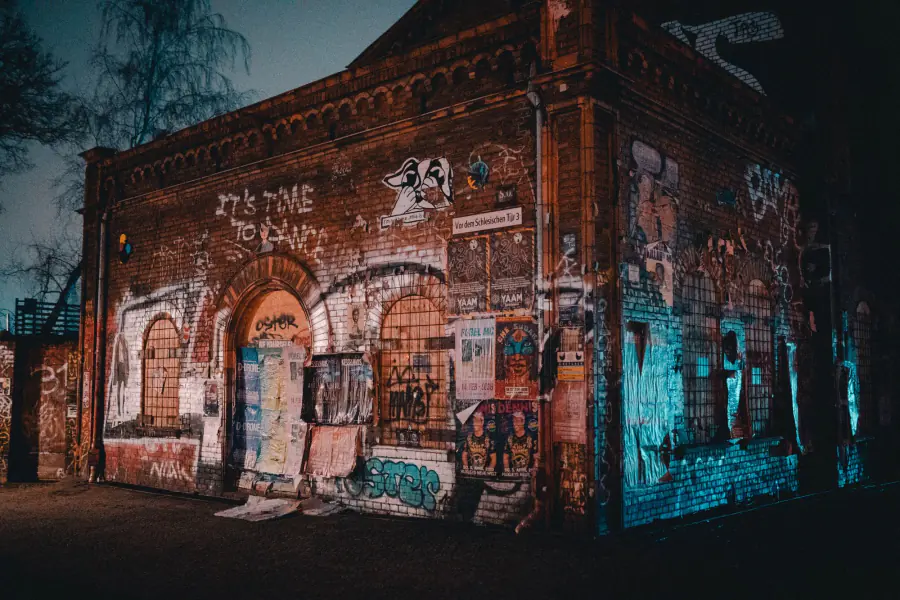
Yes — and it’s arguably easier here than in almost any other European capital, mainly because of how long the parties run. A big Berlin techno club doesn’t do a four-hour night with a 3 a.m. cut-off; the flagship weekend venues advertise open-ended programmes that start on Friday or Saturday night and finish somewhere on Sunday or Monday. When a party lasts that long, heavy drinking stops being the default and starts being the thing that ends your night early. Locals pace themselves: dance, break, sit in the courtyard, eat something, come back. Sobriety just sits at one end of that same spectrum, not outside it.
The second reason is the phone policy. Several of Berlin’s best-known techno venues — Berghain and Tresor among them — put stickers over your camera lenses at the door and ban photography inside. It sounds trivial. In practice it deletes the entire performance layer of nightlife: nobody is filming a story of themselves holding a drink, so nobody feels watched for not holding one. There’s no “why aren’t you drinking?” interrogation because there’s no audience.
Third, the music is the actual point. Berlin floors are dark, low-lit and oriented toward the booth rather than toward a bottle-service table. Conversation happens in the smoking area, the garden or the chill-out room — not shouted across a bar. If sober nights out have felt boring to you because the only available activity was talking loudly, a Berlin dancefloor fixes that by giving you something else to do for eight hours.
What sobriety doesn’t buy you: a free pass at the door, a discount on the ticket, or immunity from a 7 a.m. energy crash. Those still apply. But the culture itself will not fight you.
[IMAGE: Berlin Kreuzberg — industrial club exterior with queue on Köpenicker Strasse, landscape]
Where should you go sober clubbing in Berlin?
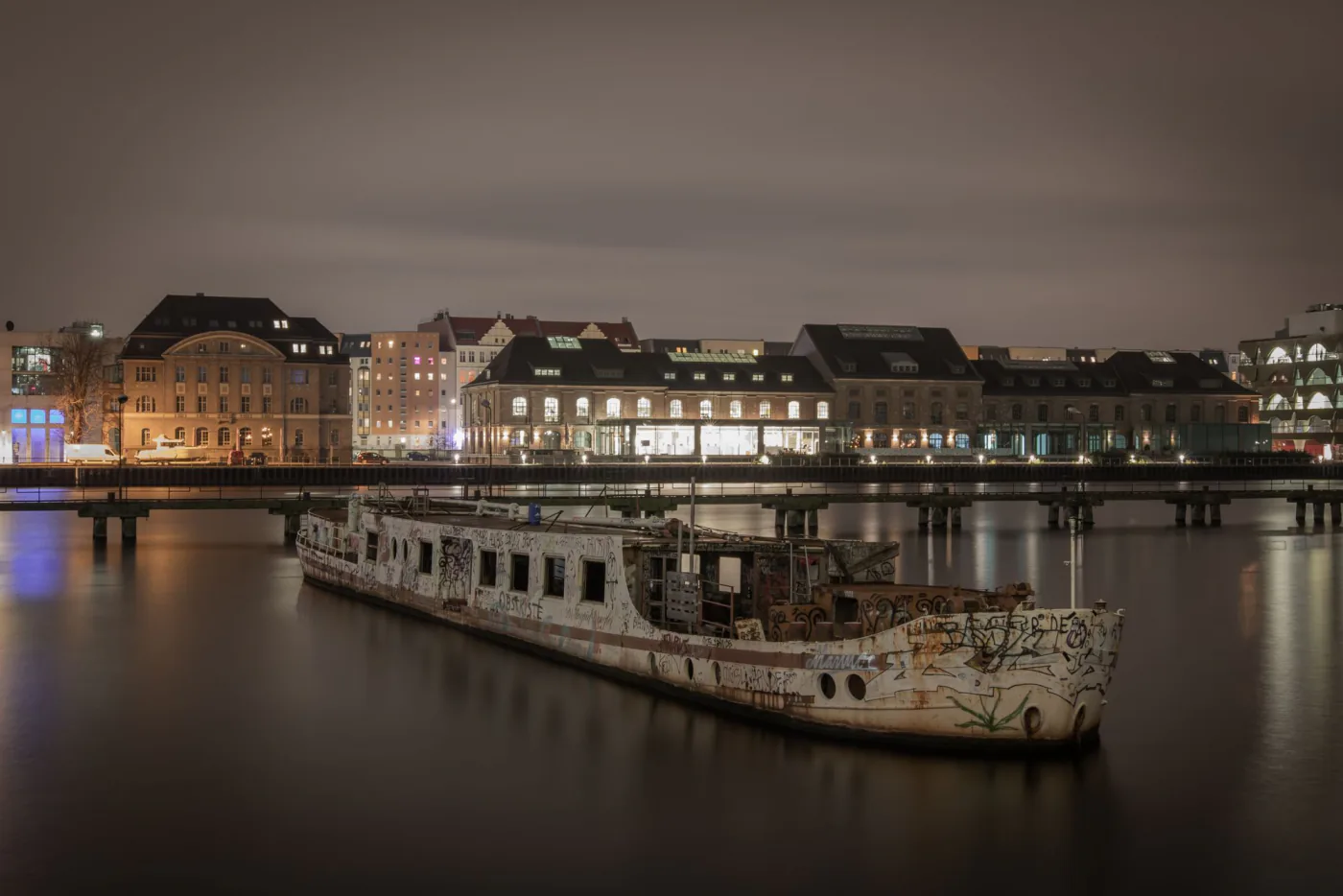
Start with long-format techno clubs, open-air garden clubs and daytime rooftop floors rather than late-night cocktail bars, because those are the rooms where not drinking is invisible. Berlin’s club map shifts constantly — venues close, move and change concept, and several long-running institutions have shut in recent years — so treat any name as a starting point and check the venue’s own channels for your travel dates.
Broadly, four kinds of space work well without alcohol:
- Big-room techno clubs — the Berghain / Tresor / ://about blank tier. Long sets, serious sound systems, total indifference to what’s in your hand. Best if you want to dance for hours and disappear into the music.
- Outdoor and garden clubs — Sisyphos in Lichtenberg and the Spree-side spaces around Holzmarkt are the classic reference points: open-air areas, food stands, odd installations, daylight. The gentlest entry point if long dark rooms feel intense.
- Rooftops and daytime DJ bars — Klunkerkranich above the Neukölln Arcaden and similar Holzmarkt-style spaces run afternoon and early-evening sets. You can leave at a normal hour, clear-headed, having heard great music.
- Explicitly sober events — morning raves, ecstatic dance and conscious-dance sessions, and alcohol-free party formats. These run as pop-ups and monthly series rather than permanent fixtures, so they live on Instagram and event pages. Search “sober rave Berlin”, “ecstatic dance Berlin” and “conscious dance Berlin” for your exact dates, and use RA’s date filter for daytime listings.
One scheduling note worth planning around: Berlin floors do not peak when you’d expect. At weekend-long venues, Saturday midnight is often the emptiest the club will be all weekend, rooms fill noticeably from around 4–6 a.m., and Sunday afternoon is frequently the busiest, best-mixed stretch of the entire party. If you’re sober, arriving Sunday around midday is a completely legitimate strategy: strongest floor, shortest queue, and you’re not asking your body to stay awake all night to earn it.
| Type of night | Typical hours | Sober difficulty | Best for |
|---|---|---|---|
| Long-format techno club | Midnight → Sunday/Monday | Easy | Dancing 6+ hours, zero social pressure |
| Open-air / garden club | Late night → all Sunday | Easy | First-timers, daylight, fresh air, food on site |
| Rooftop / daytime DJ bar | Afternoon → around midnight | Very easy | Sunset sets, leaving at a sane hour |
| Morning rave / ecstatic dance | Approx. 07:00 → midday | Zero — alcohol-free by design | Newly sober travellers, solo travellers, early risers |
| Neighbourhood cocktail bar | Evening → late | Hardest | Skip it, or go for the food instead |
If you’re building a wider city plan around this, our inside guide to KitKatClub Berlin shows how door policy and club etiquette actually work at one of the city’s most selective rooms.
[IMAGE: Berlin Lichtenberg — open-air garden club courtyard with string lights, landscape]
What do you drink at a Berlin club when you’re not drinking?
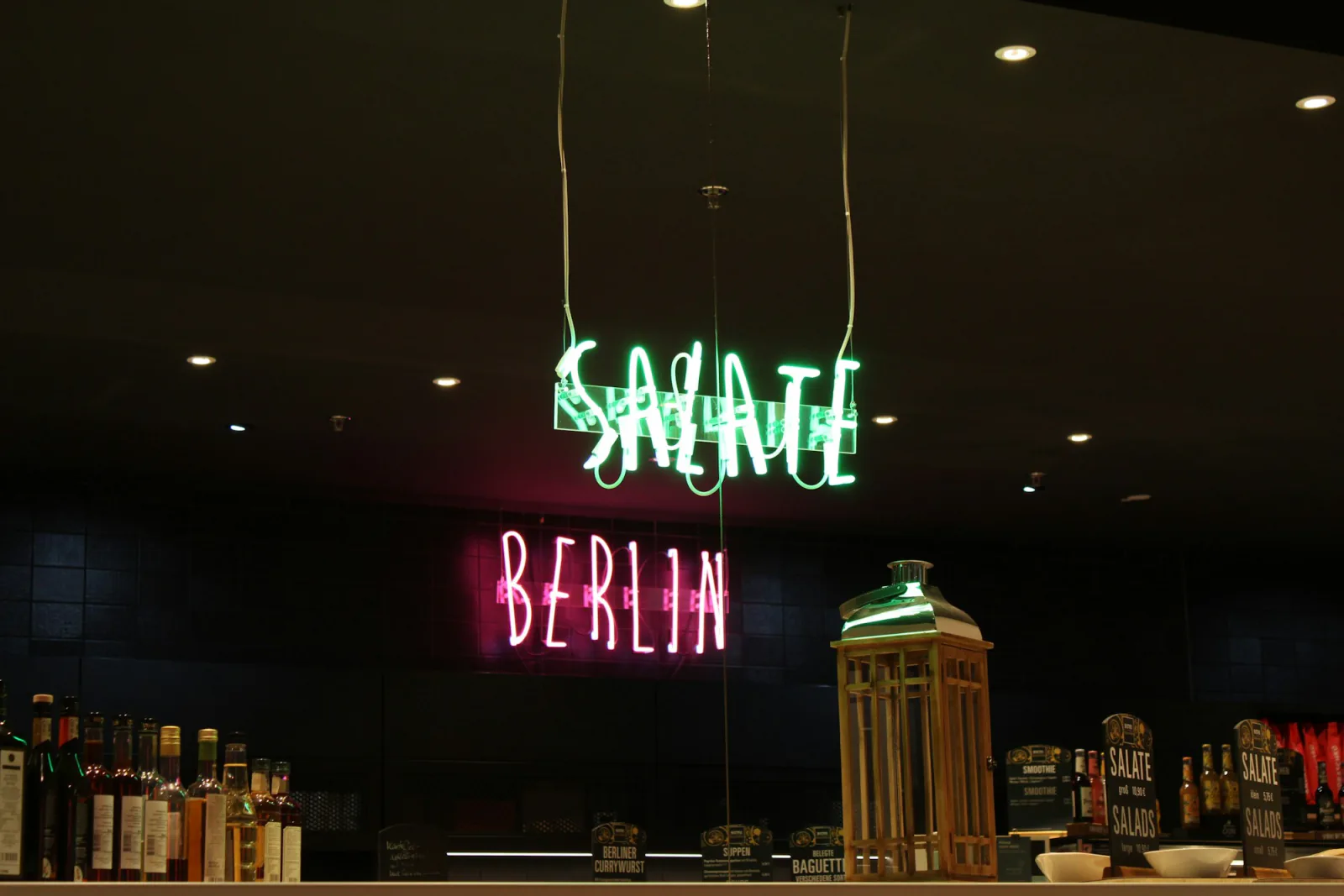
Club Mate, water, and alkoholfrei beer — all three sit behind essentially every Berlin bar, and ordering them raises exactly zero eyebrows. Club Mate is the unofficial house drink of Berlin nightlife: a caffeinated yerba mate soda, barely sweet, faintly bitter, sold at clubs, kiosks and petrol stations across the city. Expect roughly €3–4.50 at a club bar and roughly €1.50–2.50 at a Späti, as of September 2026. Half the room is drinking it at 5 a.m. It’s the most socially frictionless sober order in the city, because it looks and functions exactly like everyone else’s bottle.
Germany also takes alcohol-free beer seriously. Alcohol-free pilsners and wheat beers are mainstream supermarket and bar stock here rather than a niche special request, and isotonic alkoholfreies Weizen is genuinely marketed as a sports recovery drink. If you want the ritual of holding a cold beer without the alcohol, this is the right country. Just say “ein alkoholfreies Bier, bitte.”
Four practical notes for the floor:
- Tap water is usually available, but not always free. Most Berlin clubs will pour tap water at the bar; some charge a small amount and others have a dedicated water tap near the toilets. Ask rather than assume, and carry coins.
- Cash still rules. Many Berlin clubs run cash-only doors, bars and cloakrooms. Bring more cash than you think you need — the nearest ATM at 4 a.m. is rarely close and often charges a fee.
- Watch the caffeine. Club Mate plus an energy drink plus a ten-hour night is a fast route to a jittery, anxious dawn. Alternate every second bottle with plain water.
- Eat mid-night. Bigger venues have food stands, and the döner and currywurst spots near the clubs run absurdly late. A twenty-minute break to eat resets your energy far better than another bottle of anything.
[IMAGE: Berlin Neukölln — late-night Späti storefront with Club Mate fridge, landscape]
What does a sober Berlin night actually cost?
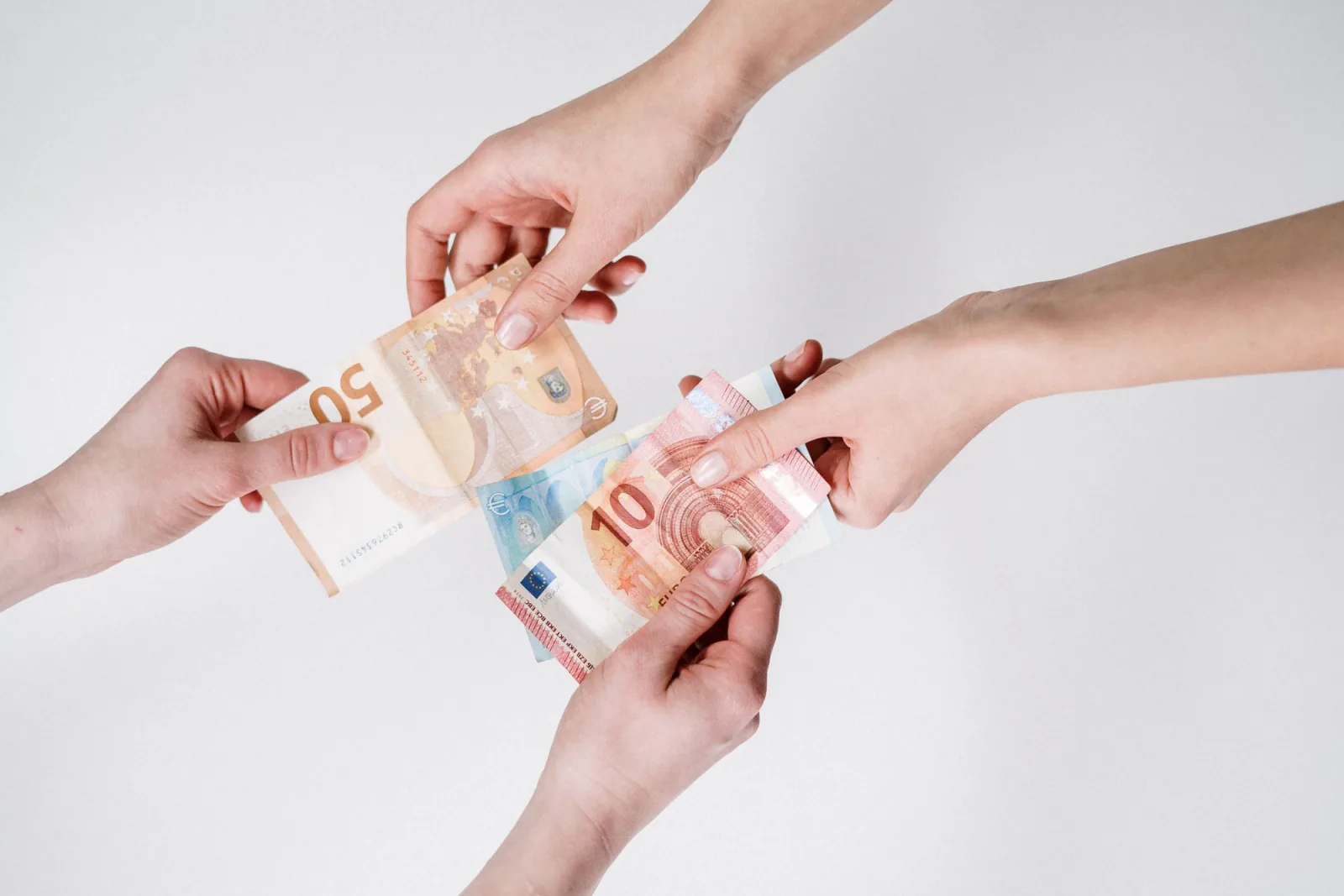
Budget roughly €30–50 for a full sober club night in Berlin, against roughly €70–110 for the same night with drinks, as of September 2026. Entry is the big variable: a midweek or small-room party sits at the bottom of the range, a headline weekend line-up at a flagship venue at the top or above it. Everything else — cloakroom, soft drinks, food, transport — is small and predictable. Exact ticket prices are published per event, so check the specific night rather than trusting any guide’s range, including ours.
| Line item | Approx. cost (Sept 2026) | Notes |
|---|---|---|
| Club entry | €15–30 | Often cash-only; big line-ups run higher |
| Cloakroom | €2–3 per item | Effectively mandatory for coats in winter |
| 3–4 Club Mate / soft drinks | €10–18 | Roughly a third of the same count in cocktails |
| Food break | €5–9 | Döner, currywurst or the in-club food stand |
| Public transport home | Around €4 single (AB) | Buy in the BVG app; check current fare |
| Hangover recovery day | €0 | The real saving on a short city break |
The overlooked line is the last one. On a three-night trip, a wrecked Sunday costs you a third of the holiday you paid to be on. Sober clubbing quietly converts that day back into museum hours, a Spree swim, or a second party.
[IMAGE: Berlin Mitte — U-Bahn platform at night with departure board, landscape]
Enjoying This?
Get more guides like this — plus flight deals — sent straight to your inbox.
How do you get to Berlin — and home from the club at 6 a.m.?
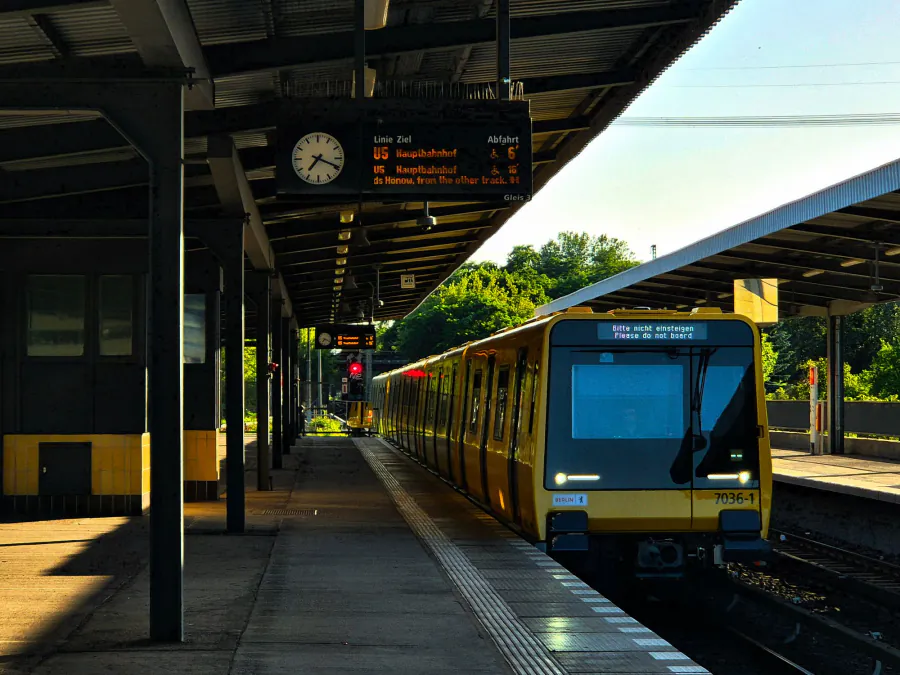
Fly into BER and let the U-Bahn handle the 6 a.m. problem, because Berlin’s metro runs all night on Friday and Saturday. That single fact is what makes sober raving here practical: you’re never negotiating a surge-priced taxi at dawn. On weekends the U-Bahn and S-Bahn run through the night; on weekdays they pause overnight and a dense network of night buses and 24-hour tram lines (the M-lines) covers the gap. Buy tickets in the BVG app before you leave the club so you’re not fighting a machine while a bus pulls away.
Getting to the city in the first place is the one part worth shopping around on. Berlin Brandenburg (BER) is served from most European hubs by both full-service and low-cost carriers, and fares swing hard by day of week — it’s usually worth comparing flights to Berlin across airlines before locking anything in, especially if you can shift your outbound by a day. Flying in Thursday and out Monday tends to beat a rigid Friday–Sunday window on both price and party access, given that Sunday is when the good floors actually peak.
From the airport, the Airport Express (FEX) and S-Bahn lines connect BER to the centre in roughly 30–45 minutes depending on where you’re staying; a ticket covering zone C costs around €5. That’s the cheap option and it’s genuinely fine. If you’re landing late, travelling with a group, or carrying gear for a festival weekend, a pre-booked airport transfer from BER removes the rank-queue lottery at a fixed, known price — the same logic as the U-Bahn, applied to the one leg where public transport is slowest.
Two door details worth knowing before you arrive:
- Go in a small group or alone. Large loud groups are the single most common rejection pattern at Berlin doors. Two people, quiet, is the safe configuration.
- Don’t arrive drunk — which, conveniently, you won’t. Visible intoxication is a standard refusal reason. Being clear-headed is a mild advantage in the queue, not a disadvantage.
[IMAGE: Berlin Brandenburg Airport BER — terminal exterior with signage, landscape]
How do you last ten hours on the floor without alcohol?
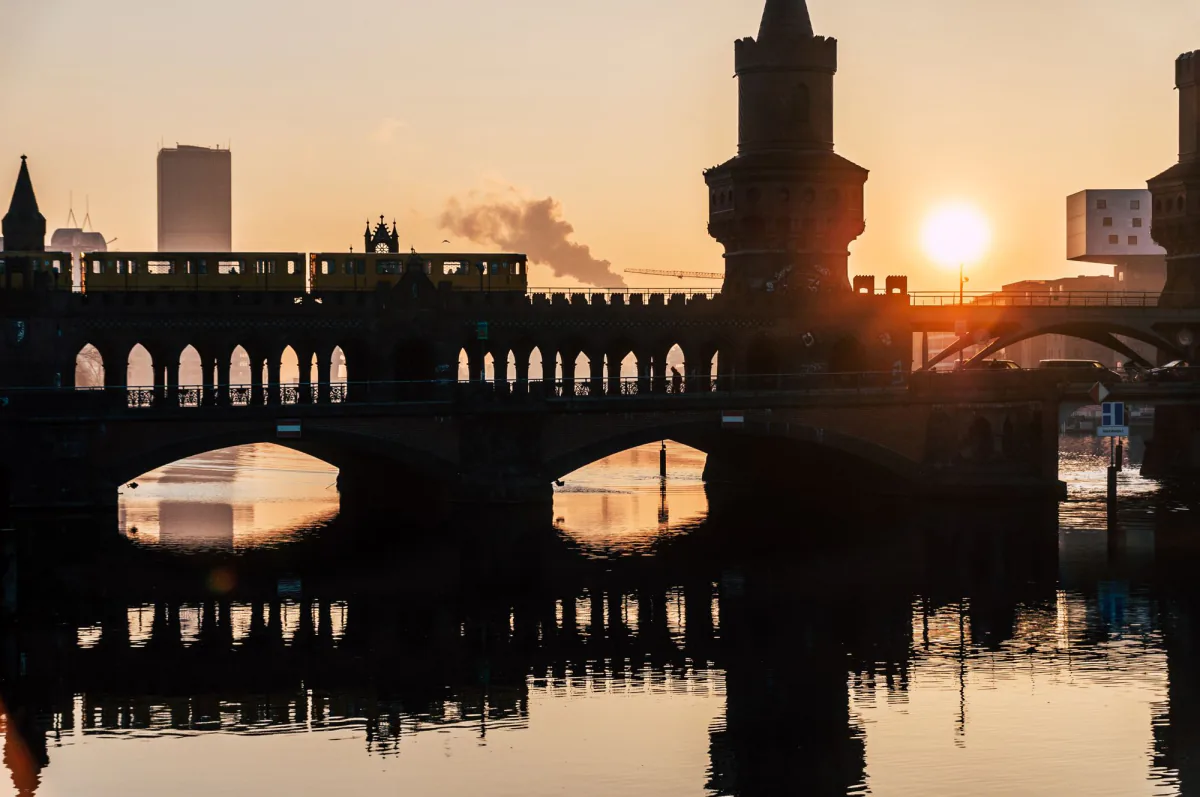
Treat it like endurance sport, not like a night out — pace, fuel, rest, repeat. Alcohol usually functions as an artificial pacing mechanism: you drink, you slow, you stop. Remove it and you need a deliberate rhythm, or you’ll burn bright for three hours and leave at 2 a.m. wondering what the fuss was about.
What actually works on a long Berlin floor:
- Nap before, not after. Sleep from roughly 8 p.m. to midnight. This is standard local practice, not a hack, and it’s the difference between dancing until sunrise and fading at 3 a.m.
- Arrive late and stay long. There is no reward for being early. Rolling in at 3 a.m. and dancing until noon costs the same entry fee and gets a far better room.
- One hour on, ten minutes off. Garden, smoking area, chill-out room — sit down, drink water, let your ears reset. Sober bodies feel volume fatigue sooner because nothing is dulling it.
- Wear earplugs. Filtered musician’s plugs cost around €15–25 and keep the music intelligible at hour nine instead of turning it into mush.
- Eat something salty mid-night. Dancing for hours is genuine cardio; you’re losing salt and water regardless of what’s in your bottle.
- Have an exit plan you’ll respect. Pick a line — “I leave when the sun is properly up” — before you go in. Sober doesn’t mean unlimited, and the floor will happily take another four hours off you.
Dress for the room, too: black, layered, comfortable shoes you can stand in for eight hours. Berlin clubs are physically hot and the cloakroom queue at 6 a.m. is longer than the one at midnight. If you’re building a broader trip around this, our first-timer’s guide to Amsterdam Dance Event covers how to pace yourself across a multi-day electronic weekend.
[IMAGE: Berlin Kreuzberg — sunrise over rooftops from a club terrace, landscape]
Sober clubbing in Berlin: FAQ
Is there a dedicated sober club in Berlin?
Not a permanent one. Berlin’s alcohol-free nightlife runs as recurring formats and pop-ups — morning raves, ecstatic dance sessions and conscious-dance events — rather than fixed venues with a licence-free bar. Search for your specific dates on Instagram and event listings, and treat the mainstream long-format clubs as your reliable fallback, since sobriety is invisible there anyway.
Will bouncers refuse me for not drinking?
No. Door selection in Berlin is about attitude, group size, visible intoxication and whether you look like you’re there for the music. Being sober helps on at least two of those. No Berlin door has ever turned someone away for ordering water.
What is Club Mate and why is everyone drinking it?
Club Mate is a caffeinated, lightly sweetened yerba mate soft drink that became the default fuel of Berlin’s club and hacker scenes. It’s sold at essentially every club bar, kiosk and Späti in the city, costs roughly €3–4.50 at a club and less at a shop, and carries no alcohol. Practically speaking, it lets you hold a bottle all night without any of the social friction.
Can I bring my own drinks into a Berlin club?
Generally no — clubs sell drinks and security checks bags at the door. Bring an empty bottle if you want to refill with water, and buy your Club Mate at a Späti beforehand only if you plan to drink it in the queue, which is a well-established local habit.
When is the best time to arrive if I’m sober?
Sunday morning or Sunday afternoon at weekend-long venues. The floors are fullest and best-mixed then, the queue is shortest, and you don’t have to stay awake all night to reach the good part. Saturday midnight is usually the emptiest the room will be.
Is sober clubbing cheaper than a normal night out in Berlin?
Yes — typically around half. A sober night runs roughly €30–50 including entry, soft drinks, food and transport, against roughly €70–110 with alcohol, as of September 2026. The larger saving is the day you don’t lose afterwards.
The bottom line: Berlin rewards the clear-headed
Berlin’s dancefloors were never really built around the bar. They’re built around duration — around staying in a room long enough for something to happen — and duration is exactly where alcohol stops helping. That’s why sober raving here doesn’t feel like abstaining from anything. It feels like you found the version of the night that was always designed for hour nine.
So pick a long-format club or a Sunday-afternoon garden floor, plan a nap for 8 p.m., put roughly €40 in cash in your pocket, and let the U-Bahn get you home at dawn. Then work backwards: fix your dates first, then the flights, then the transfer.
Your next step: shift your outbound by a day and compare fares to Berlin BER — a Thursday–Monday window usually beats Friday–Sunday on price and lands you in the city for the Sunday peak. Then lock a fixed-price transfer from BER into the centre so the one leg the night trains don’t cover is already handled before you land.
Never Miss a Deal
Get the best travel tips, festival guides & flight deals straight to your inbox.

Gbuska is the founder and lead writer at WanderFunTrip. What began as one too many 3 a.m. festival fields and a $40 flight booked on a whim turned into a full-time habit of testing adventure trails, party cities, and adults-only resorts firsthand — then writing up what actually worked (and what didn't). Every guide here starts from a real trip or a real booking, never a press release. Usually somewhere between a departures board and the next cliff jump.


