⚡ Heads up: This post contains affiliate links. If you book or buy through them, we may earn a small commission — at no extra cost to you. We only recommend stuff we’d actually use ourselves.
The first time you round the headland into Masouri and see the grey limestone wall dripping with orange tufas above the sea, you’ll understand why climbers keep coming back to this one Greek island year after year. Kalymnos now packs more than 4,000 bolted sport routes across dozens of sectors, per the 2025 guidebook update — from 4a slabs a total beginner can flash to 9a cave roofs that eat pro climbers for breakfast.
TL;DR: a week on Kalymnos in 2026 runs around €1,300 solo (flights, budget studio, food, scooter), the best months are April–June and September–November, and you fly into Kos (KGS) then take a 25–45 minute ferry across. This guide covers where to climb, when to go, what it costs in 2026, and how to actually get there — plus the safety issue every visiting climber should know about before they clip a bolt. It works whether you’re planning your first sport-climbing trip abroad or you’ve already got a Kalymnos guidebook falling apart in your bag.
Rock Climbing in Kalymnos: Why This Greek Island Is a Bucket-List Crag
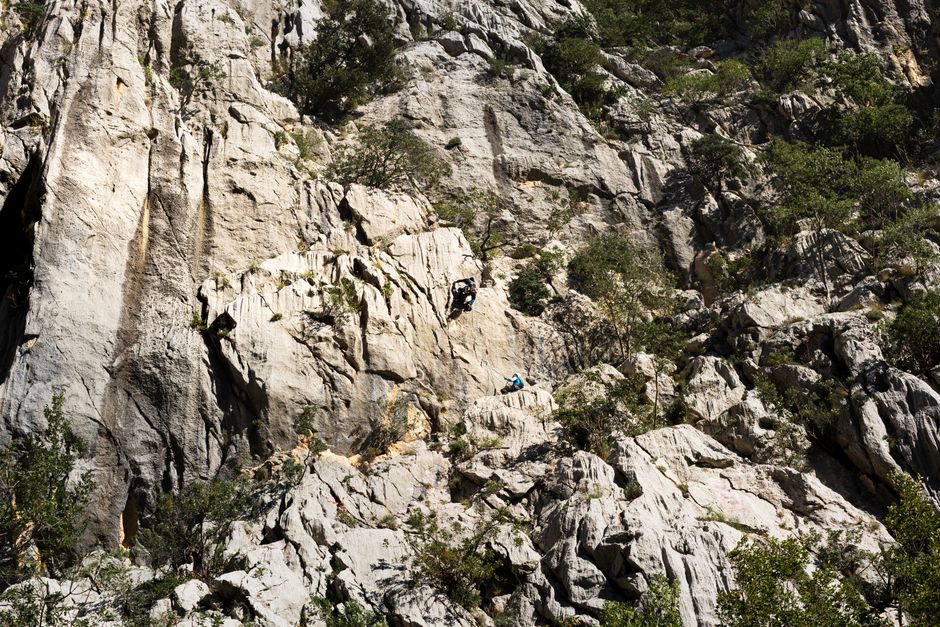
Kalymnos became a climbing destination almost by accident in the late 1990s, when a group of Italian climbers realized the island’s grey-orange limestone was riddled with tufas, stalactites and pockets — the kind of 3D, overhanging rock that makes for spectacular, photogenic sport climbing. Two decades on, it’s one of the most complete sport-climbing destinations in Europe.
What sets it apart isn’t just the volume of routes — it’s the range. You can warm up on a slab in Poets before lunch, then get shut down in a cave at Grande Grotta by 4pm, all within a 20-minute scooter ride. Nearly everything is bolted sport climbing, so you don’t need trad gear, just quickdraws and a willingness to pull on tufas.
The climbing community here is genuinely international and low-key: tavernas fill with climbers comparing beta over Mythos beer, and most crags are a short walk from the coast road, so non-climbing partners can happily read on a beach nearby.
Rest days have their own draw. A small passenger boat shuttles across to Telendos, a near-car-free islet with its own crags and a couple of excellent tavernas, and the swimming off Myrties and Masouri is warm and clear enough that you’ll want your goggles as much as your climbing shoes. It’s a rare destination where a genuinely non-climbing partner can be just as happy as the person heading up the tufas.
Best Sectors for Every Level, From Poets to Grande Grotta
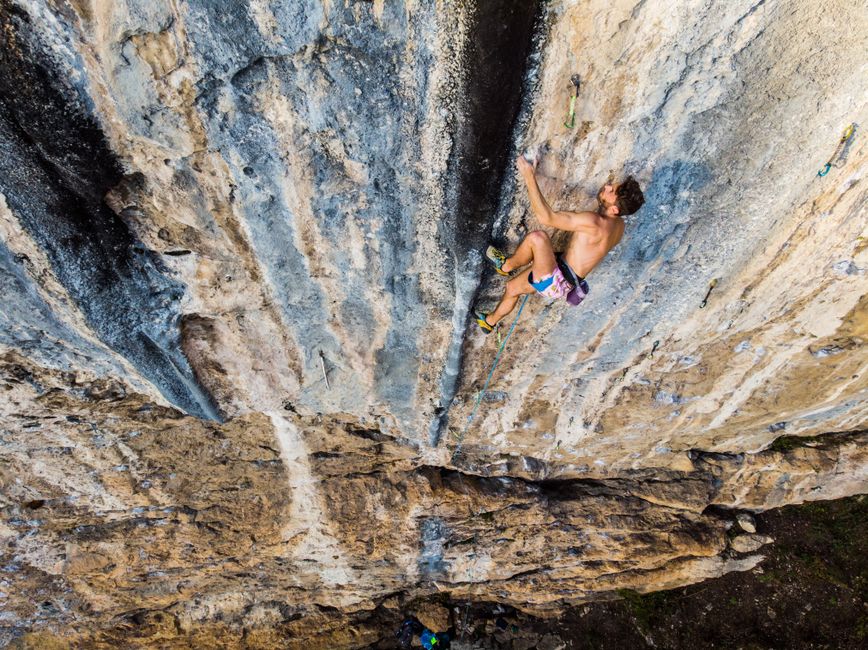
Poets is the go-to first stop for newer climbers — mostly 5a to 7a+, with shade in the afternoon and an easy approach. From there, Odyssey is the island’s most versatile wall, spanning 4c to 9a on the same cliff, so a mixed-ability group can climb side by side.
For the postcard Kalymnos experience, head to Grande Grotta or Sikati Cave — both are enormous tufa-choked caverns where 6b–8c+ routes wind through stalactites with the sea visible below. If you’re chasing hard grades, Jurassic Park’s steep 6b–8b lines are some of the most physical on the island.
A 2025 guidebook update added 14 new sectors and 355 new routes compared to 2022, including Heroes, Arginonta Valley, Black Buddha and Snake Valley — worth exploring if you’ve climbed Kalymnos before and want routes you haven’t touched.
| Sector | Grade Range (French) | Best For |
|---|---|---|
| Poets | 5a–7a+ | Beginners, mixed groups |
| Odyssey | 4c–9a | All levels on one wall |
| Grande Grotta | 6b–8c+ | Huge tufa cave, steep power |
| Sikati Cave | 6b–8c | Boat-access cave climbing |
| Jurassic Park | 6b–8b | Steep, expert-oriented |
When to Go: Kalymnos Climbing Season and Weather
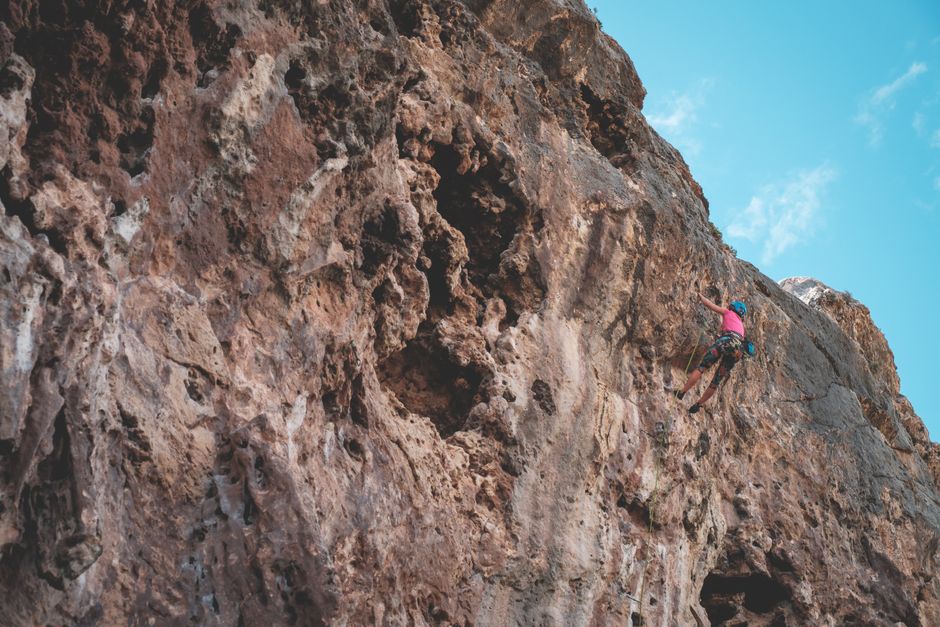
Spring (April to June) and autumn (September to November) are peak season, and for good reason: daytime temperatures sit in the comfortable high teens to mid-20s°C, and most sectors are climbable all day. Mid-October through late November is widely considered the sweet spot — rain is rare, the sea is still swimmable at around 24–25°C, and the worst of the summer crowds have gone home.
Summer (June to August) gets genuinely hot, with highs around 31–33°C, so climbers shift to shaded caves like Grande Grotta or Arhi and start early to beat the 11am–3pm heat. Winter is mild by northern-European standards — you can often climb comfortably even around Christmas — but days are shorter and a handful of sectors dry out slower after rain.
If you’re building a wider Greek itinerary around the climbing, our guide to Europe’s best shoulder-season destinations has more on why April–June and September–November hit the sweet spot for weather and prices across the Mediterranean.
Getting to Kalymnos: Flights, Ferries and Getting Around
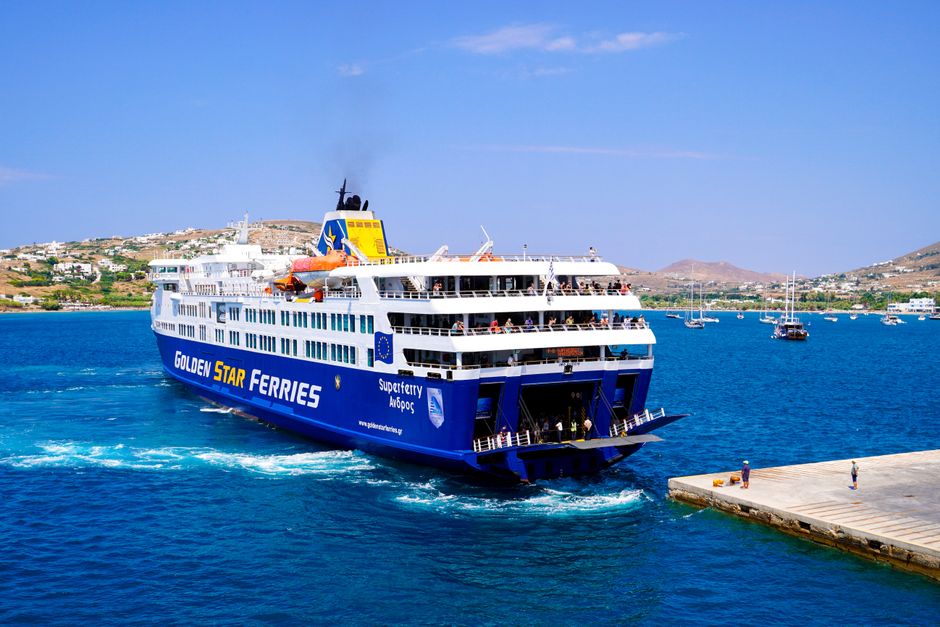
There’s no need to fly directly into Kalymnos. The nearest major airport is Kos International (KGS), followed by a short ferry hop of 25 to 45 minutes across to Kalymnos harbor — Dodekanisos Seaways and Blue Star Ferries both run the route, with around 21 sailings a week in summer dropping to roughly 9 a week in winter.
Most European flights into Kos are seasonal, typically running June through October or November — easyJet, Jet2 and TUI fly from the UK (Stansted and Birmingham, plus new 2026 routes from Bournemouth and Exeter), while Condor, Eurowings and TUI fly connect from Germany. Use Aviasales to compare flight routes and prices into Kos before you book, since seasonal capacity shifts year to year. Kalymnos does have its own small airport (JKL), but it’s domestic-only, with Sky Express running turboprop flights from Athens around four times a week.
Once you’re on the island, a rental scooter (around €10–15/day) is the standard way to reach the crags — most sectors are a 5–20 minute ride from Masouri or Myrties, the two villages where almost every climber bases themselves. A handful of sectors, including some of the closest to Masouri, are walkable if you’d rather skip the scooter altogether, and taxis are easy to flag down for a night out in town.
If your trip already includes a European city stopover on the way to Kos, it’s worth pairing Kalymnos with an Alpine leg — our beginner’s guide to via ferrata in the Dolomites covers a very different but equally accessible way to get onto exposed rock, if you want to bookend a limestone-heavy trip.
Enjoying This?
Get more guides like this — plus flight deals — sent straight to your inbox.
What It Costs: Accommodation, Gear Rental and Guided Courses in 2026
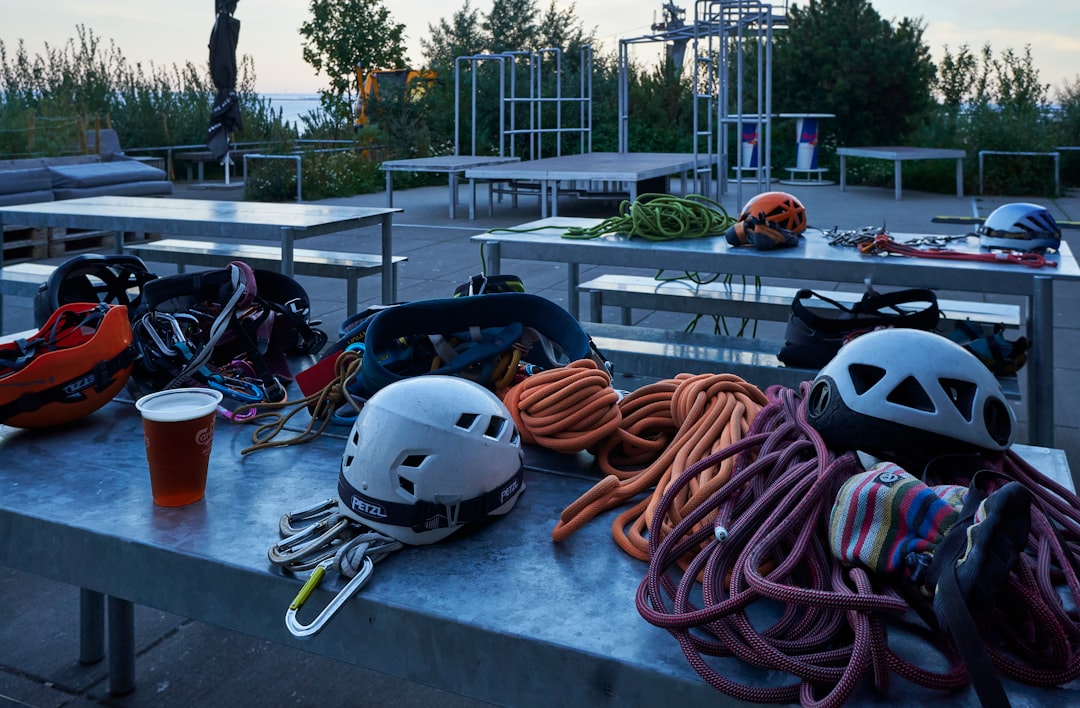
Kalymnos is still one of Europe’s better-value climbing trips. Budget studios in Masouri run around €25–35 a night, while climber-favorite guesthouses like Klimis or Climbers Village land around €35–39, and nicer mid-range studios top out near €60 — many owners will negotiate a discount for a week-plus stay. As a rough planning figure, a full week on the island — flights, accommodation, food and a scooter — lands around €1,300 per person solo or roughly €2,300 for a couple, though these are ballpark estimates that swing with season and how much you eat out.
Gear rental is limited: climbing shoes go for around €5 a day, and harnesses, helmets and quickdraws are available in Masouri’s climbing shops, but ropes generally aren’t for rent — bring your own. Pack 15 to 40 quickdraws depending on how long a day you plan, plus a 70–80m rope, since Kalymnos routes run long.
New to sport climbing? Confirmed local operators including Kalymnos Climbing Guide, Kalymnos Primal Climb and Kalymnos Climbing Adventure run beginner instruction, with a private 4-hour intro session for a small group running around €74–100 per person. Food is another area where Kalymnos stays cheap: a taverna dinner with a carafe of local wine runs roughly €12–18 per person, and most climbers cook simple lunches at their studio to save both money and time between routes.
- Climbing shoes + harness + helmet (own or rented, ~€5/day for shoes)
- 15–40 quickdraws and a 70–80m dynamic rope
- Chalk bag, tape for tufa-scarred hands, and a headlamp for early starts
- Reef-friendly sunscreen — you’ll be exposed for hours on south-facing walls
- A printed or downloaded 2025-edition guidebook (older editions miss the newest sectors)
Kalymnos Climbing Festival and Safety Notes (Rebolting Project)
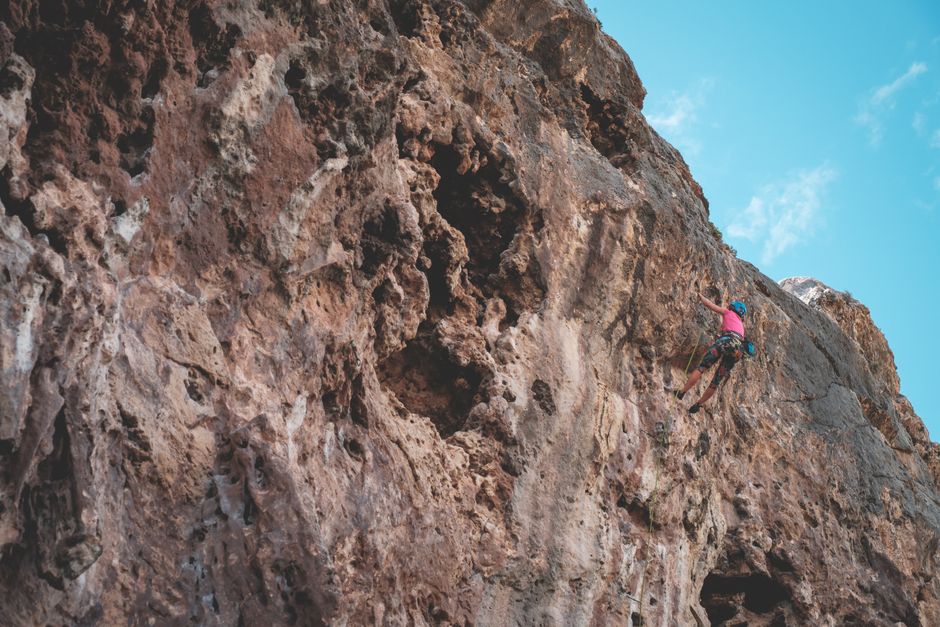
The island’s annual Kalymnos Climbing Festival is confirmed for 2–4 October 2026, following a 2025 edition that drew more than 3,500 climbers for clinics, competitions and communal dinners. It’s a great time to visit for the atmosphere, but expect busier crags and book accommodation well ahead.
One thing every visiting climber should know before clipping in: a 2025 accident linked to roughly 24-year-old bolts prompted a municipal Rebolting Project that’s been systematically inspecting older hardware across the island. As of 2026, climbers are advised to treat any route bolted before 2005 that hasn’t yet been re-bolted with real caution — check current condition reports at the crag or with a local climbing shop before committing. It’s the same logic behind travel insurance for any adventure sport: you plan for the routine day, but you’re covered if something goes wrong. We use EKTA for adventure-sport travel insurance that specifically covers climbing, since standard policies often exclude it. For more on why that matters, see our complete guide to adventure sports travel insurance in Europe.
Frequently Asked Questions
Is Kalymnos good for beginner climbers?
Yes — sectors like Poets and the lower grades at Odyssey offer abundant 4a–6b routes with easy approaches and shade. Several local operators also run half-day intro courses for first-timers.
How many climbing routes does Kalymnos have?
The current guidebook lists more than 4,000 bolted sport routes spread across dozens of sectors, as of the 2025 edition — up from roughly 3,400 a decade earlier as new sectors keep being developed.
What’s the best month to climb in Kalymnos?
Mid-October through late November is widely considered the sweet spot: rain is rare, temperatures are comfortable, and the peak summer crowds have thinned out. April through June is a close second.
Do you need to bring your own rope to Kalymnos?
Generally yes. Climbing shoes and sometimes harnesses can be rented in Masouri, but ropes usually aren’t available to rent, so bring a 70–80m dynamic rope for the island’s longer routes.
How do you get from Kos airport to Kalymnos?
Take a taxi or bus from Kos International Airport to Kos town or Mastichari port, then a ferry to Kalymnos harbor — the crossing itself takes 25 to 45 minutes, with roughly 21 sailings a week in summer.
Is climbing in Kalymnos safe?
Mostly, but check bolt condition before committing to older routes. A 2025 accident tied to aging hardware triggered an island-wide Rebolting Project, and climbers are advised to be cautious on any pre-2005 route that hasn’t been re-bolted yet.
The Bottom Line
Kalymnos earns its reputation honestly: thousands of routes, warm limestone, a laid-back climbing village vibe, and a season that stretches from spring through late autumn. Book your flights into Kos early if you’re going in the September–November sweet spot, since seasonal European routes fill up fast — search flight options on Aviasales to lock in a good fare. And because flight schedules to Kos can shift or get cancelled outside peak season, it’s worth adding Compensair to your back pocket in case a delay or cancellation entitles you to compensation.
Never Miss a Deal
Get the best travel tips, festival guides & flight deals straight to your inbox.

Gbuska is the founder and lead writer at WanderFunTrip. What began as one too many 3 a.m. festival fields and a $40 flight booked on a whim turned into a full-time habit of testing adventure trails, party cities, and adults-only resorts firsthand — then writing up what actually worked (and what didn't). Every guide here starts from a real trip or a real booking, never a press release. Usually somewhere between a departures board and the next cliff jump.