⚡ Heads up: This post contains affiliate links. If you book or buy through them, we may earn a small commission — at no extra cost to you. We only recommend stuff we’d actually use ourselves.
By the WanderFunTrip editorial team · Last updated 20 September 2026
You found it. Lisbon to Bangkok for a price that looks like a typo, routed through Istanbul with a four-hour gap in the middle. Then you notice the words next to the itinerary: self-transfer. Two tickets. Two booking references. Two airlines that have never heard of each other and never will.
That little label is the difference between a travel hack and a very expensive lesson. Self-transfers genuinely unlock routes and prices that no single airline sells — they’re how budget carriers get stitched onto long-haul networks. But the moment your first flight runs late, you discover that nobody downstream is obligated to care. No rebooking. No hotel. No compensation. Just a departures board and a credit card.
TL;DR: A self-transfer means two separate tickets, so EU261/UK261 protection for the missed connection does not apply — each airline is only liable for its own flight. Budget a minimum of around 3–4 hours for domestic-to-domestic and around 4–6 hours when immigration or a terminal change is involved, and buy a protection layer (a booking platform guarantee or a policy that names self-connections) before you book.
What Are Self-Transfer Flights, Exactly?
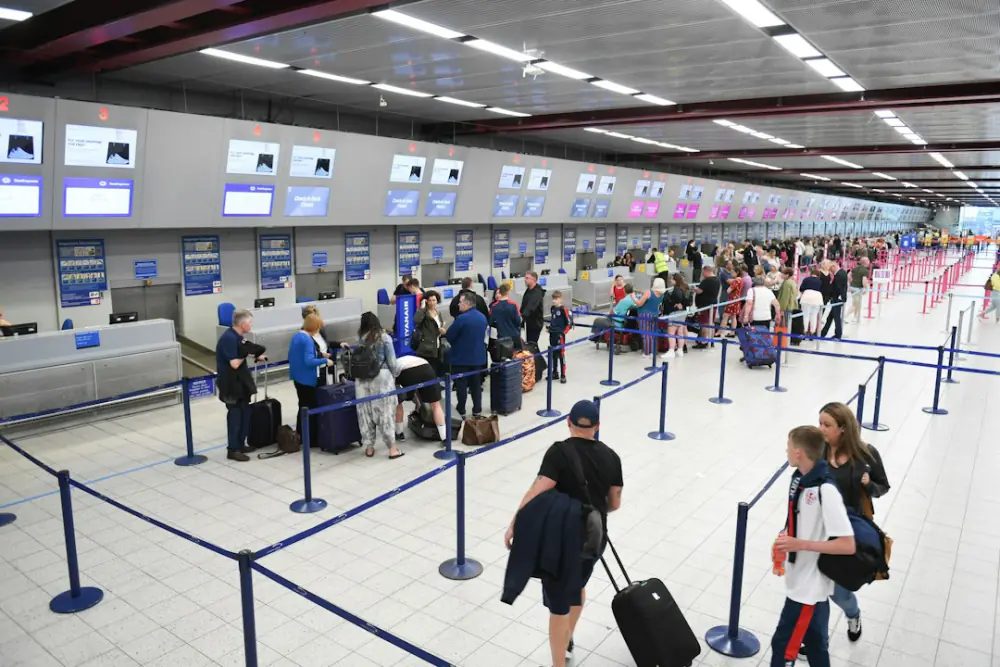
A self-transfer flight is an itinerary where you change planes but your two flights sit on separate tickets, so you are personally responsible for getting yourself — and your bag — from the arrival gate to the next check-in desk. Nobody transfers you. You are the transfer.
On a normal connecting ticket, one booking reference covers the whole journey. The airlines involved have an interline or codeshare agreement: your bag is tagged to the final destination, and if leg one is late, the carrier rebooks you on leg two at no charge. That’s the contract you’re paying for.
A self-transfer replaces that contract with your own logistics. Booking platforms call it virtual interlining — software pairs two unrelated flights that no airline alliance would ever sell together. That’s why you’ll see combinations like Ryanair into a hub and a Gulf carrier out of it, or an intra-Asia budget hop feeding a transatlantic flight.
What you actually have to do during the layover:
- Land and disembark — then clear immigration if the airport has no sterile transit corridor for your route.
- Collect checked baggage from the carousel, because it was only tagged to this airport.
- Exit landside into the public terminal — often a different terminal than the one you need.
- Check in again from scratch, with a second bag allowance you have to pay for separately.
- Clear security again, and in some countries an exit immigration check too.
Five steps, each with its own queue. On a good day at a small, well-signed airport that’s 60–90 minutes. At a sprawling hub during a summer peak, with a passport check and a terminal train in the middle, it can swallow three hours without anything going wrong. Worth knowing before you agree to a “generous” two-hour gap.
How Much Money Does Booking Separate Tickets Really Save?

The saving comes from breaking a route that one airline monopolises into two competitive segments — and it’s biggest where a legacy carrier has no direct rival on the long-haul leg. There’s no fixed percentage, and anyone quoting you one is guessing.
The pattern is predictable, though. Self-transfers tend to pay off when:
- Your home airport is secondary. A regional airport with one low-cost carrier to a major hub, then anything you like out of that hub.
- A budget airline serves the first leg. Low-cost carriers rarely interline, so the only way to combine them with anyone else is a self-transfer.
- You’re going somewhere awkward. Secondary cities in Southeast Asia, the Balkans, Central Asia and West Africa are often far cheaper reached as two hops.
- You’re flexible on dates. Overnight layovers, the safest kind of self-transfer, usually cost the least.
Where it does not pay: short domestic hops, routes where a single airline already sells a through-fare at a similar price, and anything during a peak weather season. A €40 saving is not worth the risk on a January connection through a snow-belt hub.
And be honest about the total cost, not the headline fare. Two tickets mean two baggage fees, two seat-selection fees if you want them, possibly an airport transfer between terminals or between two different airports in the same city, and a meal during the layover. Add a protection product on top. That €89 fare can quietly become €180 before you’ve left home.
Our practical rule: run the self-transfer price against the best through-ticket you can find. Compare the fares side by side on a flight search that shows both routings, and price up the paired-ticket options on a platform built for multi-stop and virtual-interline itineraries. If the gap is under about 15% of the total trip cost, take the through-ticket and sleep properly. If it’s 40% or more, the self-transfer starts earning its risk — assuming you protect it.
What Happens If You Miss the Second Leg?

You lose the ticket. On separate bookings, the second airline treats your late arrival as a no-show, which usually voids that ticket entirely and any return segment attached to it — and you buy a new walk-up fare at whatever it costs that afternoon.
This is the part travellers consistently misjudge, because it feels like it should be covered. The relevant test is simple and unforgiving: one booking reference covering the whole journey generally means you’re protected; two or more references usually means you’re not. EU Regulation 261/2004 and its UK equivalent attach protection to a single contract of carriage. The UK Civil Aviation Authority states it plainly: where a journey is made up of two or more separate bookings, there is no statutory right to care, compensation or onward transport if a delay causes you to miss a later flight.
Here’s what each party is and isn’t on the hook for:
| Through-ticket (one reference) | Self-transfer (two references) | |
|---|---|---|
| Rebooking after a missed connection | Free, airline’s obligation | You buy a new ticket |
| EU261/UK261 for the missed connection | Yes, if conditions are met | No — separate contracts |
| EU261 for a delay on leg one alone | Yes, if it qualifies | Yes — that flight still qualifies on its own |
| Baggage tagged to final destination | Usually yes | No — collect and recheck |
| Meals and hotel during a long disruption | Airline’s duty of care | Your wallet, unless insured |
Note row three, because it’s the one people miss. If your first flight was delayed 3+ hours or cancelled and it independently qualifies under EU261 — departing from an EU airport, or arriving in the EU on an EU carrier, with no extraordinary circumstances — that flight is still claimable on its own merits. It won’t pay for the ticket you lost, but the statutory bands run from €250 to €600 depending on distance, which softens the blow considerably. If filing yourself feels like a second job, a claims service can handle the EU261 paperwork for that leg on a no-win-no-fee basis.
How Much Layover Time Is Enough?

Plan on roughly 90–120 minutes more than you’d allow for a normal connection at the same airport — which in practice means about 3–4 hours domestic-to-domestic and around 4–6 hours whenever immigration, customs or a terminal change enters the picture. Published minimum connection times do not apply to you; they assume a single ticket and an airline that transfers your bag.
| Scenario | Suggested buffer | Why |
|---|---|---|
| Hand luggage only, same terminal, domestic | approx. 2.5–3 h | Security requeue only |
| Checked bag, same terminal, domestic | approx. 3–4 h | Carousel waits are unpredictable |
| International arrival, immigration required | approx. 4–6 h | Passport queues scale with arrival banks |
| Terminal change or airport change | approx. 5–7 h | Add ground transport plus its own delays |
| Last flight of the day on leg two | Overnight, or don’t book it | No same-day recovery option exists |
Three refinements that matter more than the raw number. First, book the first leg early in the day — delays compound across an airline’s rotation, so a 07:00 departure is statistically far more reliable than a 19:00 one. Second, check whether leg two runs more than once a day. A route with four daily departures gives you a recovery path; a twice-weekly route means missing it costs you days, not hours. Third, treat winter and peak summer as a different sport — if the hub is prone to fog, snow or thunderstorm shutdowns, either add hours or go overnight.
The overnight layover deserves a proper mention. It looks like a hassle and it’s the single most effective risk reducer available: a 14-hour gap absorbs almost any leg-one delay, and a cheap airport hotel usually costs less than the replacement ticket you’d otherwise buy. If the gap lands overnight, our guide to cheap airport lounge access shows how to wait it out horizontally for less than a hotel room.
Enjoying This?
Get more guides like this — plus flight deals — sent straight to your inbox.
Which Airports Help You Self-Connect — and Which Don’t?
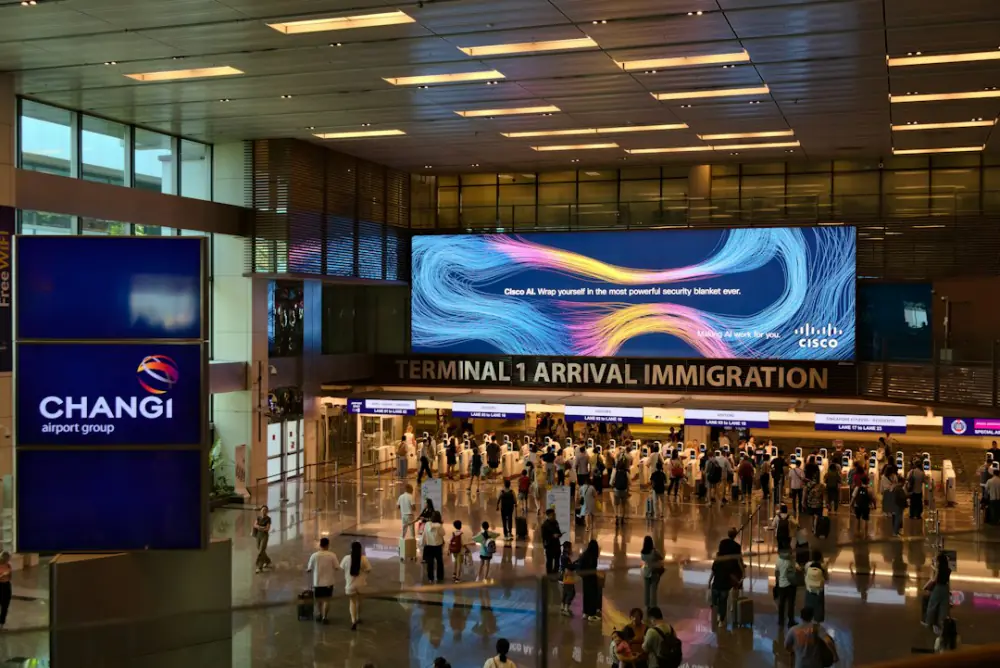
A handful of European airports run dedicated self-connect programmes that transfer your bag and add missed-flight protection, while the United States sits at the opposite extreme and forces every passenger through immigration regardless of destination. The airport you route through changes the risk more than the airlines do.
The helpful end. London Gatwick (GatwickConnects) and Milan Malpensa (ViaMilano) have both operated schemes where self-connecting passengers hand their bag to a transfer desk in arrivals instead of dragging it landside, with some form of protection if the onward flight is missed. Programmes like these change terms periodically, so confirm the current offer on the airport’s own website before you build a plan around it. Several airports that act as low-cost hubs — Dublin among them — publish detailed connection guidance for passengers on separate tickets even without a formal product.
The hostile end. The United States has no sterile international transit. If your routing touches a US airport on the way to Canada, Mexico or the Caribbean, you must clear CBP, collect your checked bag, drop it at a recheck belt and pass TSA again — and you need a valid visa or ESTA purely to transit. Budget accordingly; four hours at a major US hub during an evening arrival bank is not generous, it’s adequate.
Things to verify before you commit to a hub:
- Transit visa rules for your passport — some countries require one even to reach landside baggage reclaim.
- Terminal layout — is leg two in the same building, or a 25-minute shuttle away?
- Landside walking time between arrivals and the correct departures hall.
- Check-in cut-off for the second airline, typically 40–60 minutes before departure and strictly enforced by low-cost carriers.
- Overnight access — some terminals close overnight and turf everyone out, which ruins a “free airport sleep” plan.
One more: if your layover is long enough to leave the airport, a pre-booked arrival transfer beats haggling with a taxi rank at 2am in a city you don’t know. We compared shuttles, private transfers and taxis on price and wait time in our airport transfer options guide.
How Do You Protect a Two-Ticket Itinerary?
Stack three independent layers — a booking-platform guarantee, a travel insurance policy that explicitly names self-connections, and a self-built time buffer — because no single one of them covers every failure mode.
Layer 1: the platform guarantee. Virtual-interlining platforms sell the protection the airlines won’t. Kiwi.com’s Guarantee, for example, includes connection protection: if leg one is delayed, cancelled or rescheduled and you miss leg two as a result, the platform offers credit toward a replacement flight or helps pursue an airline refund. Coverage typically triggers on cancellations and on reschedules beyond around 24 hours, and — this is the clause that bites — it can be voided if you change anything directly with the airline without telling the platform first, including adding checked baggage or switching to a shorter layover. Read the terms, then don’t touch your booking outside the platform. If you’re routing through an unfamiliar hub, booking the pairing as a protected self-transfer is usually worth more than the few euros you’d save assembling it manually.
Layer 2: insurance that actually says “separate tickets”. Standard missed-connection benefits often assume one ticket and one carrier. Look specifically for wording that covers self-connections, check the delay threshold that triggers a payout (policies vary from a couple of hours up to 12), check whether a minimum layover is required for the claim to stand, and check the per-claim cap against a realistic walk-up fare. A policy that pays €150 against a €600 replacement ticket isn’t protection, it’s a gesture. Comparing policies on trip-disruption cover before you book takes ten minutes and is the cheapest insurance you’ll ever buy against your own optimism.
Layer 3: your own operational habits. These cost nothing:
- Check in online for leg two before you leave home — a boarding pass already issued removes the check-in-desk cut-off from the equation entirely.
- Travel hand-luggage-only where possible. No carousel, no recheck, typically an hour saved.
- Screenshot both booking references, the second airline’s contact number and your insurance policy number. Airport Wi-Fi fails exactly when you need it.
- Keep a card with headroom for an emergency ticket. Reimbursement comes later; the fare is due now.
- Watch leg one’s inbound aircraft the night before. If it’s already running late, you’ll know your risk before the airport does.
Frequently Asked Questions
Is a self-transfer the same thing as a layover?
No. A layover is any gap between two flights; a self-transfer specifically means those flights are on separate tickets. You can have a two-hour layover that’s fully protected by one airline, or a two-hour self-transfer where nobody is responsible for you. The booking reference tells you which one you have — if there are two, it’s a self-transfer.
Do I always have to collect my checked bag on a self-transfer?
Almost always, yes. Your bag is tagged only to the intermediate airport because the second airline has no agreement to receive it. The exceptions are airports running a dedicated self-connect bag service, such as the programmes seen at London Gatwick and Milan Malpensa. Never assume a through-tag — confirm it at the first check-in desk.
Can I claim EU261 compensation if I miss my second flight?
Not for the missed connection itself, because separate tickets are separate contracts. You can still claim for the first flight independently if that flight qualifies on its own — a delay of three hours or more, or a cancellation, without extraordinary circumstances. Compensation bands run from €250 to €600 by distance. It won’t cover your replacement ticket, but it’s real money you’re entitled to.
Does travel insurance cover a missed self-connection?
Only if the policy explicitly says so. Many standard missed-connection benefits are written around single-ticket itineraries and exclude self-transfers outright. Others require a minimum layover length or a specific covered cause such as weather or mechanical failure. Read the exclusions before you buy, and check the claim cap against what a same-day replacement fare would realistically cost.
Do I need a visa for the country where I self-transfer?
Often yes, because collecting your bag means entering the country legally, not just passing through airside. The United States requires an ESTA or visa even for pure transit and routes every arriving passenger through immigration. Other countries offer visa-free transit only if you stay airside, which a self-transfer makes impossible. Check your specific passport and airport before booking.
Is a two-hour self-transfer ever safe?
Rarely, and only under narrow conditions: hand luggage only, same terminal, no immigration control, a domestic-to-domestic pairing, and a second flight that runs several times a day so a miss isn’t catastrophic. Add any checked bag, passport queue or terminal change and two hours becomes a coin flip. When the gap is that tight, the platform guarantee matters more than the schedule does.
The Verdict: Worth It, With Conditions

Self-transfers aren’t a trap — they’re a trade. You’re accepting the logistics and the liability that an airline would normally absorb, and in exchange you get access to routes and fares that don’t exist on a single ticket. Done well, it’s one of the most powerful tools in budget travel. Done badly, it’s a €400 walk-up fare and a night on a terminal floor.
The conditions are simple enough to remember: a buffer that reflects reality (3–4 hours minimum, 4–6 with immigration, overnight when the stakes are high), a protection layer you actually read, and a first leg early in the day on a route with alternatives. Hit those three and your downside shrinks to an inconvenience.
Ready to run the numbers on your own route? Pull up your dates, compare the through-fare against the split-ticket price, and if the saving clears your risk threshold, book it protected rather than piecing it together yourself. Then set your buffer, check in for leg two from your sofa, and go enjoy the trip you just paid half price for.
Never Miss a Deal
Get the best travel tips, festival guides & flight deals straight to your inbox.

Gbuska is the founder and lead writer at WanderFunTrip. What began as one too many 3 a.m. festival fields and a $40 flight booked on a whim turned into a full-time habit of testing adventure trails, party cities, and adults-only resorts firsthand — then writing up what actually worked (and what didn't). Every guide here starts from a real trip or a real booking, never a press release. Usually somewhere between a departures board and the next cliff jump.