⚡ Heads up: This post contains affiliate links. If you book or buy through them, we may earn a small commission — at no extra cost to you. We only recommend stuff we’d actually use ourselves.
By the WanderFunTrip editorial team · Updated 24 September 2026
TL;DR: Standard travel insurance almost always contains a “hazardous activities” clause that silently kills your cover the moment you jump, dive deep, or ski past the rope line. The seven biggest offenders are air sports, free-flight sports, off-piste skiing, deep or uncertified scuba, high-altitude mountaineering, riding a scooter without the correct licence, and grade IV+ whitewater. Most of them are still insurable — but only through an adventure add-on or a specialist policy bought before you travel.
Here’s the uncomfortable truth nobody tells you when you’re standing at the drop zone in Interlaken with a GoPro strapped to your chest: the travel insurance you bought for €22 on a comparison site probably stopped covering you the second you stepped into the aircraft. Not because anyone lied to you — because page 14 of the policy wording has a list, and skydiving is on it.
Travel insurance is priced on the assumption that you’ll behave like an average tourist. Sunburn, a stolen phone, a delayed flight, maybe food poisoning. The moment your holiday involves gravity, altitude, or an engine, the insurer’s risk model breaks — so they write an exclusion instead. And exclusions don’t just reduce your payout. They void the medical section of your policy entirely for that incident, which means a helicopter evacuation and a week in a foreign ICU lands on your credit card.
Below are the seven activities that most reliably void a standard policy in 2026, what insurers actually look for when they assess a claim, and how to stay covered without giving up the thing you flew there to do.
What does “extreme sport” actually mean to a travel insurer?

To an insurer, “extreme” isn’t about how scared you felt — it’s about which named list your activity appears on in the policy wording. Almost every mainstream policy sorts activities into three tiers, and the tier decides whether you’re covered automatically, covered for an extra premium, or not covered at all.
The tiers usually look something like this:
- Tier 1 — included as standard: hiking on marked trails, snorkelling, cycling, kayaking on flat water, on-piste skiing (sometimes), horse riding at walking pace.
- Tier 2 — covered with an “adventure” or “sports” add-on: bungee jumping, a tandem skydive, recreational scuba to a set depth, via ferrata, trekking below the policy’s altitude ceiling, rock climbing with ropes at a guided crag.
- Tier 3 — excluded outright, no add-on available: BASE jumping, wingsuiting, free solo climbing, professional or competitive participation in almost anything, and anything the policy calls “expedition”.
Two details catch people out more than anything else. First, insurers generally apply the exclusion to the incident, not the trip — so if you break an ankle walking to dinner, you’re covered, but if you break it on an excluded activity, that entire claim is gone. Second, many policies quietly attach an extra condition to liability and personal accident sections even when the medical section is fine, meaning you might have emergency treatment covered but zero protection if you injure someone else.
Consumer guides like Forbes’ 2026 roundup of hidden travel insurance exclusions keep flagging the same pattern: the exclusion is never hidden, it’s just never read. The list below is where you should start reading.
Sports 1–4: the adrenaline hits almost no standard policy covers
These four are the ones that show up by name in the exclusions section of nearly every off-the-shelf policy. If one of them is the reason you’re flying somewhere, assume you are uninsured until you’ve bought cover that names it explicitly.
1. Skydiving, BASE jumping and wingsuiting
Air sports are the single most commonly excluded category in travel insurance. Allianz Travel, for example, lists skydiving, BASE jumping, hang gliding and parachuting among its excluded activities, and most competitors word it similarly. A tandem skydive with a licensed operator is sometimes bought back through an adventure add-on — solo jumps, wingsuit flights and BASE jumps almost never are, because there’s no meaningful actuarial data and the outcomes cluster at the catastrophic end. If your bucket list includes a jump over Lauterbrunnen or the Palm in Dubai, you need a specialist policy, not an upgrade.
2. Paragliding, hang gliding and microlights
Free-flight sports are excluded by default even when you’re strapped to a commercial tandem pilot. This surprises people because paragliding feels tame — you run off a grassy slope and float. Insurers don’t see it that way: it’s unpowered flight with no second chance at low altitude, and rescue often means a helicopter. Some adventure add-ons cover tandem flights with a certified operator; solo flying, cross-country flying and anything involving a motor almost always sits in the uninsurable tier.
3. Off-piste and heli-skiing
Crossing the rope line is the cleanest way to void winter sports cover. Off-piste skiing is one of the most common exclusions in standard travel insurance, and even dedicated winter sports add-ons frequently cover off-piste only when you’re with a qualified local guide and inside a resort boundary. Heli-skiing and cat-skiing are usually a separate exclusion again. The kicker: mountain rescue in the Alps is charged directly to the casualty, and avalanche searches involving a helicopter and a dog team run into serious four- and five-figure territory before you’ve seen a doctor.
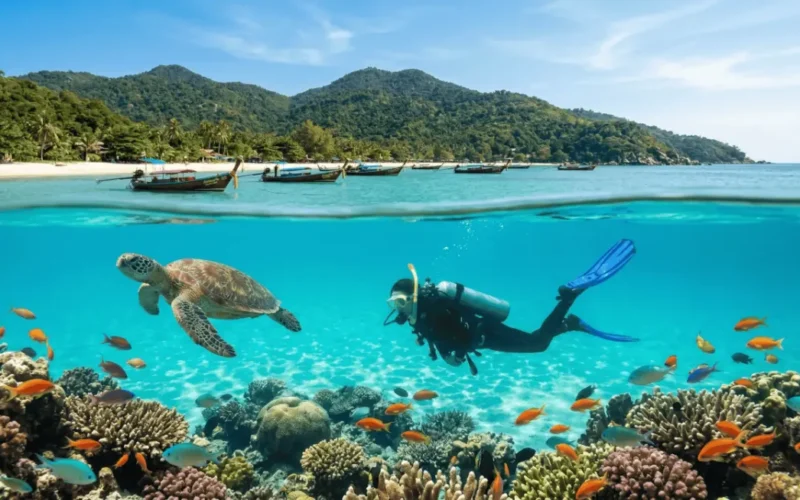
4. Scuba diving beyond your depth limit — or without the right card
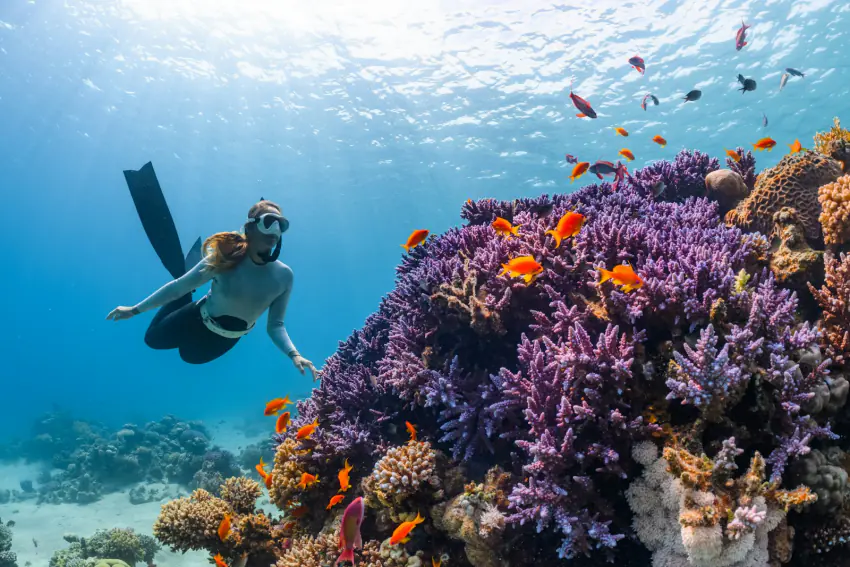
Most policies cover recreational scuba only to a stated depth and only when you hold the matching certification. Common ceilings are 18 m or 30 m, with diving beyond 40 m treated as high-risk and requiring an explicit endorsement. Two silent claim-killers live here: diving deeper than your policy says even by a few metres, and diving without a certification when the dive shop waved you through on a “discover scuba” basis. Solo diving, cave and wreck penetration, and technical mixed-gas diving are separate exclusions on top. If you dive regularly, a membership-based dive insurer such as Divers Alert Network is worth stacking alongside a travel policy for chamber cover.
Sports 5–7: the ones buried in the small print
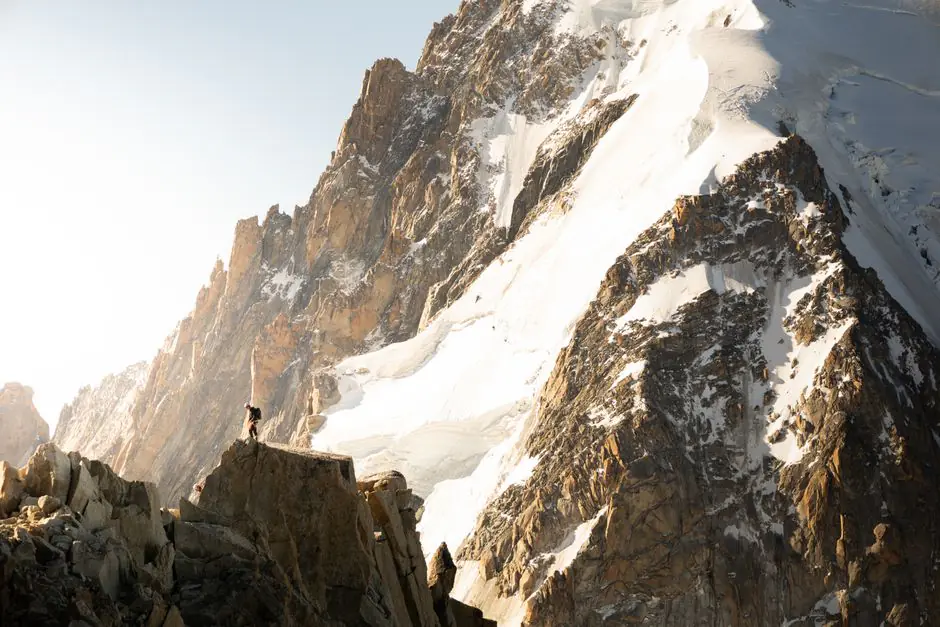
These three are more dangerous precisely because they don’t feel extreme. Nobody thinks of renting a scooter as an extreme sport — insurers do.
5. High-altitude trekking and mountaineering
Almost every standard policy has an altitude ceiling, and it’s lower than trekkers expect. Many mainstream policies cap cover at around 15,000 ft (approx. 4,570 m), and some stop as low as roughly 11,500 ft (approx. 3,500 m) — which puts Everest Base Camp, Kilimanjaro and Thorong La on the wrong side of the line for a lot of travellers. The rule that catches people is that the limit applies to the highest point on your itinerary, not where you sleep: a summit morning above your ceiling can void cover for an incident up there even if base camp is comfortably below it. Anything involving ropes, crampons, ice axes or peaks above 6,000 m generally needs a dedicated mountaineering endorsement rather than a generic adventure upgrade.
6. Riding a motorbike or scooter without the correct licence
This is the most common claim denial of the seven, by a wide margin. Insurers consistently require three things: a licence valid for that engine size in that country, a helmet, and sobriety. Ride a 150cc scooter in Vietnam on a car licence, or skip the helmet because locals do, and your medical claim can be refused outright — World Nomads spells this out in its own policy guidance, and UK comparison sites list it among the top reasons claims get rejected. Being a passenger on an unlicensed rider’s bike can void your claim too. In much of Southeast Asia you’ll also need an International Driving Permit with the correct motorcycle category stamped on it, obtained before you leave home.
7. Grade IV+ whitewater, canyoning and caving
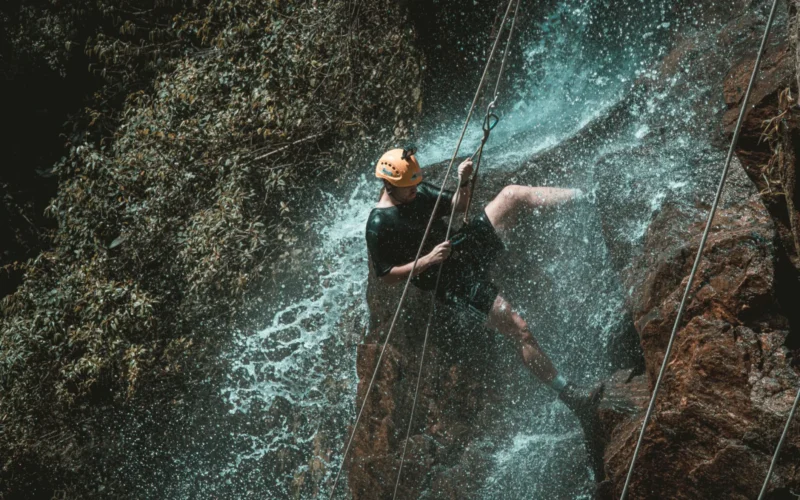
Guided rafting is often included up to grade III and excluded above it. That single number is doing a lot of work: the Zambezi below Victoria Falls, the Futaleufú in Chile and plenty of Nepali and Ugandan runs are grade IV–V commercial trips sold to ordinary tourists. Canyoning sits in the same awkward zone — some insurers treat it as a tier-2 add-on activity, others exclude it entirely once abseiling or cliff jumping is involved. Caving and cave diving are almost universally excluded because rescue is slow, specialised and expensive.
Which activities are covered, upgradeable, or off the table?
The table below summarises how the seven typically sit in mainstream policy wordings as of September 2026. Insurers differ, so treat it as a checklist to verify against your own documents — not as a guarantee.
| Activity | Standard policy | What usually restores cover |
|---|---|---|
| Skydiving (tandem) | Excluded | Adventure/extreme sports add-on |
| BASE jumping / wingsuit | Excluded | Specialist insurer only — often nothing |
| Paragliding (tandem) | Excluded | Add-on, certified operator only |
| Off-piste / heli-skiing | Excluded | Winter sports add-on + guide condition |
| Scuba beyond 30–40 m | Excluded above stated depth | Depth endorsement + matching cert |
| Trekking above the altitude cap | Excluded above ~3,500–4,570 m | High-altitude or expedition endorsement |
| Scooter / motorbike | Conditional — void without licence or helmet | Correct licence + IDP + helmet, always |
| Whitewater grade IV+ / caving | Excluded above grade III | Add-on naming the grade explicitly |
If your trip touches more than two rows of that table, a specialist adventure policy is usually cheaper and cleaner than stacking add-ons onto a budget plan. EKTA’s adventure travel insurance is one of the easier ones to check against this list, because it lets you add sports cover at the quote stage instead of burying it in an endorsement you have to request by email.
Enjoying This?
Get more guides like this — plus flight deals — sent straight to your inbox.
How do you actually get covered for extreme sports?

You buy cover that names your activity in writing, before you leave, and you keep the evidence that you met its conditions. That’s the whole method — but each step has a trap in it.
- Search the PDF, don’t trust the sales page. Open the policy wording and use Ctrl+F for your sport, plus the words “altitude”, “depth”, “guide”, “licence” and “professional”. If the word isn’t there, you aren’t covered for it.
- Check the sub-limits, not just the yes/no. A policy can “cover” mountaineering and still cap search and rescue at a figure that wouldn’t pay for a single helicopter hour. Repatriation and rescue limits matter more than the headline medical number.
- Confirm the operator condition. Many add-ons only pay out when you’re with a licensed or locally certified instructor. Keep the booking confirmation and the operator’s licence number — it’s what the loss adjuster will ask for.
- Buy before the first flight, not the night before the jump. Cancellation cover starts at purchase, and some insurers refuse activity add-ons once the trip has begun.
- Carry proof of competence. Dive card, motorcycle licence, IDP, avalanche course certificate. Photograph them and store them offline.
One more practical note on logistics: if your sport dictates the destination, book the insurance and the flight in the same sitting so the dates can’t drift apart. We usually compare flight prices across airlines first, lock the dates, then buy the policy against those exact dates — mismatched dates are a boring but very common reason claims get rejected. For more of these pre-departure checks, our guide to adventure sports travel insurance in Europe goes deeper on policy wording and paperwork.
What happens when an extreme sports claim gets denied?

You become the payer of first resort, immediately and in full. Foreign hospitals bill the patient, not the insurer, and mountain rescue services in the Alps, New Zealand and much of North America invoice the casualty directly. There’s no grace period while you argue.
If it happens, the sequence that gives you the best odds is: get treated first and worry about money second; ask the hospital for an itemised bill and the full medical report, not a summary; request the denial in writing with the specific clause cited; then escalate. Insurers regularly reverse decisions when the exclusion was applied loosely — for example, denying a claim for “mountaineering” when you were walking on a marked trail, or citing an alcohol exclusion without a blood test to support it.
Your escalation routes, roughly in order: the insurer’s internal complaints process (usually eight weeks), then the national financial ombudsman or dispute-resolution scheme where the policy was sold, then your card issuer if you paid by credit card and the product was mis-sold. Keep every receipt, every email, and a dated written account of what happened while it’s fresh. If you’re travelling on a long, multi-country trip where the risk profile changes as you go, it’s worth re-reading the wording at each stage — the same operator-and-licence detail we dig into in our breakdown of the Verzasca Dam bungee jump in Switzerland, where who runs the jump decides whether you are covered at all.
Frequently asked questions
Does travel insurance cover bungee jumping?
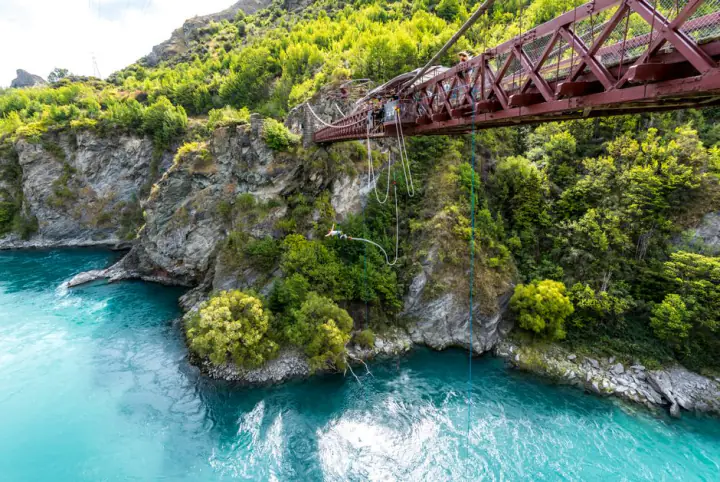
Usually only with an adventure add-on, and only with a licensed commercial operator. Bungee is rarely covered as standard, but unlike BASE jumping it’s widely available as a tier-2 upgrade because the operator base is regulated and the injury data is predictable. Check that the wording says “bungee jumping” and not just “amusement rides”.
Is tandem skydiving covered if a professional is strapped to me?
Sometimes, but never assume it. A number of insurers buy tandem skydiving back through an extreme sports rider on the condition that the jump is run by a certified commercial drop zone. Solo jumps, jump courses and anything involving your own canopy are typically excluded regardless of the add-on.
Will my policy cover me if I hire a scooter in Thailand or Bali?
Only if you hold a licence valid for that engine size, carry an International Driving Permit with the motorcycle category, and wear a helmet. Missing any one of those three is among the most frequent reasons medical claims are refused in Southeast Asia. Rental shops will happily hand you keys without checking — that has no bearing on your insurer’s decision.
What altitude does standard travel insurance stop covering?
Commonly around 15,000 ft (approx. 4,570 m), though some policies stop closer to 11,500 ft (approx. 3,500 m). The ceiling applies to the highest point you reach on the whole itinerary, including passes and viewpoints. Anything with ropes, crampons or a technical summit generally needs a dedicated mountaineering endorsement.
Can I buy extreme sports cover after my trip has already started?
Sometimes, but the options narrow sharply and cancellation cover is lost. A handful of insurers sell policies to travellers already abroad, often with a waiting period of a few days before cover activates. It’s always cheaper and safer to add the activity before departure.
Does credit card travel insurance cover adventure activities?
Rarely, and the exclusion lists tend to be broader than paid policies. Card-linked cover is designed around trip cancellation and baggage, with medical sections that often exclude the entire hazardous-activities list outright. Treat it as a supplement, never as your primary cover for an adventure trip.
The bottom line before you jump

None of this is an argument for staying home. It’s an argument for spending twenty minutes with a PDF before you spend a weekend in a foreign hospital arguing about a clause. The seven activities above aren’t uninsurable — six of the seven are perfectly coverable, and the seventh (BASE and wingsuit flying) has its own specialist market. What voids your cover isn’t the sport. It’s buying a policy written for someone who was never going to do it.
Do this before your next adventure trip: open your policy wording, search it for your activity, confirm the altitude and depth numbers, and make sure your licence or certification matches what you’ll actually be doing. If any of those come back wrong, fix it now — get an adventure sports travel insurance quote that names your activity and travel knowing the helicopter isn’t coming out of your savings.
Never Miss a Deal
Get the best travel tips, festival guides & flight deals straight to your inbox.

Gbuska is the founder and lead writer at WanderFunTrip. What began as one too many 3 a.m. festival fields and a $40 flight booked on a whim turned into a full-time habit of testing adventure trails, party cities, and adults-only resorts firsthand — then writing up what actually worked (and what didn't). Every guide here starts from a real trip or a real booking, never a press release. Usually somewhere between a departures board and the next cliff jump.