⚡ Heads up: This post contains affiliate links. If you book or buy through them, we may earn a small commission — at no extra cost to you. We only recommend stuff we’d actually use ourselves.
Western Europe eats through a travel fund fast — €25 for a hostel bunk, €18 for a mediocre dinner. Head southeast instead and the same money stretches three or four times as far, without trading down on food, scenery or nightlife. Albania, Bulgaria, Romania, North Macedonia, Bosnia and Herzegovina, Serbia and Moldova are the seven countries where a backpacking budget genuinely goes furthest in 2026.
TL;DR: Moldova and Albania come out cheapest overall, with hostel beds from around €8–9 a night and full days comfortably under €30. Bulgaria switched its national currency to the euro on January 1, 2026, but Sofia and Plovdiv remain some of the least expensive capitals in the EU. All seven border each other or sit one short hop apart, so one open-jaw ticket can cover several at once.
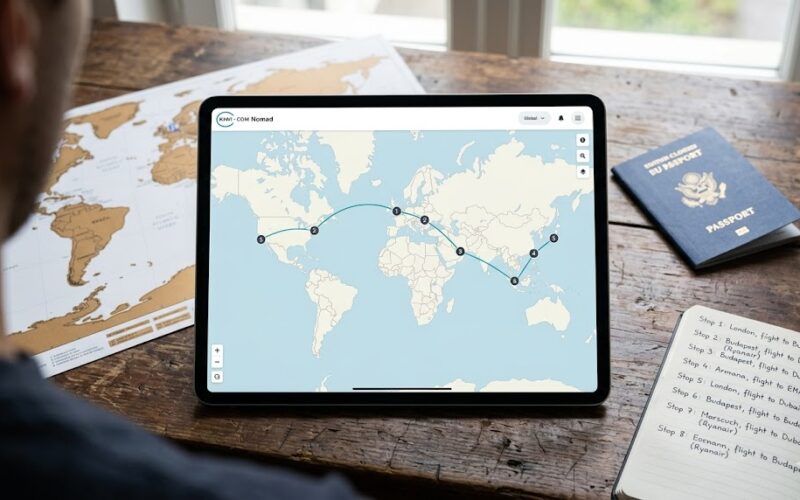
Getting there is half the savings — run your route through a flight price comparison tool before picking dates, since fares into Tirana, Sofia, Bucharest, Skopje, Sarajevo, Belgrade and Chișinău swing widely week to week, and check our multi-city flight booking tricks if you’re planning to hit more than one of these countries on the same trip.
| Country | Local Currency (2026) | Approx. Backpacker Daily Budget* |
|---|---|---|
| Albania | Lek (ALL) | €25–35 |
| Bulgaria | Euro (EUR) | €30–42 |
| Romania | Leu (RON) | €25–35 |
| North Macedonia | Denar (MKD) | €22–32 |
| Bosnia & Herzegovina | Konvertibilna Marka (BAM) | €22–30 |
| Serbia | Dinar (RSD) | €28–38 |
| Moldova | Leu (MDL) | €20–28 |
*WFT estimate covering a hostel or private room, cheap local meals and public transport, built from hostel, food and transport prices researched for this guide as of 2026. Actual spend varies by season and city.
1. Albania: Europe’s Best Value for Money
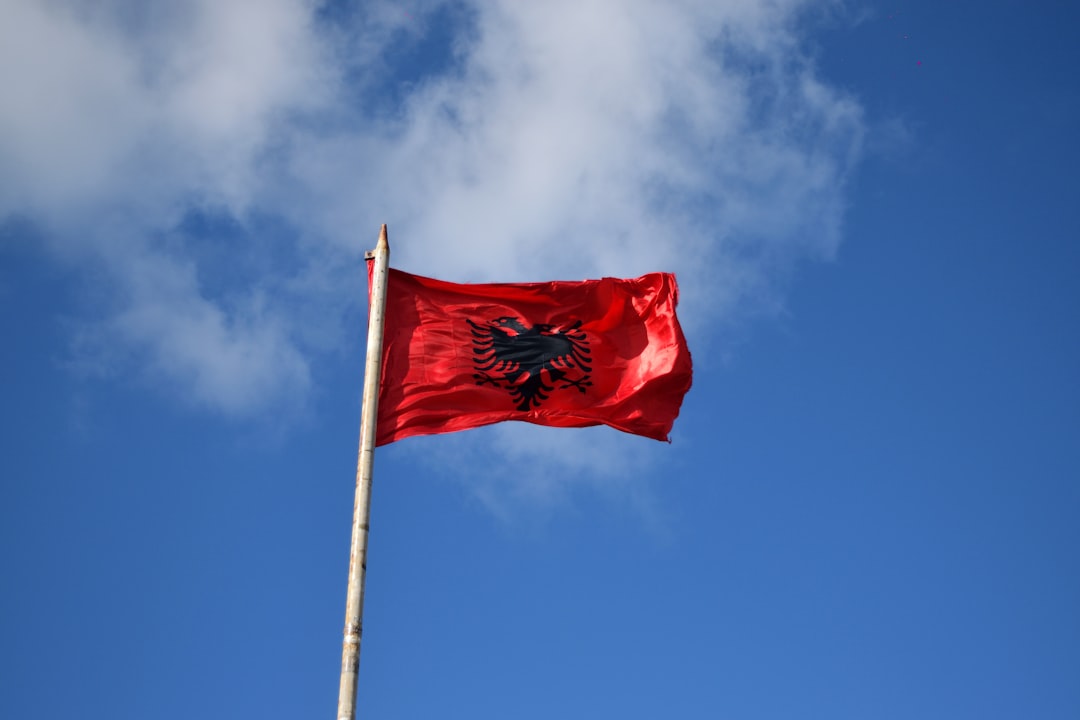
Albania is the single best value-for-money country on this list in 2026 — hostel dorms start around €8 a night and a full day of food, sleep and transport rarely breaks €35. Budget guesthouses run from about €15, and outside Tirana and the coast, prices drop even further.
A 0.5-litre bottle of homemade raki sold at local markets goes for roughly 200–300 lek (about €2–3), and a shared furgon (minibus) between towns like Berat, Gjirokastër and Sarandë typically costs a few euros a leg rather than the €20+ you’d pay for the same distance in Italy or Croatia. For a full breakdown of getting around without renting a car, our Albania itinerary built entirely around buses and furgons covers routes and timing in more detail.
Stick to Gjirokastër and Berat’s UNESCO old towns for the cheapest beds, and save the coastal splurge for Ksamil or Sarandë, where prices climb but still stay well under Western Mediterranean rates. Even Tirana’s city-centre hostels rarely crack €12 a night, and a sit-down plate of tavë kosi or grilled qofte at a local lokal typically costs less than a fast-food meal back home.
2. Bulgaria: Cheap Prices, Now in Euros
Bulgaria adopted the euro as its official currency on January 1, 2026, replacing the lev — but the switch hasn’t erased its reputation as one of the EU’s cheapest countries to travel. A cup of properly brewed coffee still runs around €0.26 in most towns, and Sofia and Plovdiv both have a growing hostel scene aimed at budget travelers.
Getting to the Black Sea coast is one of the better value long hauls in the region: a one-way bus ticket from Sofia to towns like Varna or Burgas costs about €12–15, covering roughly 450 km. Mountain huts and monastery guesthouses scattered through the Rila and Pirin ranges also rent rooms for a fraction of city hotel rates, if you don’t mind a basic setup.
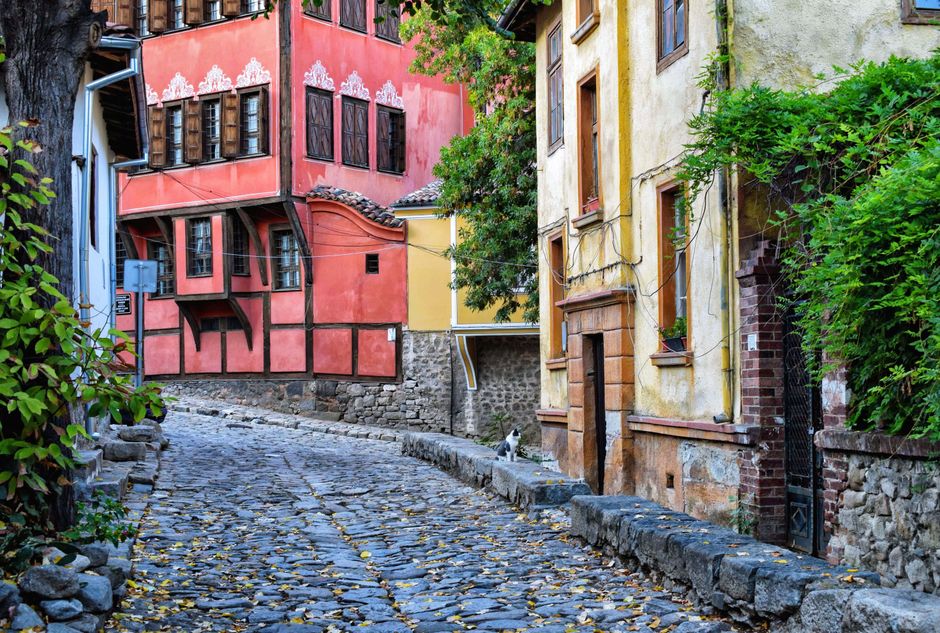
Plovdiv’s old town is the better base for a slower, cheaper few days — fewer big-city markups than Sofia, with just as much history packed into its cobbled streets. Skara (grilled meat) joints and shopska salad still run a few euros a plate, and local Kamenitza or Zagorka beers stay well under the price of an imported bottle at the same bar.
3. Romania: The Cheapest Country in the EU
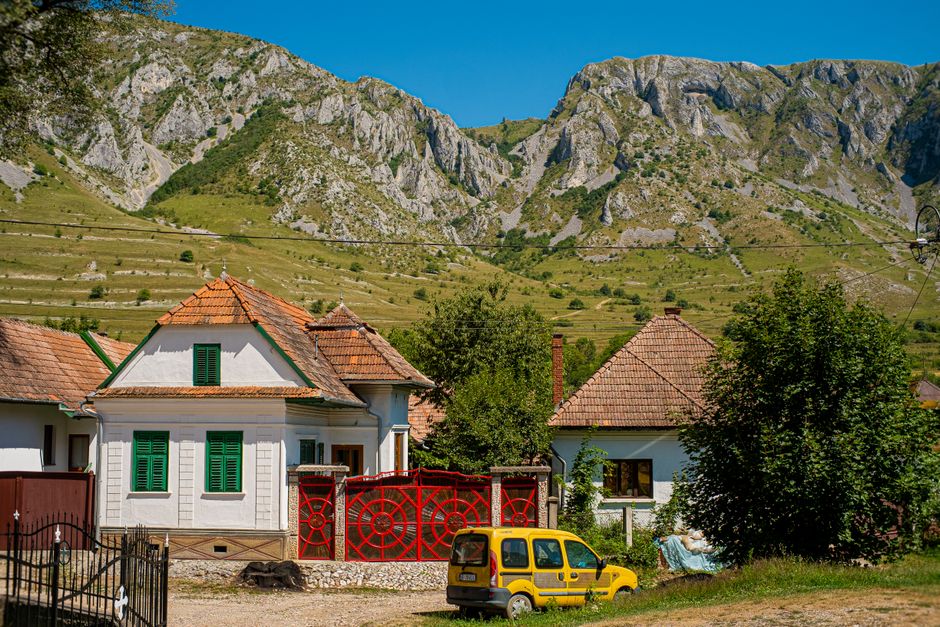
Romania is widely considered the cheapest country still inside the European Union, and it shows the moment you order a drink: a 0.5-litre local beer like Ursus, Timișoreana or Bergenbier runs about 2–4 lei (roughly €0.40–0.80), while an imported Corona at the same bar can cost 12 lei (around €2.30). A bottle of decent Romanian wine goes for 10–30 lei (about €2–6), as of an August 2026 exchange rate near €1 to 5.2 lei.
Romania’s rail network, run mainly by state carrier CFR, reaches almost every town in the country, making it realistic to cover Bucharest, Brașov, Sighișoara and Cluj-Napoca on a single cheap rail pass rather than flying or driving between them.
Bucharest’s city centre carries a small premium over the rest of the country, so budget travelers tend to spend two nights there and push most of their trip toward Transylvania, where the same money buys noticeably more. Street food like a covrig (Romanian pretzel) or a slice of pizza rarely costs more than a euro or two, and even sit-down restaurant mains in smaller cities like Sighișoara stay noticeably below Bucharest prices.
4. North Macedonia: Ohrid and Skopje on a Shoestring
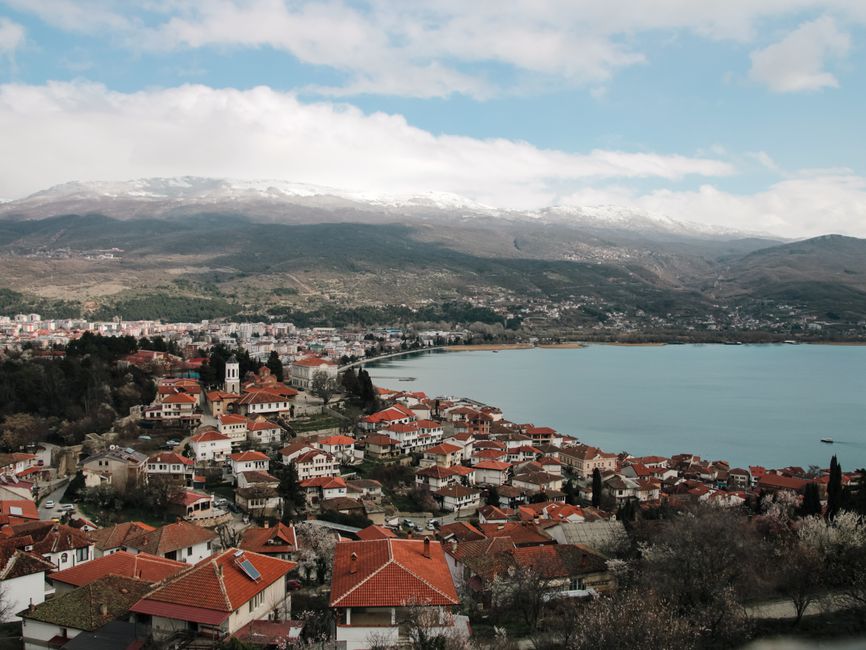
North Macedonia keeps costs down through private accommodation rather than hotels — a room booked directly with a local host runs about €10–15 a night in the July–August peak around Lake Ohrid, and roughly half that the rest of the year. Skopje, the capital, is even cheaper across the board.
Homemade rakija sold by the half-litre in local markets costs around 100 denar (about €1.60 at 2026 exchange rates near €1 to 62 denar), and skara (grill) restaurants serving grilled meat plates are the standard budget meal — cheaper and often better than the tourist-facing waterfront spots in Ohrid town itself.
For the same lake views at a lower price, base yourself in nearby Struga instead of Ohrid — it’s a short bus ride away and consistently cheaper for both rooms and food. Skopje’s Old Bazaar is also worth a couple of nights on its own: cheap grilled-meat lunches, a walkable old town, and none of the peak-season Ohrid markup.
Enjoying This?
Get more guides like this — plus flight deals — sent straight to your inbox.
5. Bosnia and Herzegovina: Sarajevo for Less

Sarajevo delivers a genuinely unique Balkan capital experience without a Western European price tag — a plate of ćevapi, the region’s signature grilled kebab, costs about 2–4 KM (roughly €1–2), and a burek pastry snack runs around 2 KM (about €1). The konvertibilna marka is fixed to the euro at exactly €1 = 1.95583 KM, so prices convert cleanly.
Hostels and budget pensions are widely available in Sarajevo’s old town, and a day trip to Mostar to see the Stari Most bridge is an easy, inexpensive bus ride away rather than a costly organized tour.
One safety note that’s specific to this country: stick to paved roads and marked trails outside cities, since parts of rural Bosnia and Herzegovina still have unexploded landmines left from the 1992–1995 war. Within cities and on any signposted route, that risk essentially disappears, and Sarajevo’s mix of Ottoman old town and Austro-Hungarian architecture makes it one of the most distinctive capitals on this entire list.
6. Serbia: Belgrade Nightlife Without the Price Tag

Belgrade delivers big-city energy — clubs, riverside bars, a genuinely lively scene — at a fraction of what the same night out costs in Vienna or Berlin. A sit-down main course typically runs RSD 600–2,400 (roughly €5–20 depending on the venue), with plenty of solid options at the lower end of that range, based on a 2026 exchange rate near €1 to 117 dinars.
Getting around the capital is cheap too: Belgrade’s public bus, tram and trolleybus network covers around 120 lines, while private minibuses cost more, at roughly €2 a ride. For longer hops between cities, Flixbus and a handful of local operators keep intercity fares low.
Novi Sad, an hour north of Belgrade by train, is worth the detour for travelers who want the same budget-friendly vibe with a quieter, riverside pace. Bakeries (pekara) selling burek, pastries and sandwiches are open around the clock in most Serbian cities and remain one of the cheapest ways to eat well between bigger meals.
7. Moldova: Europe’s Most Overlooked Bargain

Moldova is arguably the cheapest and least-visited country in this list — hostel beds in the capital, Chișinău, run about $10–20 a night (roughly €9–17), and an informal homestay arranged directly with a local host can cost as little as €10. Public transport is close to free by comparison: a trolleybus ride costs 6 lei (about €0.30) and a minibus fare around 3 lei (about €0.15), at a 2026 rate near €1 to 20 lei.
Because Moldova borders Romania directly, it’s realistic to combine both countries in one trip without backtracking — flying into one capital and out of the other with a multi-stop flight search usually beats booking a round trip into a single city and doubling back. Since you’ll be swapping SIMs or data plans across several borders on a trip like this, it’s worth comparing eSIM options for crossing multiple countries before you land.
Don’t skip the Mileștii Mici wine cellars just outside Chișinău — one of the world’s largest underground wine collections, and a cheap, memorable half-day trip from the capital. Restaurant meals in the capital are still noticeably cheaper than the rest of the EU, and outside Chișinău, prices drop even further, making Moldova an easy country to under-budget for by accident.
Frequently Asked Questions
What is the cheapest country to visit in Europe in 2026?
Moldova and Albania are the two cheapest overall, with hostel beds from around €8–9 a night and full days of food, sleep and transport comfortably under €30. Both keep costs low mainly through private rooms and homestays rather than hotel chains.
Is Bulgaria still cheap now that it uses the euro?
Yes — Bulgaria switched its national currency to the euro on January 1, 2026, but the underlying prices for food, transport and accommodation haven’t jumped to Western European levels. Sofia and Plovdiv remain among the least expensive capitals in the EU.
How much money do I need per day backpacking the Balkans and Moldova?
Budget around €20–40 a day across these seven countries, covering a hostel or private room, cheap local meals and public transport. Moldova and Albania sit at the lower end of that range, while Bulgaria and Serbia run slightly higher, mostly due to capital-city prices.
Is Bosnia and Herzegovina safe to travel in?
Yes, for the vast majority of travelers sticking to cities, marked trails and paved roads. The main hazard is unexploded landmines left in some rural areas from the 1992–1995 war, so avoid wandering off-path in the countryside.
Do I need a visa for these seven countries?
Requirements vary — Bulgaria and Romania are EU members, while Albania, North Macedonia, Bosnia and Herzegovina, Serbia and Moldova are not, and most US, UK, EU and Schengen-area passport holders get visa-free entry for short stays. Always check current requirements for your specific passport before booking, since policies do change.
What if my budget flight into the region gets delayed or cancelled?
Budget carriers serving smaller regional airports do get disrupted more often than major hubs, so it’s worth pairing a cheap fare with flight disruption compensation cover before you fly. It typically costs nothing upfront and only pays out if your flight is actually delayed or cancelled.
Seven Countries, One Shoestring Budget
None of these seven destinations ask you to compromise on food, scenery or nightlife to stay cheap — Albania and Moldova simply cost less than the rest of Europe, and Bulgaria, Romania, North Macedonia, Bosnia and Herzegovina and Serbia aren’t far behind. Start with whichever border you can fly into cheapest, then work outward by bus or train.
Before you book, run your route through a flight search covering all seven countries to compare which capital gives you the cheapest way in for this trip.
Never Miss a Deal
Get the best travel tips, festival guides & flight deals straight to your inbox.

Gbuska is the founder and lead writer at WanderFunTrip. What began as one too many 3 a.m. festival fields and a $40 flight booked on a whim turned into a full-time habit of testing adventure trails, party cities, and adults-only resorts firsthand — then writing up what actually worked (and what didn't). Every guide here starts from a real trip or a real booking, never a press release. Usually somewhere between a departures board and the next cliff jump.