⚡ Heads up: This post contains affiliate links. If you book or buy through them, we may earn a small commission — at no extra cost to you. We only recommend stuff we’d actually use ourselves.
By the WanderFunTrip Team · Updated September 2026 · Sources: montourdumontblanc.com, refuge websites, regional transport operators
TL;DR: The TMB is a loop of roughly 165–170 km with about 10,000 m of climbing through France, Italy and Switzerland, and most people walk it in 9–11 days. As of 2026, a dorm bed with dinner and breakfast costs around €52–80 in France and Italy and €80–110 in Switzerland. Bookings for the next season usually open in late September or early October, and the best huts can sell out within hours.
Picture this: day three, 7 a.m., and you’re lacing your boots outside Rifugio Elisabetta while the Glacier de la Lée Blanche glows pink above you. Two hours ago you were asleep in a bunk room with twelve strangers. Now you’re walking into Italy. That mix of big alpine scenery and friendly hut life is why the Tour du Mont Blanc is one of the most popular long-distance hikes in Europe.
It also takes real planning. Refuges sell out fast, Swiss prices come as a shock, and one bad weather day can wreck a tight schedule. This guide covers the route, the refuges, a realistic 2026 budget and the mistakes first-timers keep making. You’ll know what to book and when.
What Is the TMB and How Long Does It Take?
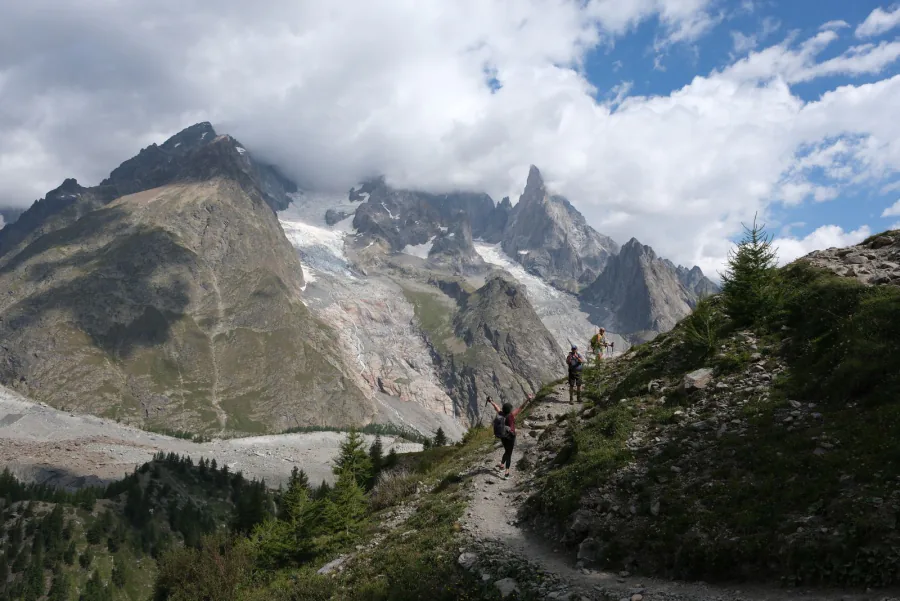
The Tour du Mont Blanc (TMB) is a circular hiking route of roughly 165–170 km that loops around the Mont Blanc massif through France, Italy and Switzerland, and most hikers finish it in 9–11 days. Faster hikers do it in 7–8 days. Slower walkers, or anyone who wants rest days, take 12–14. Total elevation gain is around 10,000 m, which is roughly like climbing Everest from sea level more than once.
A typical day looks like this:
- Distance: about 15 km on average
- Walking time: 5–7 hours, not counting breaks
- Climbing: around 1,000 m up and a similar amount down
- Terrain: well-marked paths, some rocky passes and a few short ladder or cable sections on certain variants
No technical climbing is needed. You don’t need ropes, crampons or a guide in summer conditions. What you do need is fitness. If you can hike 6 hours with a 7–9 kg pack two days in a row and still feel fine on day three, you’re in good shape. Knees take the biggest hit, because the long descents are harder than the climbs for most people. Trekking poles help a lot.
The classic direction is anticlockwise, starting in Les Houches near Chamonix. Most guidebooks and hut timings follow that direction, so you’ll walk alongside the same faces for days. That’s part of the fun. Many hikers finish the trip with a WhatsApp group of new friends from five countries.
If you have already done a hut-to-hut classic like our Torres del Paine W Trek guide, the TMB will feel familiar. It’s just longer, and the food is much better.
Route Breakdown: The Classic 11-Stage Itinerary
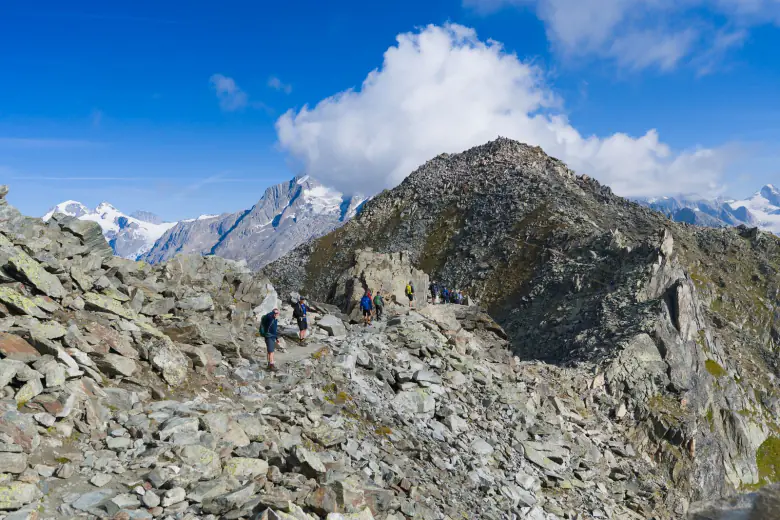
The classic TMB itinerary runs anticlockwise from Les Houches through Les Contamines, Courmayeur, La Fouly, Champex and Trient before returning to the Chamonix valley. Here is a common 11-stage plan with typical overnight stops:
| Stage | Overnight Stop | Country | Highlight |
|---|---|---|---|
| 1 | Les Contamines | France | Col de Voza and the Bionnassay glacier |
| 2 | Refuge de la Croix du Bonhomme or Les Chapieux | France | First big pass day |
| 3 | Rifugio Elisabetta | Italy | Col de la Seigne border crossing |
| 4 | Courmayeur | Italy | Mont Blanc south face, town comforts |
| 5 | Rifugio Bonatti | Italy | Grandes Jorasses balcony trail |
| 6 | La Fouly | Switzerland | Grand Col Ferret (around 2,500 m) |
| 7 | Champex-Lac | Switzerland | Easy valley day, lake swim |
| 8 | Trient | Switzerland | Bovine route or Fenêtre d’Arpette variant |
| 9 | Tré-le-Champ or Argentière | France | Col de Balme views back to Mont Blanc |
| 10 | Refuge de la Flégère | France | Lac Blanc and the Aiguilles Rouges |
| 11 | Les Houches (finish) | France | Brévent ridge, then down to the finish |
Two variants are worth knowing about. The Fenêtre d’Arpette (approx. 2,665 m) is the highest point you can choose on the TMB. It’s steep, bouldery and spectacular, with views of the Trient Glacier, but only take it in clear, dry weather. The Lac Blanc detour near the end adds some effort and gives you one of the most photographed lake views in the Alps.
Short on time? You can cut a day by taking the bus through Val Ferret or the lift up from Les Houches. Purists may grumble, but your knees won’t.
Refuges and Booking: How to Secure Your Beds

Most TMB refuges are booked through the central platform montourdumontblanc.com, and next-season availability usually opens in late September or early October. The most popular huts, including Bonatti, Elisabetta and Col de la Croix du Bonhomme, can sell out within days or even hours. Some independent refuges, such as Rifugio Bonatti and Rifugio Elisabetta, take bookings by email or form rather than through the platform, so check each one separately.
Here’s the booking plan that works:
- Pick your dates and direction first. Anticlockwise is the default, and all refuge timings assume it.
- Book the bottleneck huts first. Get Elisabetta, Bonatti and the Bonhomme area confirmed, then build the rest of the itinerary around them.
- Have backups ready. Hotels and gîtes in towns like Courmayeur, La Fouly and Champex are easier to get than mountain huts.
- Pay the deposits quickly. Many huts cancel bookings if the deposit isn’t paid on time.
- Reconfirm a few days out. Some Italian refuges expect a quick phone or email check.
What refuge life is like: Almost everyone books demi-pension (half board), which covers a bed, a three-course dinner and breakfast. Dinner is usually served to everyone at the same time at shared tables, so it’s a very social trip. You take off your boots at the door and wear the hut shoes provided. Most huts require a sleeping bag liner, and many sell or rent them if you forget. Showers are often short, token-operated or cold at the higher huts.
The refuges open around mid-June and close around 20 September, and some of the higher, more remote huts close earlier. Planning a September trip? Check each hut’s closing date before you lock in the route.
Enjoying This?
Get more guides like this — plus flight deals — sent straight to your inbox.
Tour du Mont Blanc Cost: A Realistic 2026 Budget

A self-guided TMB in 2026 costs most hikers around €900–1,400 per person for 10–11 days in refuges on half board, not counting flights and gear. Where you land in that range depends mainly on how many Swiss nights you have, how often you pick private rooms and how much you spend on lunches and drinks.
| Expense (as of 2026) | Typical Cost |
|---|---|
| Dorm half board — France & Italy | approx. €52–80 per night |
| Dorm half board — Switzerland | approx. €80–110 per night |
| Rifugio Bonatti (dorm / private, half board) | around €74 / €94 per person |
| Packed lunch or trail snacks | around €12–18 per day |
| Geneva Airport → Chamonix bus | from around €11–30 one way |
| Shared airport shuttle | approx. €30–40 per person |
| Private airport transfer | from around €150 |
Money-saving moves:
- Carry cash. Most huts take cards now, but connections can fail, so keep some euros and a little Swiss francs for the Swiss section.
- Refill your water at hut taps and village fountains where they’re marked as drinkable. Don’t pay for bottled water.
- Choose dorms over private rooms. At Bonatti that alone saves about €20 per night.
- Keep your Swiss nights short. Walking from La Fouly to Champex to Trient in two days limits your exposure to Swiss prices.
For comparison, our Everest Base Camp trek cost and route guide shows a trek where the daily costs are lower but the flights cost far more. The TMB is the opposite: it’s easy to reach, but pricey once you’re on the trail.
How Do You Get There and Stay Safe on the Trail?
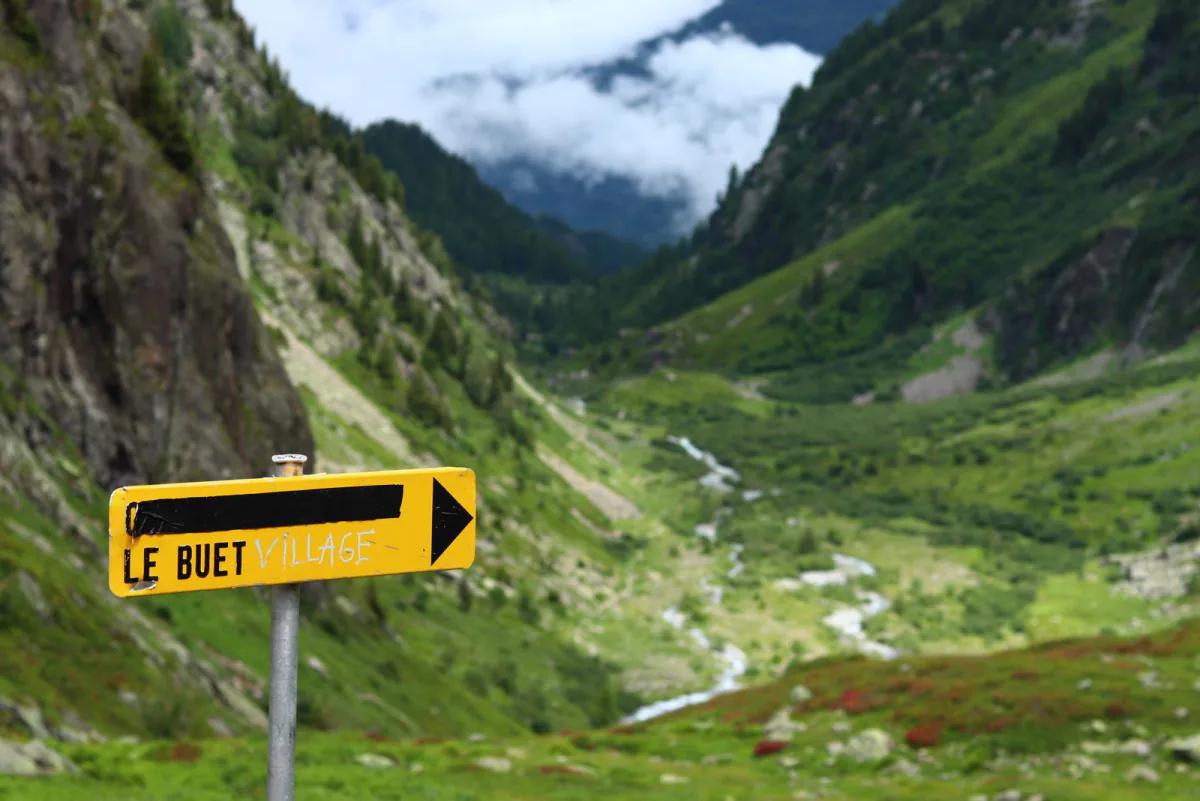
Fly into Geneva, take a bus of about 1 hour 40 minutes to Chamonix, and then stay safe by starting early, watching the weather and carrying insurance that covers mountain rescue.
Flights and Transfers to Chamonix
The easiest way to reach the TMB is to fly into Geneva Airport (GVA), then take a bus or shuttle about 1 hour 40 minutes to Chamonix or Les Houches. Geneva gets frequent flights from across Europe and good long-haul connections, and fares can vary a lot from one week to the next. It pays to compare cheap flights to Geneva across flexible dates before you lock in your refuge bookings.
Your transfer options from Geneva:
- Budget buses: Several operators run the route, with fares from around €11 if you book early.
- Shared shuttles: These drop you door to door, usually for around €30–40 per person. They’re handy for late arrivals.
- Private transfers: From around €150 per vehicle. That’s worth it for groups of 3–4 splitting the cost.
Other entry points exist too. You can start in Courmayeur (with transfers from Turin or Milan) or in Champex (by Swiss train and bus). Starting in Italy or Switzerland is a smart way around fully booked French huts, because you’re still walking the same loop, just from a different point.
Timing tip: Arrive in Chamonix the day before you start. You’ll be able to shake off travel fatigue, buy gas canisters or snacks, and check the latest trail conditions at the Office de Haute Montagne. Starting the TMB straight off a red-eye flight is a classic first-timer mistake.
Safety, Weather and Insurance
The biggest risks on the TMB are sudden alpine weather changes, lingering snow on the high passes early in the season, and knee or ankle injuries on long descents. Afternoon thunderstorms are common in July and August, so aim to cross the passes before about 1 p.m. In June, snow can linger on passes like the Col des Fours and Fenêtre d’Arpette, and you may need microspikes or a lower route.
Your safety checklist:
- Check the Météo-France or MeteoSwiss forecast every evening at the hut
- Pack a waterproof jacket, warm layer, hat and gloves, even in August
- Save the European emergency number 112 on your phone
- Download offline maps, because signal disappears in several valleys
- Tell your hut if you change plans, so no one starts looking for you
Why insurance really matters here: Standard travel policies often exclude hiking above a set altitude or treat trekking as a “hazardous activity.” Mountain rescue rules also differ from country to country. A helicopter evacuation in Switzerland, or an unjustified call-out in Italy’s Aosta Valley, can cost you thousands. Look for a policy that clearly covers hiking up to at least 3,000 m, plus mountain rescue and medical repatriation. We use adventure travel insurance that covers trekking on alpine trips, because it lets you pick the activity level you need rather than guess at the fine print.
Also think about cancellation cover. Refuge deposits are often non-refundable, and a sprained ankle two weeks before departure can cost you several hundred euros in lost bookings.
FAQ: Your TMB Questions Answered
Is the Tour du Mont Blanc hard for beginners?
The TMB is challenging but doable for fit beginners with some hiking experience. The difficulty comes from doing about 1,000 m of climbing day after day, not from technical terrain. Train with back-to-back long hikes carrying a loaded pack for 2–3 months beforehand.
When is the best time to hike the TMB?
The best window is late June to mid-September, when the refuges are open and the passes are usually clear. July and August have the most reliable weather and full hut service, but also the biggest crowds. Early September is quieter, though some higher huts start closing mid-month.
Can you do the Tour du Mont Blanc without booking refuges?
Not really in peak season, because the popular huts are fully booked months ahead. Camping is an option, but wild camping and bivouac rules vary between France, Italy and Switzerland and are often restricted. Check local rules for each section before relying on a tent.
How much does the Tour du Mont Blanc cost?
Expect around €900–1,400 per person for a self-guided 10–11 day trek staying in refuges on half board as of 2026. Guided or luggage-transfer packages cost considerably more. Flights, gear and insurance come on top.
Do you need a guide for the TMB?
No, a guide isn’t required. The trail is well waymarked, and thousands of people walk it self-guided every summer. A guide or organised tour mainly saves you the booking hassle and adds safety in poor weather.
Which direction should you hike the Tour du Mont Blanc?
Most hikers go anticlockwise from Les Houches, the traditional direction that guidebooks and hut timings follow. Going clockwise means quieter trails, but you meet the same people head-on instead of walking with them.
Conclusion: Start Planning Your 2027 TMB Now
The Tour du Mont Blanc gives you three countries, around 165 km of trail and some of the best mountain views in Europe, plus dinners with strangers who become trail friends. The walking is the easy part. The real challenge is booking early, since refuge bookings for next season usually open in late September or early October, and the best huts go first.
Your next steps: pick your dates, book the bottleneck huts, lock in flights to Geneva while prices are low, and get trekking insurance with mountain rescue cover before you pay any deposits. Then start training. Mont Blanc will be waiting.
Never Miss a Deal
Get the best travel tips, festival guides & flight deals straight to your inbox.

Gbuska is the founder and lead writer at WanderFunTrip. What began as one too many 3 a.m. festival fields and a $40 flight booked on a whim turned into a full-time habit of testing adventure trails, party cities, and adults-only resorts firsthand — then writing up what actually worked (and what didn't). Every guide here starts from a real trip or a real booking, never a press release. Usually somewhere between a departures board and the next cliff jump.