⚡ Heads up: This post contains affiliate links. If you book or buy through them, we may earn a small commission — at no extra cost to you. We only recommend stuff we’d actually use ourselves.
⚡ TL;DR: Europe’s best techno nights in 2026 are not in Berghain’s queue. Cities like Tbilisi, Rotterdam, Leipzig, Katowice and Naples run world-class sound systems with door policies you can realistically pass and entry that usually sits somewhere around €10–25 instead of €30+. Fly midweek, land early, and treat Sunday morning as part of the plan.
Here is the uncomfortable truth about European techno tourism: the famous clubs have become the least interesting part of it. You queue for three hours in Berlin, get turned away by a bouncer who has seen four thousand tourists that week, and end up in a bar playing tech-house remixes of Fleetwood Mac. Meanwhile, forty minutes away by budget flight, there are rooms with better sound, cheaper drinks and a crowd that actually came to dance rather than to photograph the entrance.
This guide covers seven clubs across Europe that punch far above their reputation — places that regularly book the same artists as the headline venues but without the mythology tax. Everything below is based on venues that have been operating consistently as of 2026. Opening hours, door policies and pricing shift constantly in nightlife, so treat specifics as a starting point and always check the club’s own socials the week you travel.
Why Are Underrated Techno Clubs Often Better Than the Famous Ones?

Smaller and lesser-known clubs generally deliver a better night because the crowd-to-capacity ratio favours dancers over spectators. When a venue becomes a bucket-list item, a large share of the room is there to have been there — phones up, standing still, three deep at the bar. In a club that mostly serves its own city, people arrive at 2am, stay until 8am, and know the resident DJs by name.
There are practical advantages too, and they compound fast across a weekend:
- Shorter queues. Thirty minutes instead of three hours means you actually hear the opening set, which is often the most interesting part of the night.
- Lower entry. Underrated venues in Central and Eastern Europe typically sit in the €8–20 range, versus €25–30 at flagship clubs.
- Cheaper drinks. In Tbilisi, Katowice or Bucharest, a beer at the club bar often costs less than a bottle of water at a Berlin superclub.
- Better odds at the door. Selective policies exist everywhere, but you are competing with dozens rather than thousands.
- Residents, not just headliners. The people programming these rooms play them weekly, which makes for more coherent nights.
The trade-off is planning. Famous clubs are easy — everyone knows the address and the tram line. For the venues below you need to check whether the party is monthly rather than weekly, whether the address changes, and whether the club is on hiatus. A good rule: find the venue on Resident Advisor, then cross-check their own Instagram from the last fourteen days. If nothing has been posted in a month, assume nothing is happening.
If you are building a multi-city route rather than a single weekend, our European music festival guide covers the logistics of stringing several nightlife cities together without burning out by day four.
Which Techno Clubs in Europe Are Actually Worth Flying For in 2026?

Seven venues stand out in 2026 for sound quality, programming consistency and value: Bassiani in Tbilisi, BAR in Rotterdam, Institut fuer Zukunft in Leipzig, Hala Stulecia-era venues in Katowice, Kozmoz-scene clubs in Naples, Kamchatka in Krakow, and Control Club in Bucharest. Below is how they compare before we get into detail on each.
| Club | City | Approx. entry | Door difficulty | Best for |
|---|---|---|---|---|
| Bassiani | Tbilisi, Georgia | around €10–20 | High (registration) | Raw, political, all-night |
| BAR | Rotterdam, NL | around €10–18 | Low | Late Sunday sessions |
| Institut fuer Zukunft | Leipzig, Germany | around €12–20 | Medium | Berlin sound, no Berlin queue |
| Katowice warehouse scene | Katowice, Poland | around €8–15 | Low | Industrial spaces, cheap rounds |
| Naples club circuit | Naples, Italy | around €10–20 | Low–medium | Mediterranean chaos |
| Kamchatka / Krakow scene | Krakow, Poland | around €8–15 | Low | First-timers, walkable city |
| Control Club | Bucharest, Romania | around €8–15 | Low | Minimal and micro-house |
Prices above are approximate 2026 ranges for standard door entry and vary heavily by lineup — a touring headliner can double them. Advance tickets are usually cheaper than paying at the door, and in several of these cities advance is the only realistic option on a big night.
What Makes Bassiani in Tbilisi Worth the Flight?
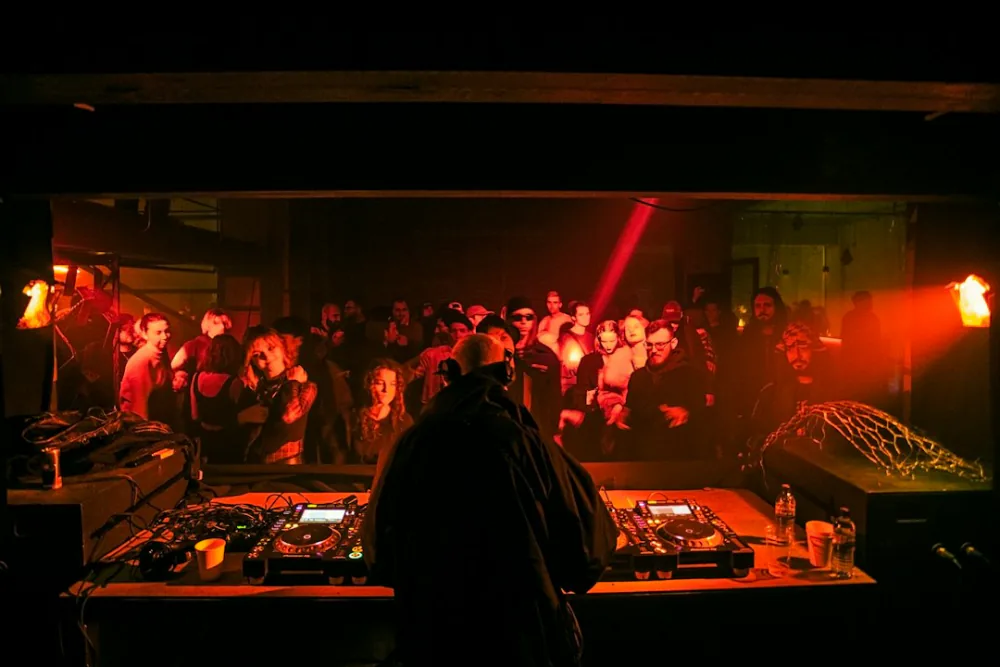
Bassiani is worth flying for because it is the rare club where the music and the politics are inseparable, and you feel it on the floor. Built into a drained swimming pool beneath Tbilisi’s national stadium, it opened in 2014 and became the anchor of a Georgian rave movement that has repeatedly collided with the state — most famously during the 2018 raids that brought thousands of people to dance in protest outside parliament. That history is not marketing copy. It is why the room feels the way it does at 5am.
Practically: entry requires registering in advance through the club’s system, and you should do it days before, not on the night. The door is genuinely selective and the club enforces a strict no-photography policy inside. Sets run long and hard — this is proper 140bpm-adjacent territory rather than melodic warm-up material. The adjoining Horoom room programmes a different, often queerer and more house-leaning night.
Tbilisi itself makes the trip easy to justify. It is one of the cheapest capitals in the wider European region, food is exceptional, and the sulphur baths in the old town are a genuinely effective Sunday recovery plan. Flights from Western Europe usually route through Warsaw, Istanbul or Vienna, and you can compare flight prices to Tbilisi across airlines before committing — fares to Georgia swing wildly depending on how far out you book.
One genuine logistics note: Tbilisi International sits roughly 17 km from the centre and many flights land at brutal hours, between midnight and 5am. Arranging a pre-booked airport pickup in Tbilisi is worth it here specifically because negotiating with taxi drivers at 3am after a long-haul connection is nobody’s idea of a strong start.
Where Should You Go for Techno in the Netherlands Instead of Amsterdam?

Go to Rotterdam. Amsterdam’s nightlife has drifted heavily toward tourist pricing and commercial bookings, while Rotterdam — a forty-minute train ride south — has kept a rawer, more industrial club culture that suits techno far better architecturally and culturally.
BAR is the obvious entry point. It is small, dark, has a genuinely excellent sound system for its size, and is best known for sessions that run deep into Sunday when the rest of the city is at brunch. It is not a superclub and does not pretend to be; the appeal is that you are close to the booth and the crowd is local. Rotterdam’s wider scene includes larger warehouse-style venues and a strong festival calendar, and the city’s post-war rebuild means clubs occupy actual industrial infrastructure rather than converted basements.
A practical Rotterdam plan for a weekend:
- Fly into Rotterdam The Hague Airport if fares allow, or into Amsterdam Schiphol and take the direct intercity train — it runs roughly every 15–30 minutes and takes around 40 minutes.
- Stay near Witte de Withstraat for walkable bars before the club, or near the Maas for quieter sleep.
- Start late. Dutch clubs fill after 1am; arriving at 11pm means an empty room.
- Buy advance tickets for anything with a name attached — Rotterdam nights sell out quietly.
- Keep Sunday clear. The city’s best sessions are Sunday afternoon and evening, not Saturday night.
Because Rotterdam pairs so naturally with other cities, it is a strong anchor for a multi-stop route. If you are chaining three or four clubbing cities in one trip, multi-city routing tools that mix budget airlines tend to beat booking each leg separately, since the cheapest hop between two secondary European cities is rarely on the same carrier.
Enjoying This?
Get more guides like this — plus flight deals — sent straight to your inbox.
Is Leipzig Really the Better Version of Berlin for Techno?
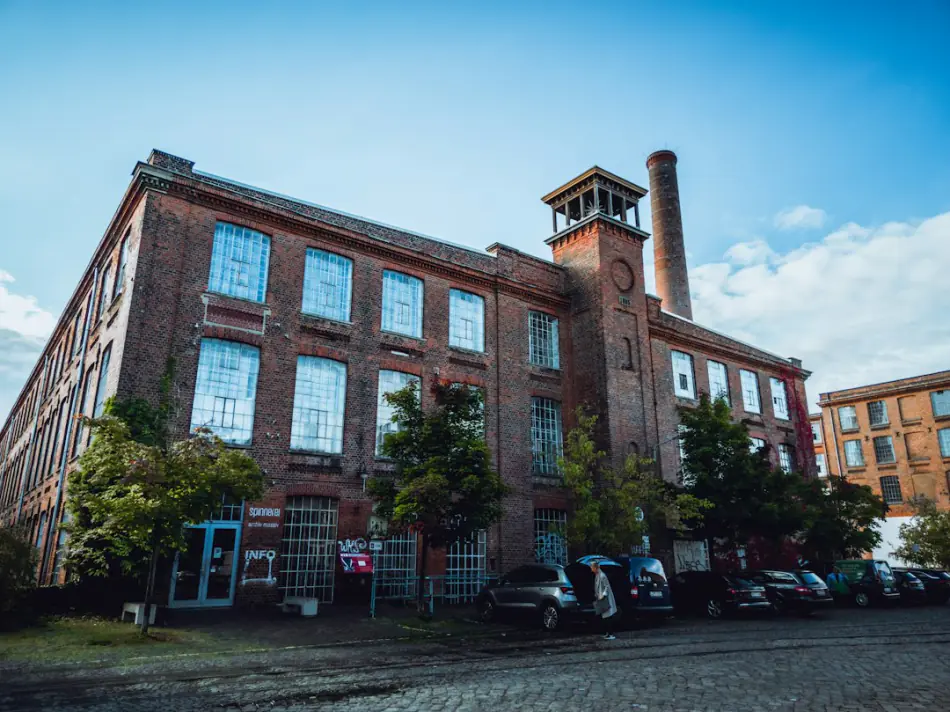
Leipzig is the better practical choice for most travellers, though it is not a Berlin replacement so much as a Berlin alternative with a much higher chance of actually getting in. Institut fuer Zukunft (IfZ), housed in a former industrial complex in the city’s south, is the centrepiece — a club with a serious sound system, a strict no-photo and anti-discrimination policy, and programming that regularly pulls the same artists circulating through Berlin’s bigger rooms.
The door is selective but rational. Turn up in a group of eight loud people on a stag weekend and you will not get in, which is by design and is precisely why the inside works. Turn up in a pair or a small group, sober enough to speak, genuinely there for the music, and your odds are good. The club is explicit about its politics and its consent culture, and awareness teams are present.
Leipzig’s advantage over Berlin is scale. The city is compact, rents are lower so venues survive longer, and the clubbing district around Connewitz has a density of bars and smaller spaces that makes a night self-contained. You can get from a bar to a club to a Späti to bed without a 40-minute U-Bahn ride each time. Trains from Berlin take around 75–90 minutes, which also means you can base yourself in Berlin and treat Leipzig as a Saturday day trip if the Berghain queue defeats you.
Worth knowing: German clubs of this type enforce phone-camera stickers at the door. Do not test it. Getting caught filming is one of the few things that reliably ends your night early, and it is the single most common mistake visiting clubbers make.
Which Eastern European Cities Offer the Best Value Techno Nights?

Poland and Romania deliver the strongest value in Europe right now, with entry, drinks and accommodation often totalling less for a full weekend than a single night out in Amsterdam or Zurich. Katowice, Krakow and Bucharest are the three to prioritise.
Katowice is the surprise. A former coal and steel city in Silesia, it has converted genuine industrial architecture into event spaces, and its scene leans hard, fast and unpretentious. It hosts major electronic events through the year and the local crowd is knowledgeable without being precious about it. Rounds at the bar frequently land under €4.
Krakow is the easiest first trip. Kamchatka and the wider Zabłocie-area scene give you credible underground nights inside a city that is already worth visiting in daylight, with cheap direct flights from across Europe. It is the best option if you are travelling with people who do not care about techno and need the trip to also be a city break.
Bucharest runs a different sound entirely. Romanian minimal and micro-house is a genuine regional export — a slower, hypnotic, groove-focused style with a devoted international following. Control Club is the accessible entry point, and the city’s after-hours culture is legitimately extreme, with parties routinely continuing well into Sunday afternoon.
Budget expectations for a two-night weekend in these cities, as of 2026:
- Club entry: around €8–15 per night, less for local-lineup nights
- Drinks: around €3–6 per beer at club prices
- Hostel or budget hotel: around €25–50 per night
- Airport transfer: around €5–15 depending on city and method
- Late-night food: around €4–8 (zapiekanka in Krakow is a national institution at 5am)
For more on stretching a nightlife budget across several cities, our breakdown of the cheapest countries to travel in Europe goes deeper on where the money actually goes.
How Do You Actually Get Into a Selective Techno Club?
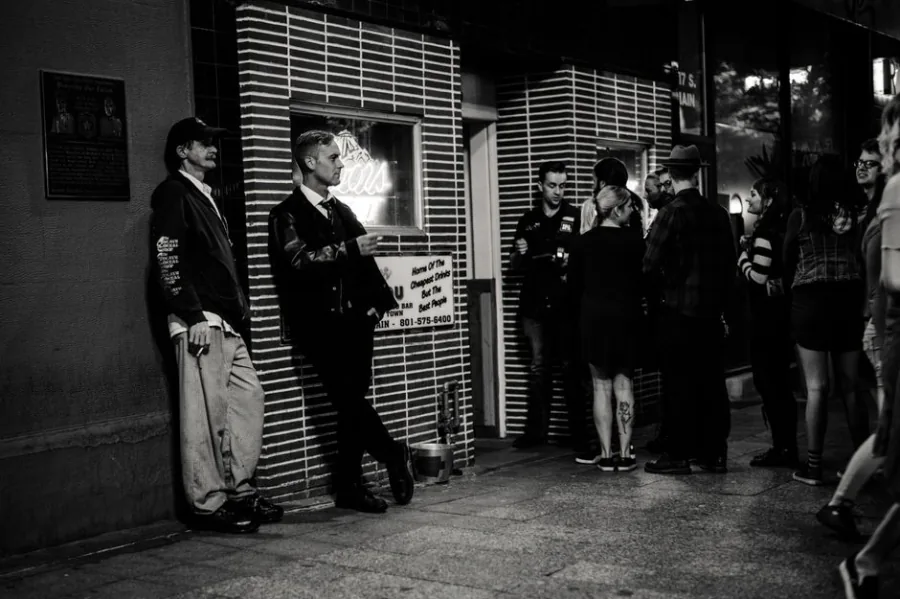
You get in by looking like someone who came to dance rather than someone who came to look. Door staff at selective clubs are filtering for one thing above all: will this person make the room worse? Everything else follows from that.
The same door logic applies across Germany — our guide to the Berlin club dress code breaks down what the bouncers are actually reading. The practical checklist, in rough order of importance:
- Go in twos or threes. Large groups are the single biggest rejection factor. If you are six people, split up and enter separately, spaced out by a few minutes.
- Mixed groups over single-gender groups. A group of five men arriving together is the classic refusal profile at most European door policies.
- Be sober enough to answer a question. Slurring, swaying or being visibly pre-loaded ends it instantly.
- Dress down, not up. Dark, plain, comfortable. Black is not a costume requirement but it is the safe default. Avoid logos, going-out shirts and anything that reads as a bar crawl.
- Be quiet in the queue. Shouting, filming the line and loud English are all read as tourist behaviour.
- Know who is playing. Some doors ask. “I’m here for the resident” is a better answer than a blank stare.
- Accept rejection gracefully. Arguing guarantees you will not get in later either, and some doors remember faces.
Timing matters as much as presentation. The window between roughly 1:30am and 3am is usually the sweet spot — early enough that the club is not at capacity, late enough that you are not standing in an empty room. Arriving at peak (around 3–4am) at a busy club often means a one-in-one-out queue regardless of how you look.
One more thing worth building into your plan: flight disruption. Clubbing trips are weekend-shaped and unforgiving — a cancelled Friday evening flight can delete the entire reason you booked. Under EU regulation, delays over three hours and cancellations on EU-departing flights can entitle you to compensation, and it is worth knowing you can check whether a delayed flight qualifies for compensation rather than writing the loss off. Claims can typically be filed for some time after the flight, so a ruined trip from last year may still be worth checking.
Frequently Asked Questions
Do I need to buy tickets in advance for these clubs?
For most of them, yes — and for Bassiani, advance registration is effectively mandatory. Smaller nights in Krakow, Katowice and Bucharest usually have door capacity available, but anything with a touring headliner will sell out. As a rule, buy in advance if the lineup has a name you recognise, and check the club’s own channels rather than third-party resellers.
What should I wear to a European techno club?
Dark, plain and comfortable — black is the default for good reason. Skip logos, dress shoes, going-out shirts and anything you would wear to a cocktail bar. Comfortable footwear matters more than it sounds when you are standing for six hours on a concrete floor. Most clubs have a cloakroom, so a jacket is not a problem.
Are these clubs safe for solo travellers?
Generally yes, and often safer than mainstream clubs, because selective venues tend to run awareness teams and enforce anti-harassment policies actively. The usual precautions still apply: watch your drink, keep your phone and cards on you rather than in a cloakroom bag, and have your route home sorted before you go in. Solo clubbing is completely normal in this scene and nobody will find it odd.
When is the best time of year to visit European techno clubs?
Autumn and winter — roughly October through March — are the strongest club months, because summer pulls the best DJs onto the festival circuit and out of the clubs. Winter also means cheaper flights and accommodation across most of these cities. The exception is Naples and other southern venues, where summer open-air programming can be excellent.
How much should I budget for a techno weekend in Europe?
For Eastern European cities, around €250–400 for a two-night weekend including flights, accommodation, entry and drinks is realistic as of 2026. Western European cities like Rotterdam or Leipzig run closer to €400–600. Flights are the most variable element by far, which is why booking midweek departures matters more than any other single saving.
Can I take photos inside these clubs?
No, and this is not a soft rule. Bassiani, Institut fuer Zukunft and most serious techno venues either sticker your camera at the door or eject people for filming. The no-photo policy exists to protect the freedom of people on the floor, and it is a large part of why these rooms feel different. Leave the phone in your pocket.
The Bottom Line: Book the Flight, Skip the Queue

The clubs on this list share one thing: they are still primarily for the people who live in those cities. That is exactly what makes them worth travelling for, and it is also fragile — the fastest way to ruin an underrated club is for a few thousand people to treat it as content. Go, be unremarkable, dance, leave the phone alone, tip the bar staff, and the scene survives your visit.
Practically, the move for 2026 is to pick two cities that are cheap to connect, travel between October and March, land on a Thursday or Friday afternoon rather than Friday night, and build in a genuine recovery day. Tbilisi plus Bucharest, or Leipzig plus Rotterdam, are both strong two-city pairings that split neatly across four days.
Start with the flight, because it is the number that decides everything else. Search flexible dates to these cities and let the cheapest midweek fare choose your destination — in this scene, the club you have not heard of is usually the better night anyway.
Written by the WanderFunTrip editorial team. Last updated September 2026. Club policies, pricing and opening hours change frequently — always verify with the venue directly before travelling.
Never Miss a Deal
Get the best travel tips, festival guides & flight deals straight to your inbox.

Gbuska is the founder and lead writer at WanderFunTrip. What began as one too many 3 a.m. festival fields and a $40 flight booked on a whim turned into a full-time habit of testing adventure trails, party cities, and adults-only resorts firsthand — then writing up what actually worked (and what didn't). Every guide here starts from a real trip or a real booking, never a press release. Usually somewhere between a departures board and the next cliff jump.


