⚡ Heads up: This post contains affiliate links. If you book or buy through them, we may earn a small commission — at no extra cost to you. We only recommend stuff we’d actually use ourselves.
Picture rappelling down a 10-metre waterfall, then sliding into a turquoise plunge pool carved out of solid Alpine rock. That’s a normal Tuesday in the gorges above Interlaken — and you don’t need any experience to do it.
Maybe the idea of cold water, dark slots and jumping off ledges makes you hesitate. That’s normal, and it’s exactly why so many people talk themselves out of the best half-day in the Bernese Oberland. The truth is the beginner canyons are built around that fear: every jump is optional, a guide clips you in, and thousands of nervous first-timers finish grinning every summer.
Canyoning here runs from May to October, with a beginner half-day tour costing around CHF 134–159 as of 2026. If you can swim a little and you’re up for getting cold and wet, you’re qualified. This guide covers the three main canyons, real prices, what to pack, and exactly how to get there.
What to Expect on Your First Descent
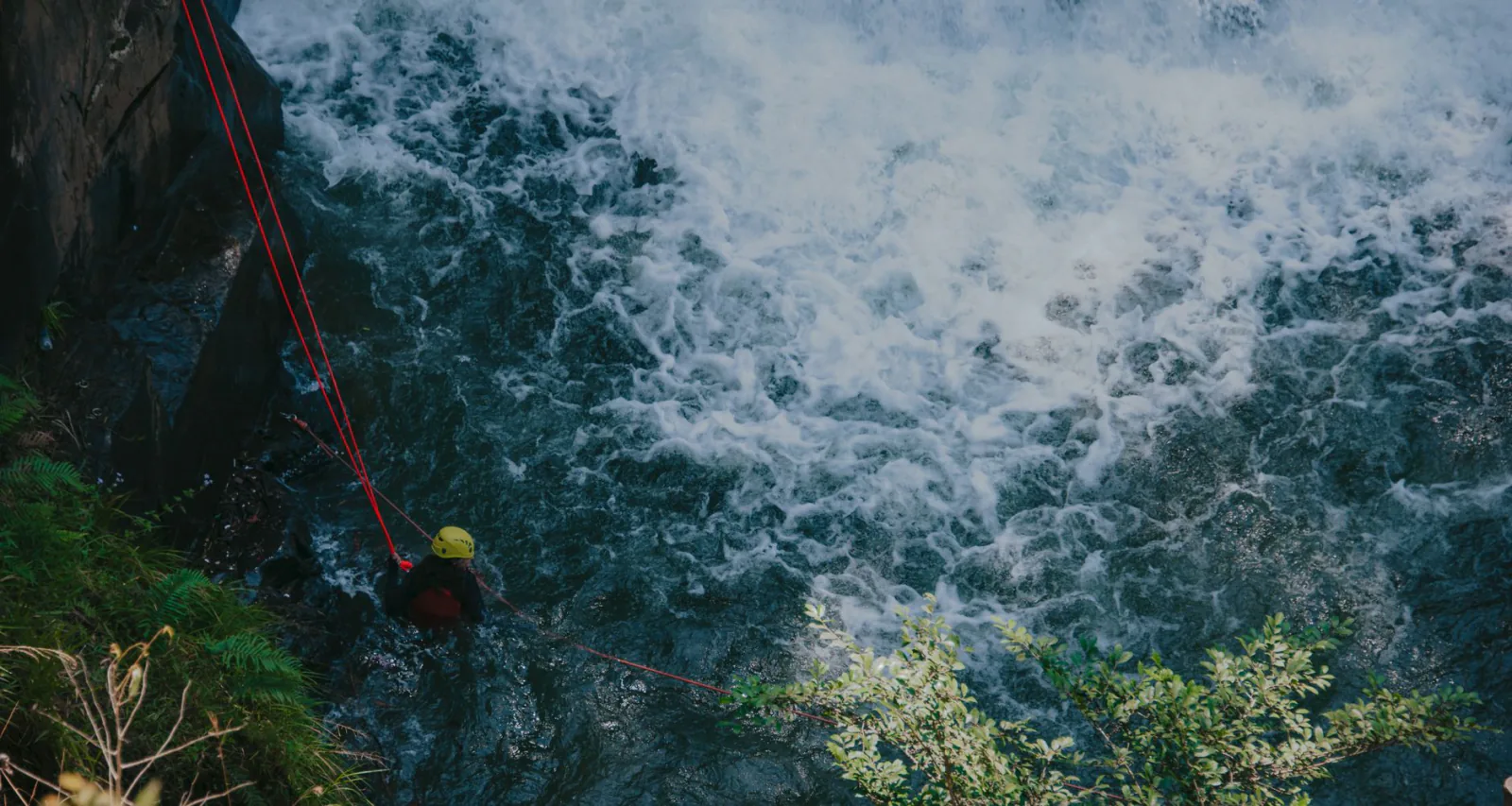
Canyoning means working your way down a mountain gorge using the water itself as the trail. You abseil down waterfalls, jump off ledges into pools, ride natural rock waterslides, and swim through narrow slots the river has cut over thousands of years. A state-certified guide leads every step and clips you into the ropes for the technical bits.
Your day starts at the operator’s base in Interlaken, where you get kitted out in a thick neoprene wetsuit — the water sits around 10–14°C even in August, so the suit is doing real work. A short van transfer (5 to 45 minutes depending on the canyon) drops you at the entry point.
Inside the gorge you’re in the water for roughly 1 to 1.5 hours on a beginner tour, with the full experience taking about 3 to 3.5 hours door to door. Guides always give you the choice: nervous about a 6-metre jump? You can climb down or abseil instead. Nobody gets pushed.
The rhythm is what surprises most first-timers. You’ll spend a few minutes concentrating hard on a rope, then suddenly you’re floating on your back through a slot canyon with sunlight cutting through the walls above. It swings between focus and pure play. By the third or fourth obstacle the nerves are gone and you’re the one asking the guide if you can jump the higher line.
If you’ve already tried skydiving in Interlaken, canyoning is a different flavour of adrenaline — less freefall, more hands-on scrambling, and far more contact with the raw landscape.
Canyoning in Interlaken: The Three Main Canyons
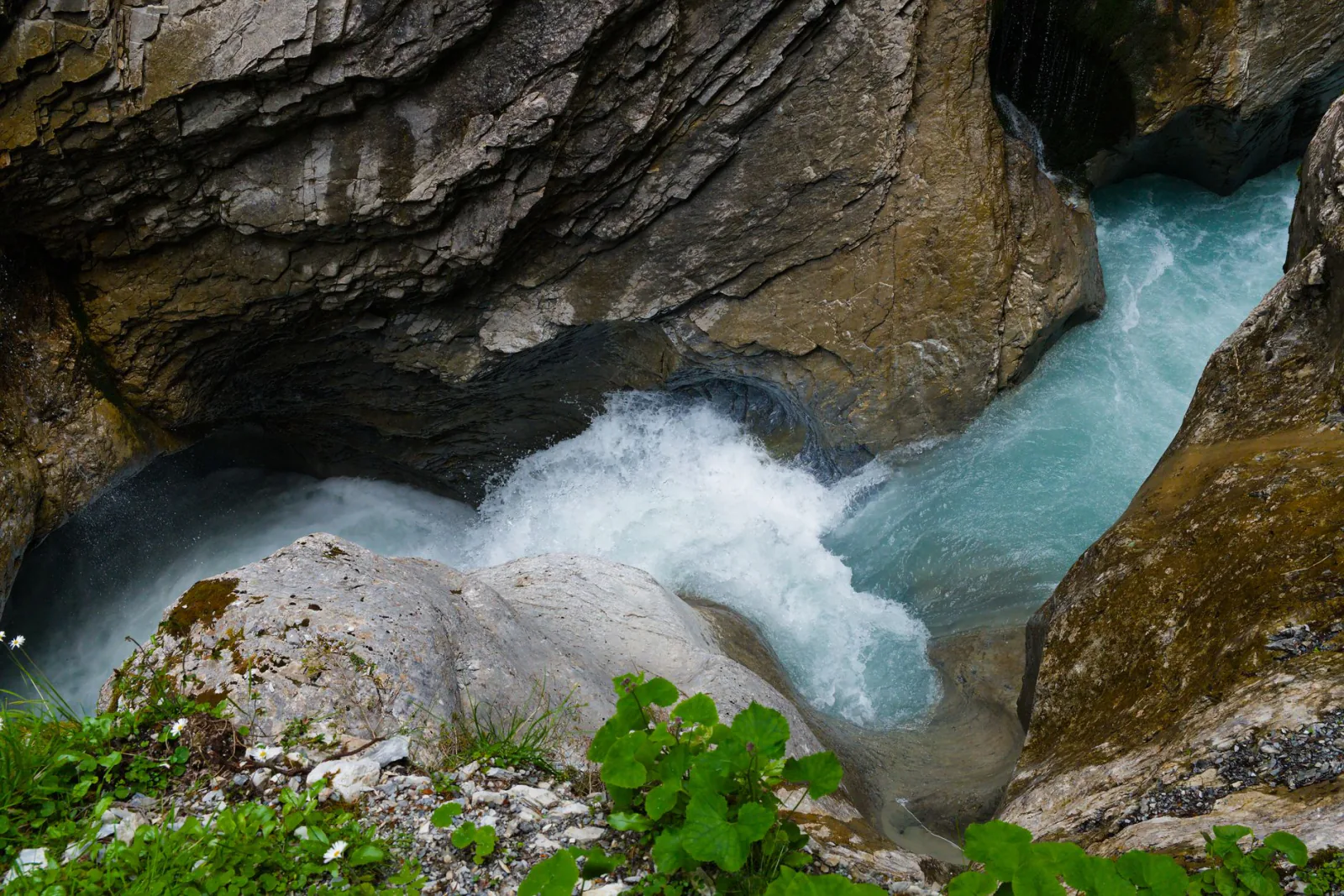
Interlaken sits at the doorstep of three very different gorges. Picking the right one matters more than picking the operator — they mostly run the same routes with similar gear. Here’s how they stack up in 2026.
| Canyon | Level | Highlights | From (2026) |
|---|---|---|---|
| Saxeten | Beginner (1/5) | Slides, abseils to ~10 m, jumps to ~5 m | ~CHF 134–159 |
| Grimsel | Intermediate | 50 m opening abseil, 8 m jumps, Tyrolean | ~CHF 169–189 |
| Chli Schliere | Advanced (14+) | Long abseils, 10 m jumps, strong current | ~CHF 229 |
Saxeten — the beginner favourite
Rated 1 out of 5 for difficulty and just a five-minute drive from town, Saxeten is where 90% of first-timers go. Expect playful slides, abseils up to roughly 10 metres, and optional jumps up to around 5 metres. It’s the pick if this is your first canyon or you’re bringing a mixed-ability group.
Grimsel — the scenic step-up
Grimsel opens with a jaw-dropping 50-metre abseil down a granite wall, then flows into jumps up to 8 metres, rock slides, and a Tyrolean traverse. It suits sporty beginners who want more, plus experienced canyoneers. The high-alpine setting near the Grimsel Pass is the most photogenic of the three.
Chli Schliere — for the confident only
Marked “difficult” and open from age 14, Chli Schliere is widely called the best gorge in the region: long rappels, 10-metre leaps, steep slides, and pushy currents across a demanding tour. Skip it for your first go.
How Much It Costs in 2026
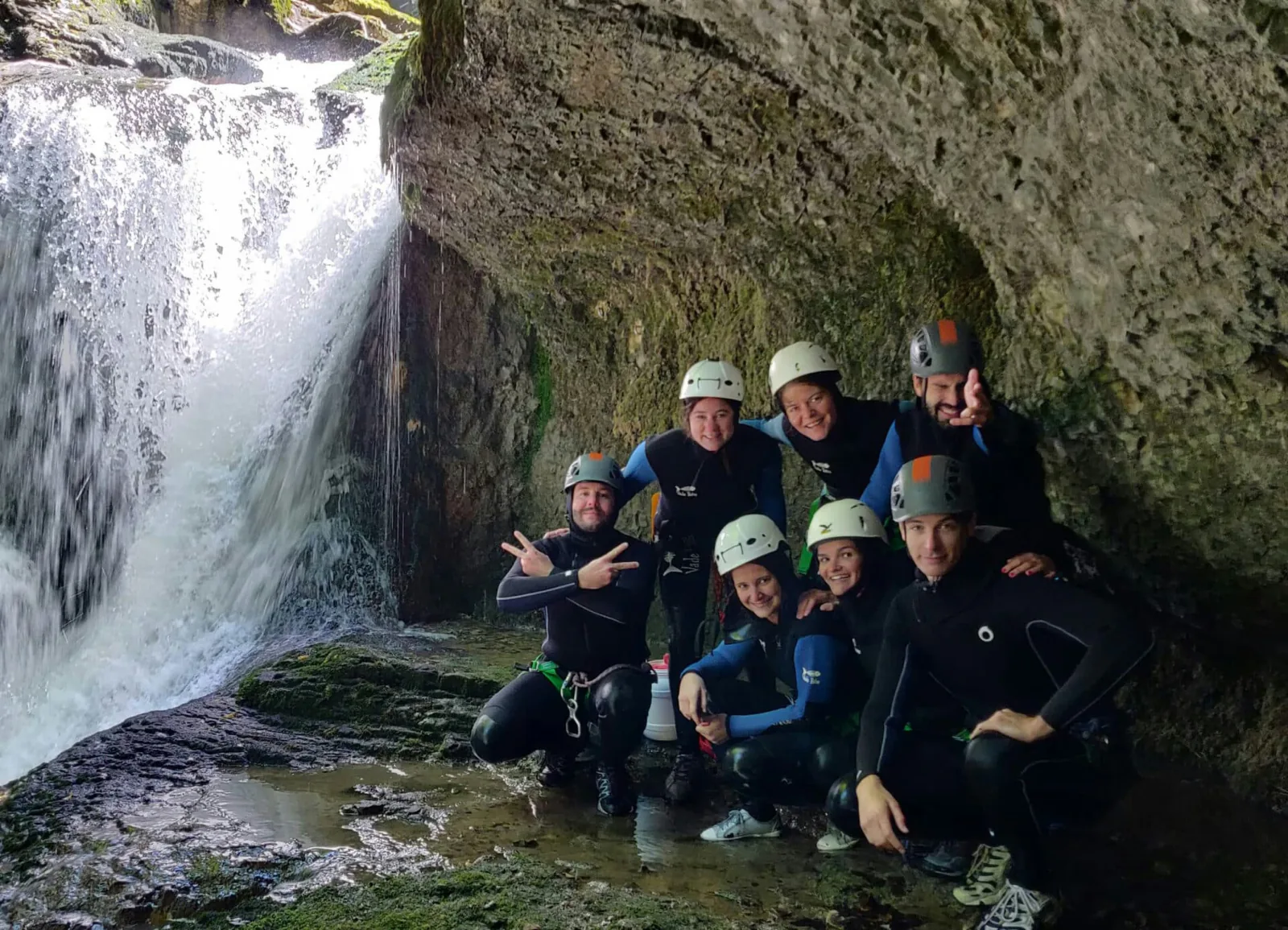
A beginner half-day at Saxeten runs about CHF 134–159 per person, and that price is close to all-inclusive for gear. Grimsel lands around CHF 169–189, and the advanced Chli Schliere tour starts near CHF 229. Prices shift a little between operators like Outdoor Interlaken, Swissraft and Alpin Raft, but the ranges above hold across 2026.
Every tour price typically includes the round-trip transfer from base, a certified guide, and the full kit: wetsuit, harness, helmet, water shoes and swim vest. What’s not included is a tip for your guide (CHF 10–20 is normal), photos (often CHF 20–30 extra), and your travel insurance.
One budgeting tip: book directly with the operator or a reputable platform rather than a hotel concierge, who may add a markup. Group discounts of 10–15% are common for four or more people, and some operators bundle canyoning with rafting for a discounted “double adventure” day. Swiss francs go quickly here, so a little planning stretches the trip.
That last one matters. Standard travel policies frequently exclude “extreme sports,” and canyoning almost always falls in that bucket. Before you book, check that your cover includes it — a dedicated adventure policy from EKTA travel insurance covers canyoning and other high-risk activities that regular plans leave out. It’s a small cost against a helicopter rescue bill in the Alps.
Compared with the region’s other big-ticket thrills, canyoning is genuinely good value. A tandem paragliding flight in Interlaken costs more for less time in the action, so a half-day in a gorge stretches your francs further.
When to Go and Who Can Join
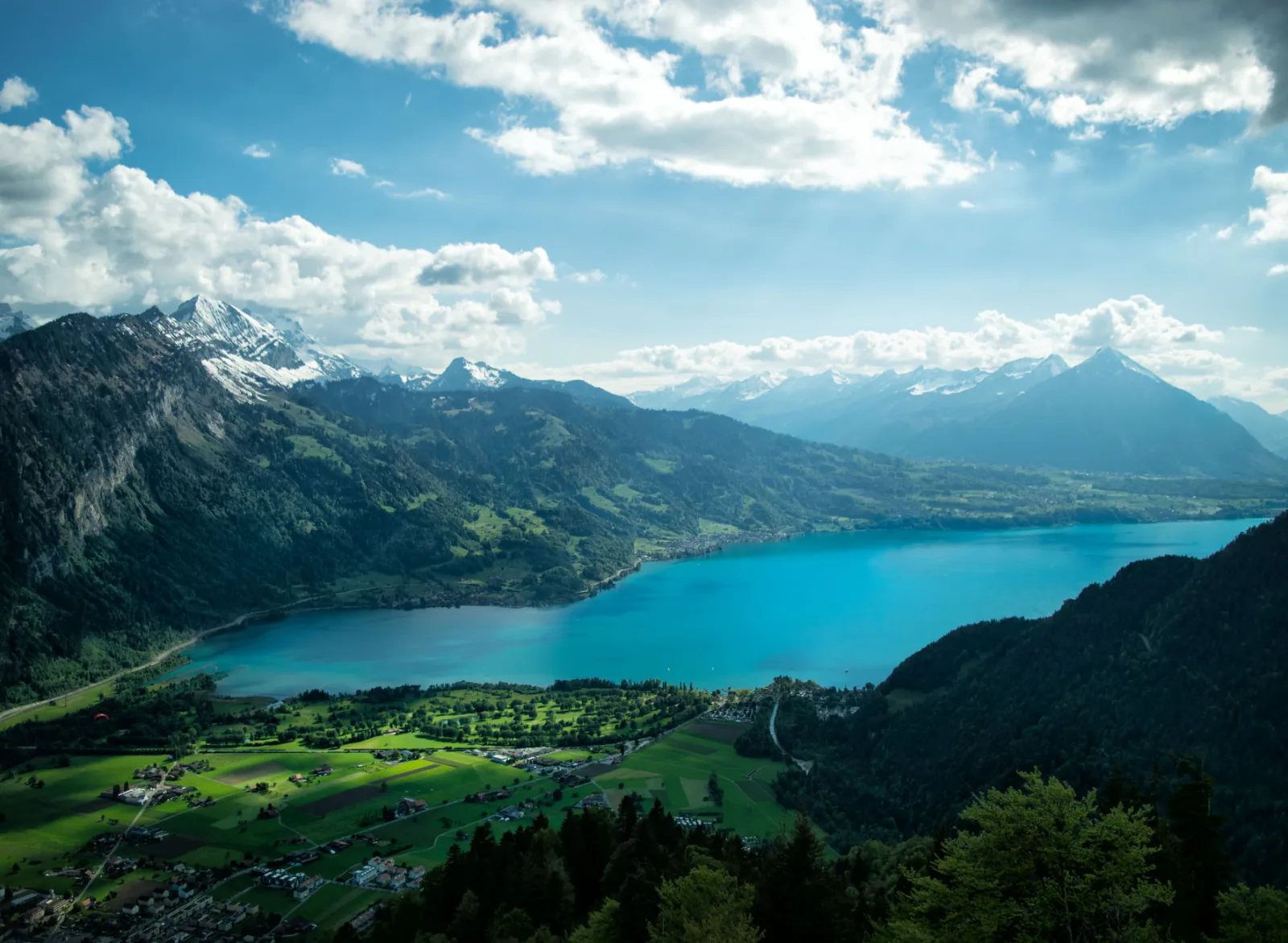
The season runs from May through October, and the sweet spot is July and August. That’s when water levels are stable, snowmelt has calmed down, and the air is warm enough that the cold water feels refreshing rather than brutal. Early season (May–June) can mean higher, colder flows; late season (September–October) brings quieter gorges and gorgeous light.
The requirements are refreshingly light. Here’s what most operators ask for a beginner tour:
- Minimum age: 12 years for Saxeten-style canyons; 14 for advanced gorges like Chli Schliere.
- Weight limit: around 125 kg maximum, for harness safety.
- Swimming: basic ability — you should be comfortable putting your face in moving water.
- Fitness: moderate. You’ll scramble, climb short ladders and hike a little, but nothing marathon-level.
- Health: tell your guide about heart conditions, pregnancy, or recent injuries beforehand.
Weather can force last-minute changes. After heavy rain, guides may switch canyons or reschedule — flash-flood risk in a narrow gorge is not something reputable operators gamble with, so build a buffer day into your trip if you can.
Enjoying This?
Get more guides like this — plus flight deals — sent straight to your inbox.
What to Bring (and What’s Provided)
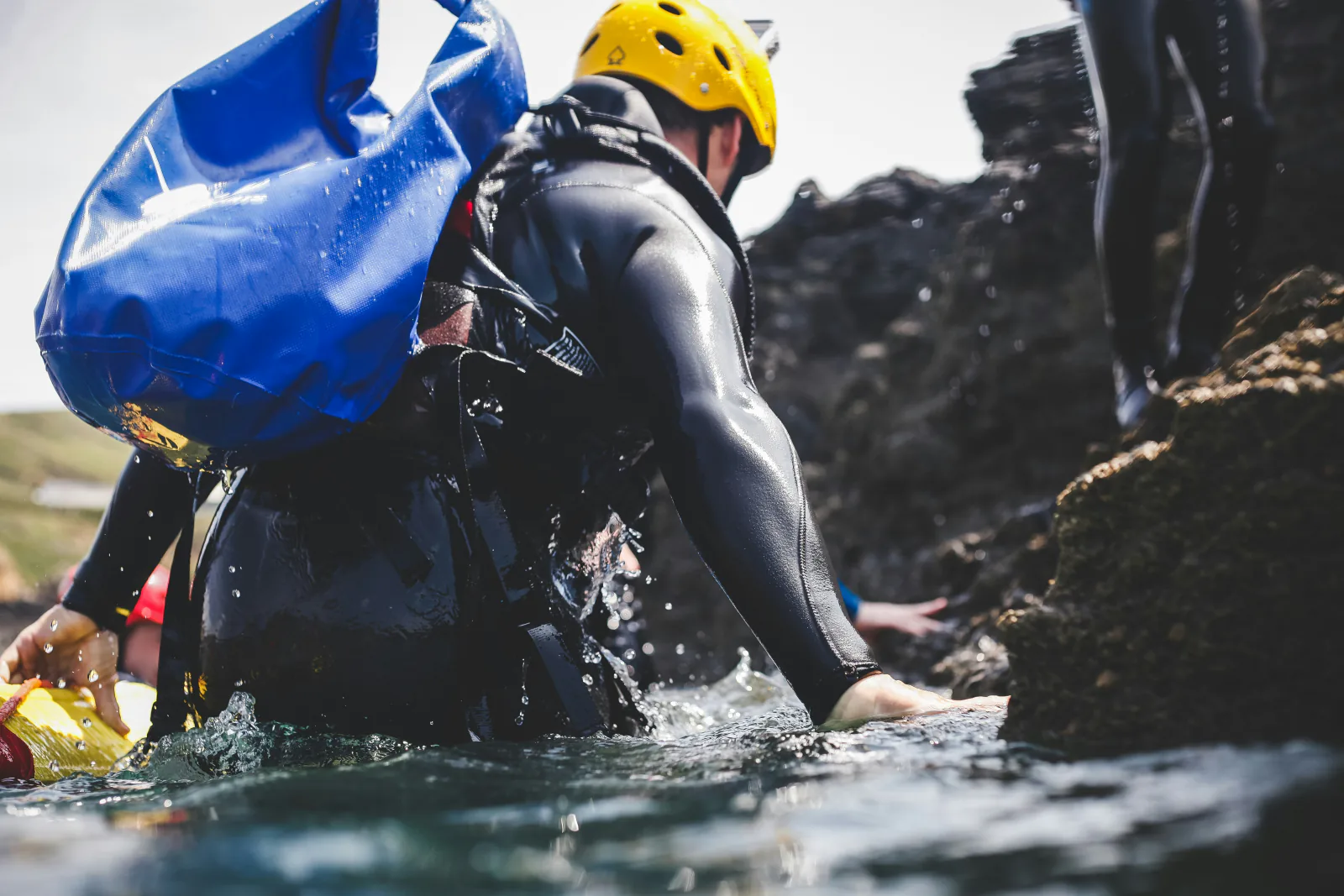
The good news: the technical stuff is all handed to you at base. You do not need to buy or rent a single piece of specialist equipment for a standard tour.
Provided by the operator: neoprene wetsuit (usually 5 mm), neoprene socks, canyoning-specific water shoes or the option to use your own trainers, harness, helmet, and a buoyancy/swim vest. Guides carry all the ropes and safety hardware.
What you bring yourself:
- Swimwear — put it on before you leave your hotel to save changing time.
- A towel and a full change of dry clothes for afterwards.
- Sunscreen — Alpine sun is strong even when it’s cool.
- A small snack and water for before and after; you can’t carry food into the canyon.
- Contact-lens wearers: wear lenses, not glasses (or bring a strap).
Leave phones, wallets and jewellery in the locker at base or in the van. Many operators sell a GoPro photo/video package so you’re not tempted to risk your own phone on a waterslide. If you want your own footage, ask about a chest-mount option when you book.
Getting to Interlaken
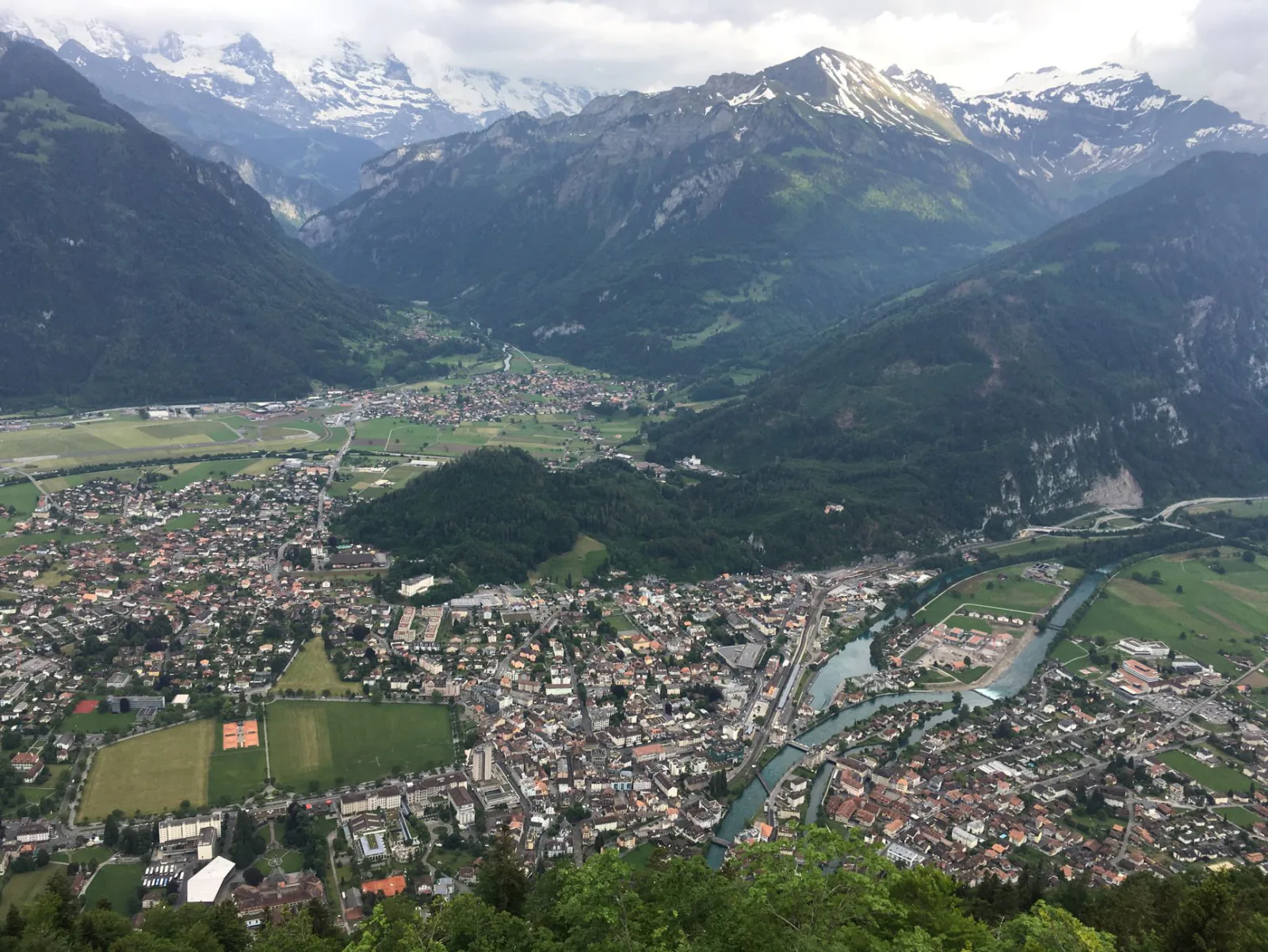
Most travellers fly into Zurich (ZRH), the closest major international airport. From there, roughly 35 trains a day run toward Interlaken Ost, with the direct IC 81 service taking about 2 hours 13 minutes and fares starting around CHF 42 (€34) as of 2026. Geneva is a slightly longer but equally scenic rail approach.
To lock in the best airfare, compare routes early — search flights to Zurich on Aviasales and set a price alert a couple of months out, since Swiss summer seats fill fast. If you’re hunting for the cheapest possible route, our European budget-flight and skiplagging guide explains how to shave fares into Switzerland without tripping airline penalties. And if your flight gets delayed or cancelled on the way, you may be owed compensation; Compensair handles the EU261 claim for you so a rough journey doesn’t eat your gorge budget.
Once you land at Interlaken Ost or West, everything is walkable or a short bus ride, and every canyoning operator offers the transfer to the gorge as part of the tour. You won’t need a rental car — in fact, parking in the town centre is a headache, so the train really is the smart move.
Frequently Asked Questions
Is canyoning in Interlaken safe for beginners?
Yes, when you book a certified operator and pick a beginner canyon like Saxeten. Guides are state-qualified, gear is inspected, and every jump or abseil is optional — you can walk around anything that scares you. The main risks come from weather, which is why tours get rescheduled after heavy rain.
Do I need to know how to swim?
Basic swimming ability is enough for a beginner tour. You’ll wear a buoyant wetsuit and a swim vest, so you float easily, but you should be comfortable in moving water and able to paddle across a pool. Strong swimming isn’t required for Saxeten-level gorges.
How cold is the water?
Expect water around 10–14°C even in midsummer, as it’s fed by Alpine snowmelt. The 5 mm neoprene wetsuit keeps you comfortable for the 1–1.5 hours you’re actually in the canyon. Most people warm up quickly once they’re moving and jumping.
What should I wear under the wetsuit?
Just your swimwear. Put it on before you arrive to save time in the changing room. Everything else — wetsuit, shoes, helmet, harness and vest — is provided, so you only bring a towel, dry clothes and sunscreen for afterwards.
How far in advance should I book?
Book at least a few days ahead in peak season (July–August), and a week or more for weekends or larger groups. Popular Saxeten slots sell out, and pre-booking locks in your spot and price. Off-season midweek tours are often available same-day.
Can I do canyoning and another adventure on the same trip?
Absolutely — that’s the whole point of Interlaken. Many visitors stack canyoning with paragliding, skydiving or rafting across two or three days. Just avoid doing two intense water activities back-to-back so you’re not exhausted or perpetually cold.
The Bottom Line
Canyoning in Interlaken is one of the best-value adventures in the Swiss Alps: roughly CHF 134–159 buys you a half-day of waterfalls, jumps and slides through scenery most people only see in screensavers. Start with Saxeten, go in July or August, and book a certified operator a few days ahead.
Before you go, make sure your cover actually includes the activity — sort out an adventure-ready policy with EKTA so a twisted ankle in a gorge never turns into a five-figure problem. Then find your flights to Zurich, hop the train to Interlaken, and go get gloriously soaked.
Never Miss a Deal
Get the best travel tips, festival guides & flight deals straight to your inbox.

Gbuska is the founder and lead writer at WanderFunTrip. What began as one too many 3 a.m. festival fields and a $40 flight booked on a whim turned into a full-time habit of testing adventure trails, party cities, and adults-only resorts firsthand — then writing up what actually worked (and what didn't). Every guide here starts from a real trip or a real booking, never a press release. Usually somewhere between a departures board and the next cliff jump.